




This story is about how stigma quietly follows people into job interviews, and how honesty can begin to feel dangerous when a diagnosis changes the way others see you.
“We’ll let you know.”
I used to think interviewers could tell when you lied during an interview. I also thought that if I was qualified and honest, things would work out. By the time I’d had my third interview after graduation, I noticed the pattern. The interview would go well. We’d laugh a little, talk about my grades – CGPA 3.7 – my thesis, my internship, clubs, societies and university events.
I was asked about my salary expectations and when I could start. It was the follow up question: “Do you have any chronic illnesses?” or “Are you currently on long-term medication?” I used to answer honestly. I’d tell them I was HIV positive and currently on Anti Retroviral Therapy (ART). The atmosphere would turn colder and more formal, and suddenly the interview felt shorter.
The diagnosis that changed everything
I was diagnosed about two years ago and was barely able to function for weeks after. I’m not going to share how I got infected. People make a lot of assumptions when they hear “HIV”. I spent those first few weeks Googling life expectancy, medication side effects and worst-case scenarios. I barely slept, developed anxiety and had panic attacks.
It took a few months, but eventually things became manageable because ART is one pill a day and my viral load dropped until it was undetectable. Physically, treatment is working, I’m healthy and stable. Career-wise, everything started getting harder.
Finding work is harder
Every family dinner brings the question “sudah dapat kerja ke?” Months passed and I was stuck in the cycle of promising interviews followed by rejection emails. I know rejection and getting ghosted is normal. But I remember one interview.
A friend of a friend helped get me the interview and it went really well. We talked for over an hour, and it was everything I had learned to do: Copywriting, content planning, social media campaign management. At one point she even said, “I think you’d fit well with the team.”
For the first time in months, I actually had a sense of hope of landing the position, until the same question came up, about chronic illnesses or long-term medication. I hesitated for maybe two seconds before answering honestly. The interview came through mutual contacts and I felt even more pressure to be honest. I didn’t want to lie, to start my career on the wrong foot. That interview was the last time I answered so openly.
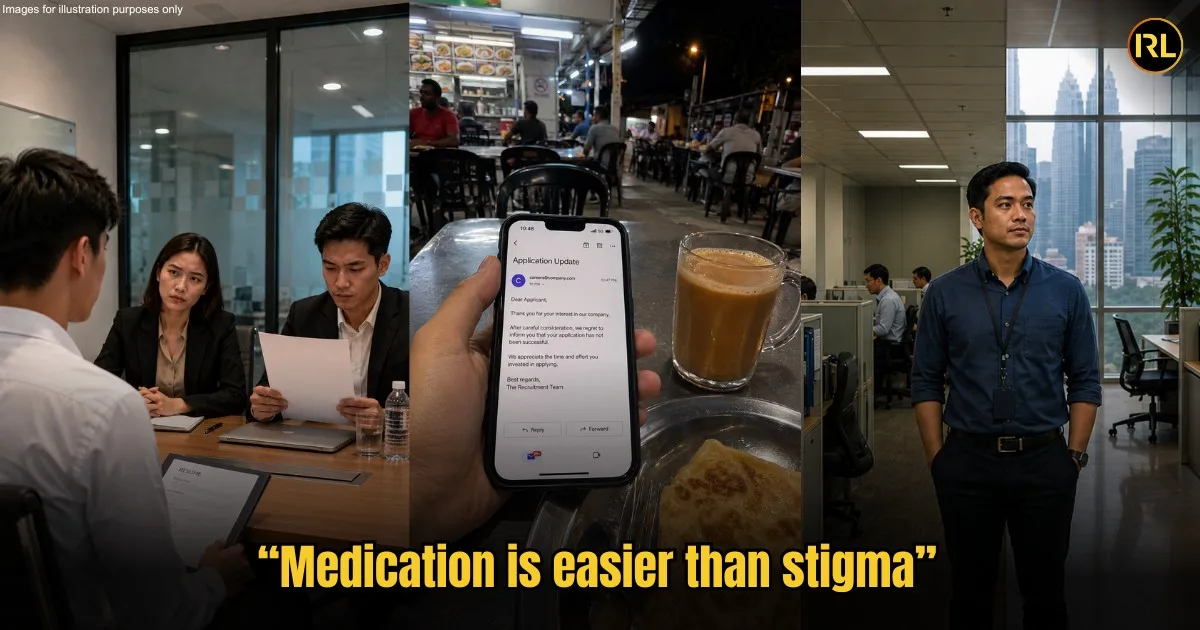
The rest of the interview felt different. Polite. Distant. Colder. Three days later, I received a generic rejection email while eating at the mamak. Two days later, friends were posting their confirmation on LinkedIn. I stared at my phone, and honesty felt less like integrity and more like self-sabotage. At that moment, I hated that my parents had raised me to be honest. I resented every lecture about honesty, ethics and professionalism.
The HIV stigma is alive and well
Honesty feels like a liability, especially in Malaysia. People here still hear “HIV” and immediately attach moral judgements. Everyone reacts differently once they find out. Some people get awkward. Many friends went silent, then drifted away. Weeks later, I’d be quietly removed from social media.
I keep my ART pills in the tiny watch pocket of my jeans. I keep my medication hidden at home because my parents still don’t know. How they still haven’t found out, I honestly don’t know. You’re supposed to “sell yourself” during the interview. I do that while hiding a part of my life. I rehearsed interview answers, practised them in the mirror, and learned how to answer medical questions carefully.
Why are employers asking?
I question why employers are even asking these questions. My work is mostly writing, campaign planning and content execution. Having HIV doesn’t stop me from sitting at a desk, attending meetings or doing communications work. I’ve met every deadline and I still function normally.
Some companies also require medical checkups during probation before confirmation, which honestly creates another layer of anxiety. Even if you choose not to disclose earlier, there’s always this lingering fear that eventually somebody will “find out.”
And once that fear enters your head, it changes the way you carry yourself. You become careful. Calculated. Quiet. The daily medication is easier to manage than the stigma around it.
I choose what I disclose.
Today, I keep my diagnosis private until I truly trust someone. It does not affect the quality of my work, or make me less responsible or somehow less capable. I still don’t know for certain whether HIV was the reason I lost those opportunities. I will never know. Nobody is going to admit to discrimination.
I’m still trying to figure things out, working part time jobs and doing gig work while job hunting for a full time position as my friends settle into stable jobs and careers. The diagnosis became part of my life. The medication became part of my routine.
A few people stayed and treated me normally. I hold onto that. I’ve become more careful about who I open up to. That lesson took longer to learn than managing the medication itself.
Submit your story to ym.efillaerni@olleh and you may be featured on In Real Life Malaysia.
Read also: ‘I gave up my family to pursue my dreams’ Shares 34 YO M’sian woman – In Real Life
‘I gave up my family to pursue my dreams’ Shares 34 YO M’sian woman