






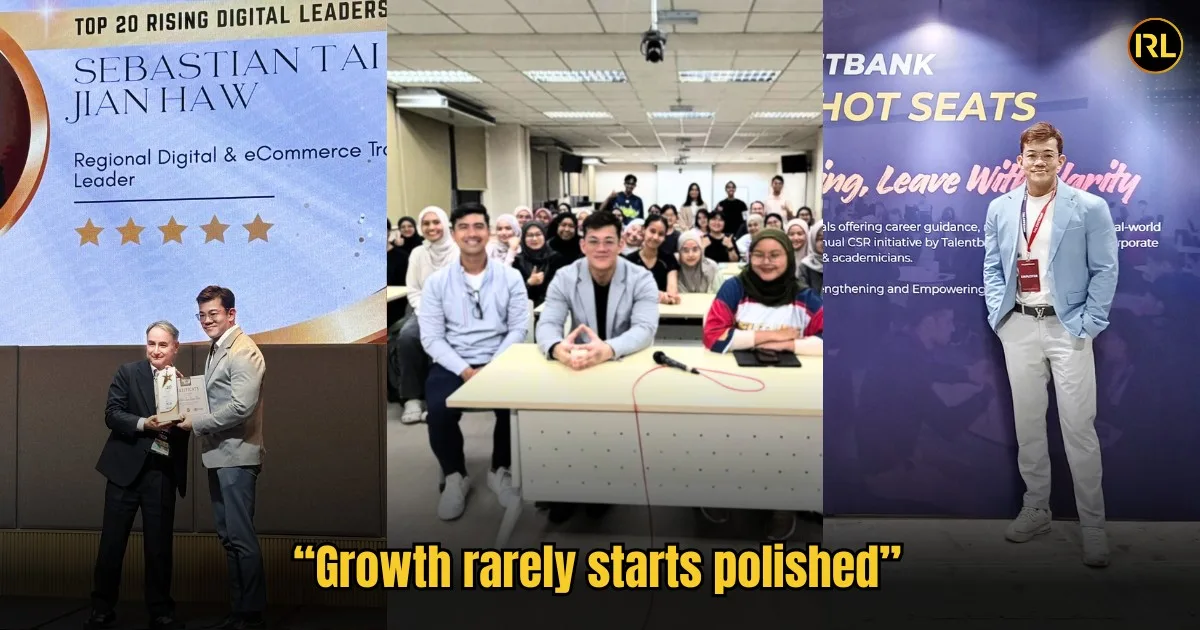
A year after sharing his story of rebuilding, In Real Life catches up with Sebastian Tai Jian Haw to see where life has taken him since.
Last year, In Real Life shared Sebastian Tai Jian Haw’s story of rebuilding. It was a story about resilience, rediscovering identity and learning that honest work is never beneath anyone.
Over the past year, another chapter has quietly unfolded.
While continuing his work in digital transformation, Sebastian has become one of the more active mentors within Malaysia’s talent ecosystem. What started as a single mentoring opportunity gradually grew into mentoring students, startup founders, refugee youth and young professionals through organisations such as Talentbank, GMI and CERTE. Along the way, he was appointed by the Xiamen University Malaysia MBA Centre as a Leadership Fellow under its Business Mentorship Programme to mentor MBA students on leadership, career development and industry insights, and now serves as an Industry Mentor with Asia Pacific University (APU). Universities have also invited him to judge student innovation competitions, including serving as a judge for the Southeast Asia Division Contest of the China International College Students’ Innovation Competition 2026 (SEA-CICSIC 2026).
When we spoke again, however, it quickly became clear that this wasn’t really a story about appointments or recognition.
It was a story about people.
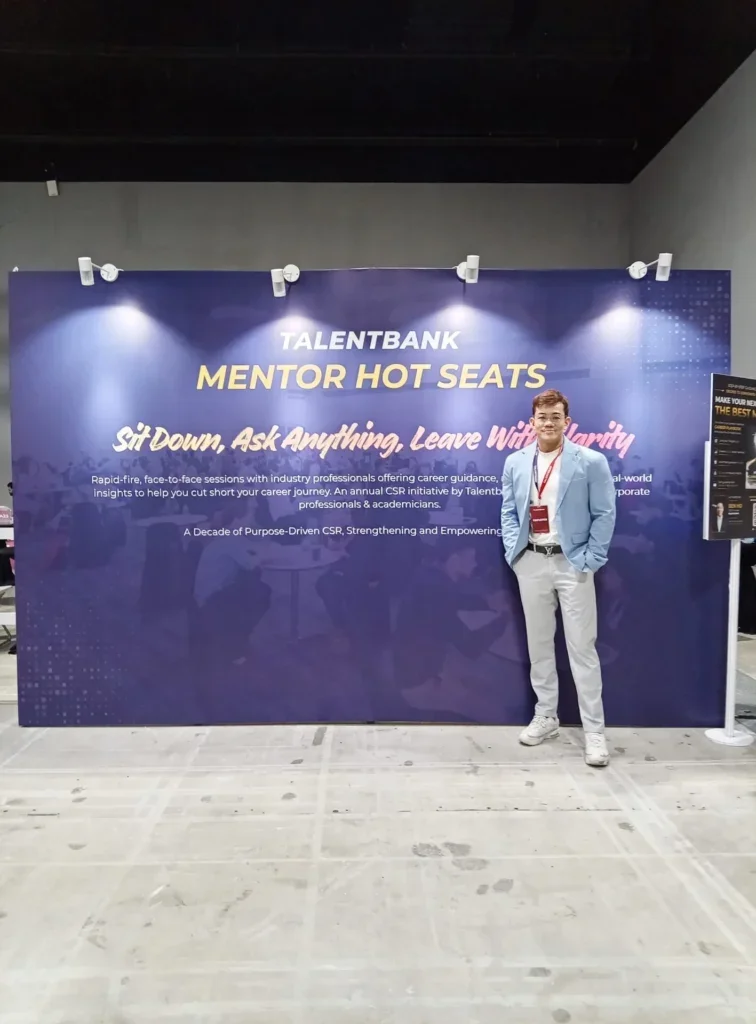
Caption : Talentbank Mentor Hot Seats, where Sebastian’s mentoring journey first began.
In Real Life: When we last featured you, your story was about rebuilding. This time, what caught our attention was something else. Your name seems to keep appearing wherever young people are being developed, whether that’s at career fairs, startup programmes, universities or refugee education initiatives. Did you ever expect this to become such a big part of your life?
Sebastian:
Not at all. If you’d asked me ten years ago what I thought this stage of my career would look like, I probably would’ve talked about leading larger regional teams, expanding businesses or taking on bigger commercial responsibilities. I genuinely enjoy that work, and I still do.
What never crossed my mind was that some of the most meaningful conversations I’d have wouldn’t happen in boardrooms. They’d happen over coffee after a mentoring session, in university classrooms, at career fairs, or sitting across from someone I’d only just met.
The first invitation came from Talentbank. They asked whether I’d be willing to mentor a group of students and young founders. I didn’t spend much time thinking about it. My immediate thought was simply, if something I’d learnt over the years could save someone a few wrong turns, why wouldn’t I?
What surprised me wasn’t the mentoring session itself. It was what happened afterwards.
I remember driving home replaying some of those conversations in my head. I kept wondering whether the student who lacked confidence would eventually apply for the job she’d been talking about, or whether the founder who was questioning his idea had decided to keep building it. I realised I was carrying those conversations with me long after the event had ended. That was probably the moment I knew this was becoming something much more personal than volunteering a few hours of my time.
After that, opportunities seemed to unfold naturally. GMI invited me to mentor founders and young professionals beyond Malaysia. CERTE introduced me to refugee youth and a completely different perspective on resilience and hope. Universities began inviting me to judge innovation competitions and spend time with students who were trying to turn ideas into something real. More recently, I was deeply honoured to be appointed by the Xiamen University Malaysia MBA Centre as a Leadership Fellow under its Business Mentorship Programme and to serve as an Industry Mentor with Asia Pacific University.
None of those were things I sat down and planned. I never had a five-year roadmap that said, “Become a mentor.”
I simply kept saying yes whenever I felt I could genuinely contribute. Looking back, those conversations have grown into mentoring more than a hundred students, founders and young professionals across career fairs, universities and community programmes. It’s still something I never expected, but it’s become one of the most meaningful parts of my journey.
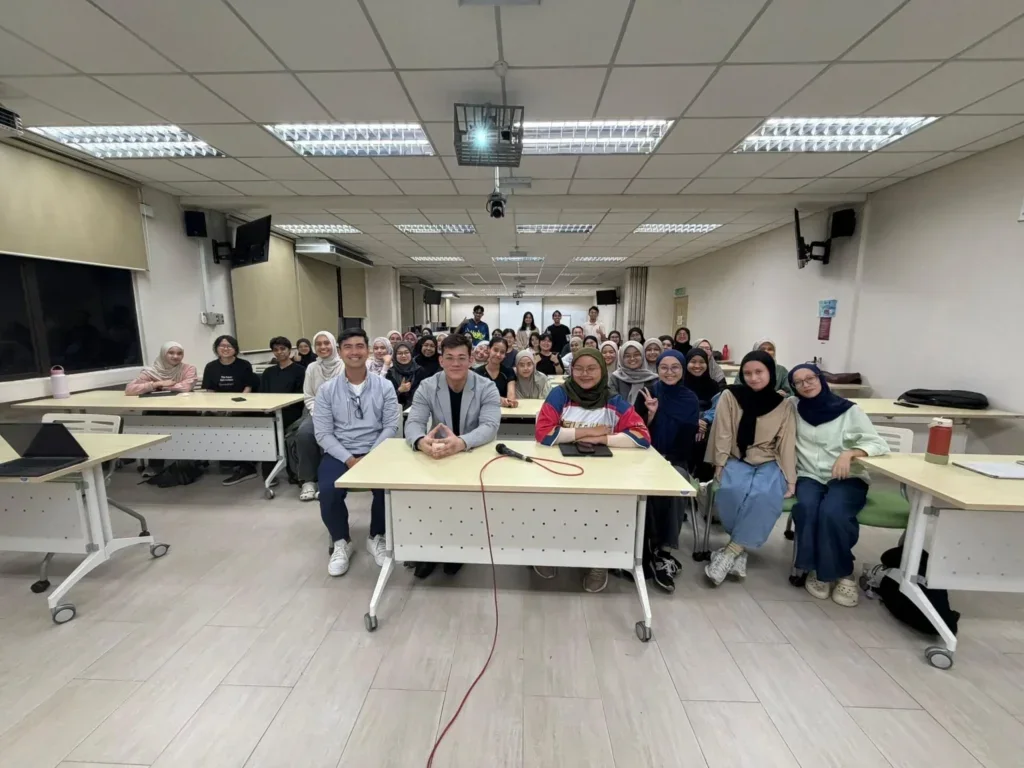
Caption: A mentoring session with university students. Sebastian believes the most meaningful conversations often begin after the presentation ends, when students feel comfortable asking the questions they’ve been carrying for a long time.
In Real Life: You’ve also spent quite a bit of time judging university innovation competitions. What have you taken away from those experiences?
Sebastian:
It’s been one of the most enjoyable parts of this journey.
This year, I had the privilege of working with students at Xiamen University Malaysia, Universiti Malaya, and later serving as a judge for the Southeast Asia Division Contest of the China International College Students’ Innovation Competition 2026 and supporting several other university innovation and design competitions. What I enjoy most isn’t judging the ideas but listening to how students think.
One Final Year Project at UM iFEST was inspired by Attack on Titan. I remember smiling because it wasn’t something I’d expect to see in an academic competition, but it reminded me that younger generations often draw inspiration from places my generation might overlook .They’re willing to explore ideas before knowing whether they’ll work. I think that’s where creativity begins.
Watching students build ideas that are still rough around the edges has been a good reminder for me too. Growth rarely starts polished, and perhaps that’s true not only for startups or innovation, but for people as well.
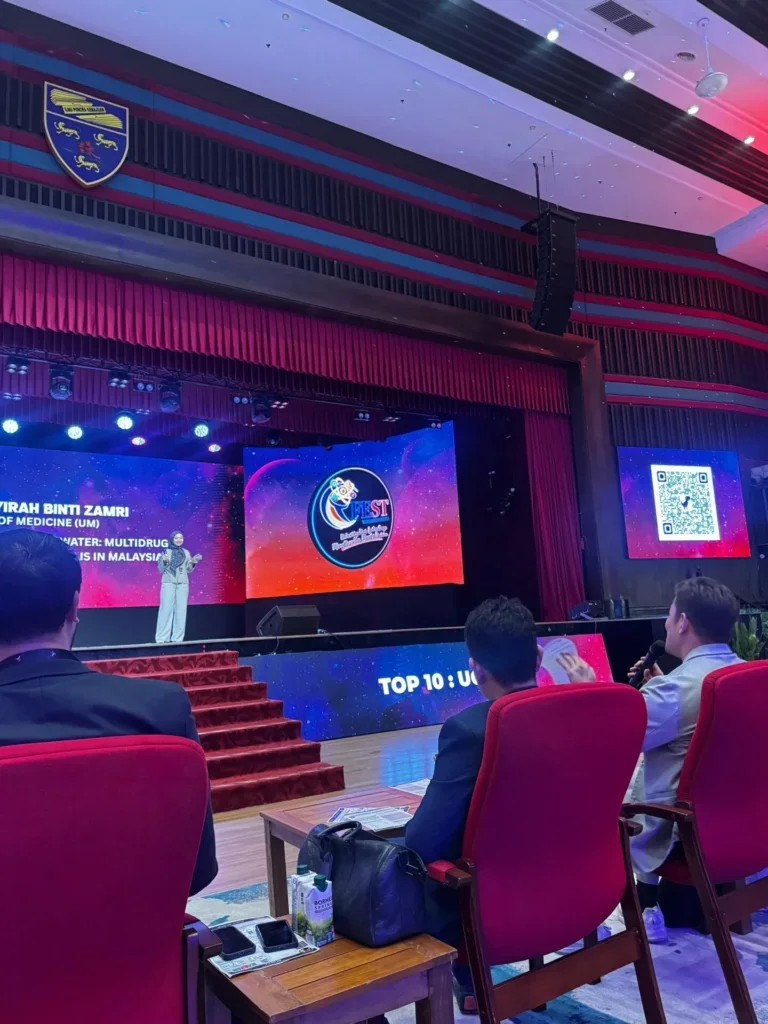
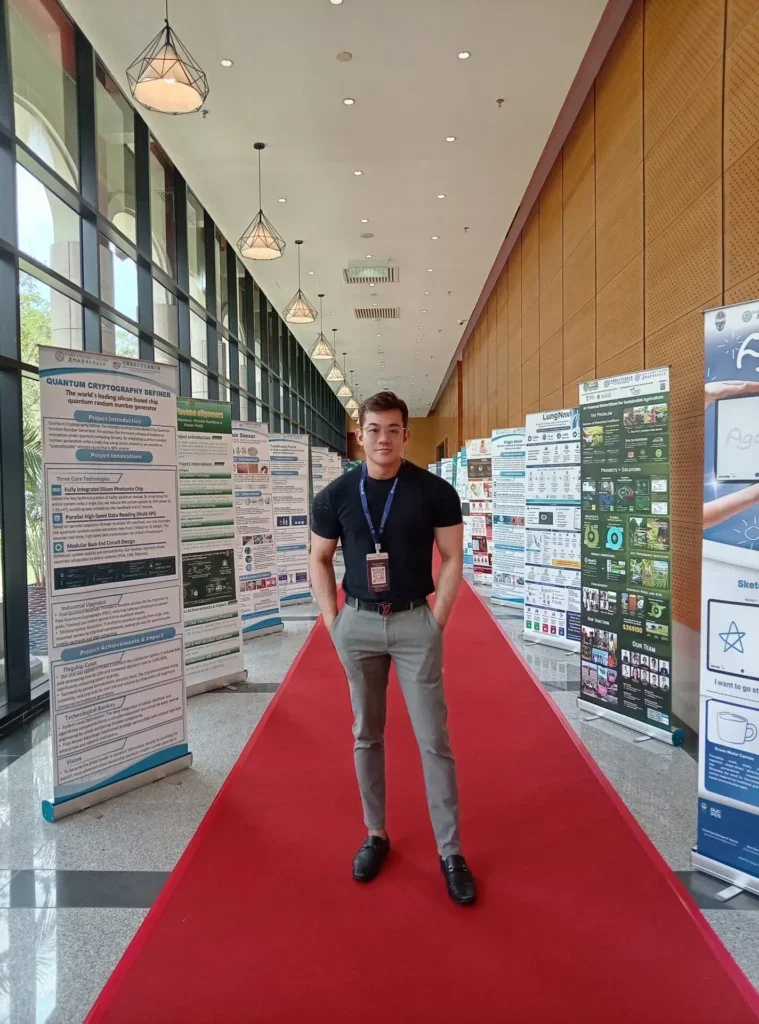
Caption: Sebastian judging and mentoring at university innovation competitions.
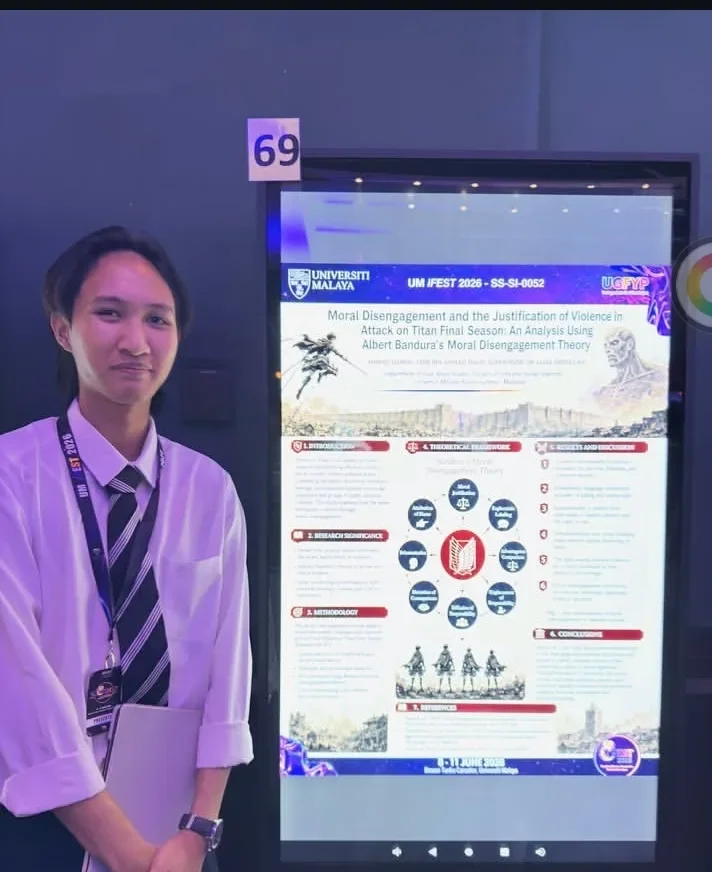
Caption: A student Final Year Project inspired by Attack on Titan, reflecting how creativity often starts in unexpected places.
In Real Life: Listening to you, it sounds like the appointments themselves aren’t what matter most to you.
Sebastian:
They’re meaningful, of course, and I’m genuinely grateful for every one of them because each represents someone’s trust. But I think what touched me more was realising why those opportunities came.
Many of them happened during a season when I wasn’t defined by a big corporate title. People reached out because they’d seen the work I was doing, the consistency of showing up and, hopefully, the impact those conversations were having. That meant a lot to me because it quietly challenged something I’d believed for a long time.
Earlier in my career, I probably thought influence came with position. The higher you climbed, the more people listened.
This past year made me see it differently.
People don’t remember every title you’ve held. They remember how you made them feel. They remember whether you gave your time generously, whether you listened without judging them and whether you genuinely wanted to see them succeed.
I think that’s why this season has been so meaningful. It reminded me that while careers are important, the impact we leave on people often outlasts the positions we hold.
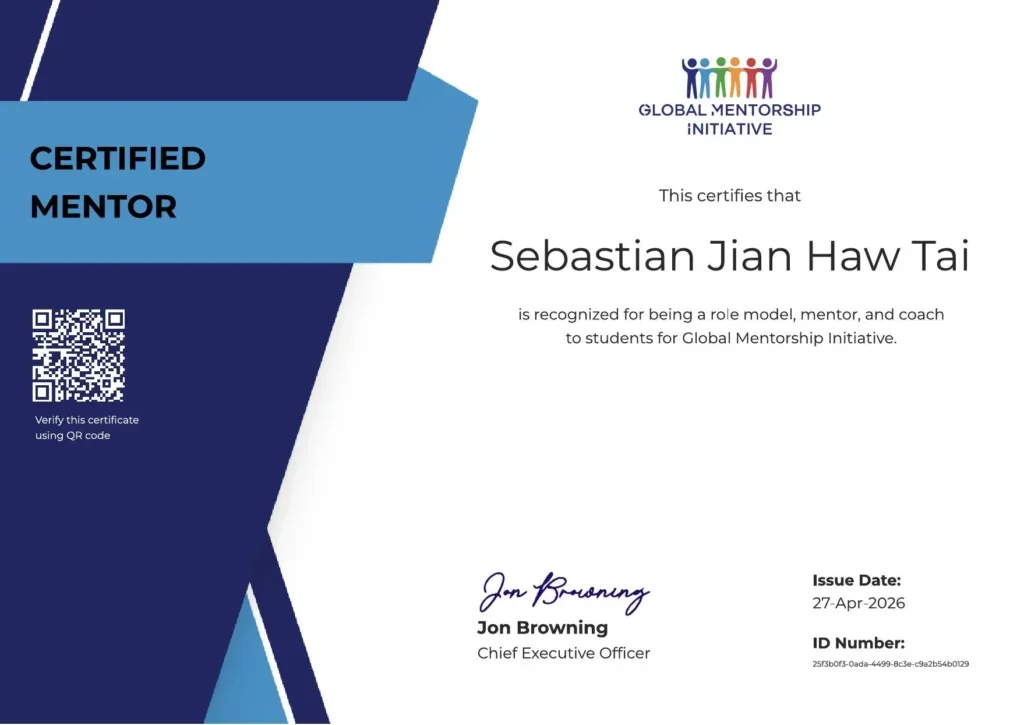
Caption: Certified as a mentor by the Global Mentorship Initiative (GMI), expanding Sebastian’s mentoring journey beyond Malaysia.
In Real Life: You’re still leading digital transformation projects, but at the same time you’re mentoring, judging competitions and even coaching people as a certified personal trainer. Those seem like completely different worlds.
Sebastian:
People laugh when they hear all of that together.
To me, though, it’s always felt like the same work wearing different clothes.
In business, you’re helping organisations transform. In mentoring, you’re helping someone believe they can take the next step. In the gym, you’re helping someone become stronger than they thought they could be.
Different environments. Same purpose.
It took me a while to realise that.
What really surprised me was that while I thought I was helping other people grow, those conversations were quietly changing me too.
In Real Life: Earlier you mentioned something that really caught my attention. You said you thought you were going into mentoring to share your experiences, but somewhere along the way those conversations started changing you instead. What do you mean by that?
Sebastian:
I don’t think I realised it at the time.
Initially, I thought mentoring was quite straightforward. You share your experiences, answer a few questions, encourage people and move on. But after enough conversations, I found myself thinking about certain people long after the mentoring sessions had ended. I’d be driving home replaying what they had shared with me, wondering how they were doing and whether things had become any easier.
When I look back now, there are probably three conversations that have stayed with me more than any others. They involved people from completely different backgrounds, but somehow they all ended up teaching me the same lesson.
In Real Life: Tell me about the first one.
Sebastian:
He was a refugee youth I met through a mentoring programme.
What struck me wasn’t his background. It was the absence of hope.
When I asked him about his future, he didn’t tell me what he wanted to become. He didn’t ask about universities or careers. After a long pause, he quietly admitted that he had stopped thinking too far ahead because he wasn’t even sure whether there was a future worth planning for.
I still remember that silence.
It made me realise how much I had taken for granted. Most students I meet are deciding which opportunity to pursue. He was still trying to believe that an opportunity might exist at all.
We ended up spending very little time talking about careers that day. Instead, we spoke about possibility, resilience and why our circumstances don’t always have the final say over our future. I didn’t leave thinking I’d solved anything for him. But I hoped he walked away believing that his story hadn’t already been written for him.
That conversation changed me because it reminded me that before people need direction, they often need hope. Sometimes the most meaningful thing a mentor can offer isn’t an answer. It’s helping someone believe that tomorrow can be different from today.
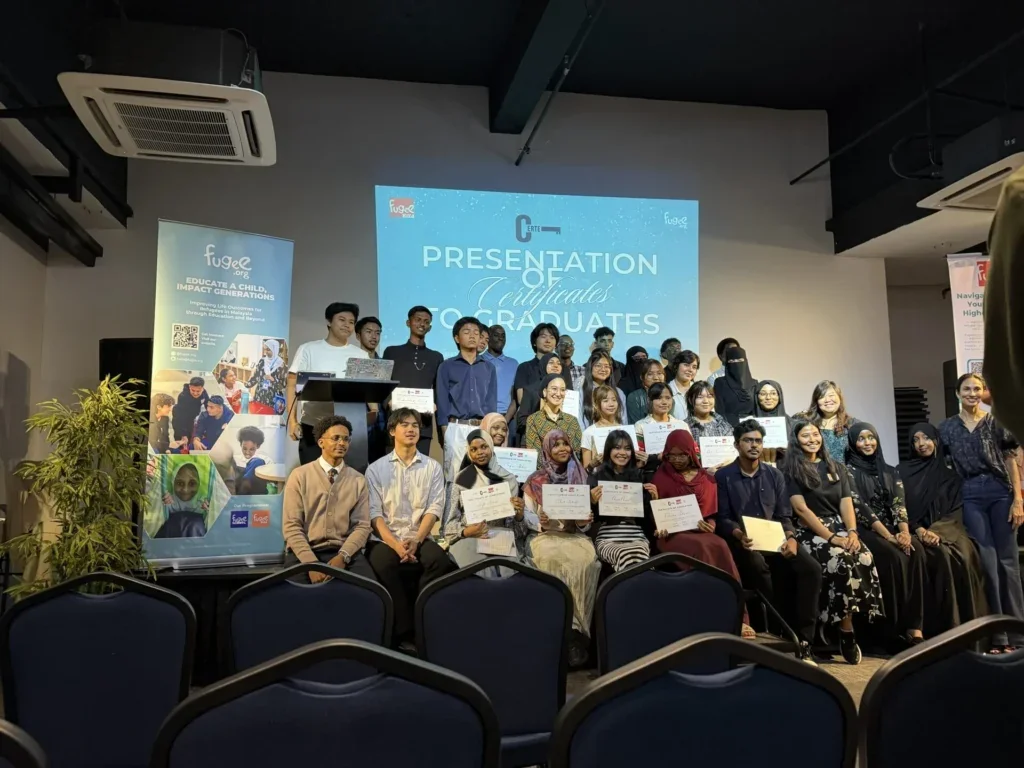
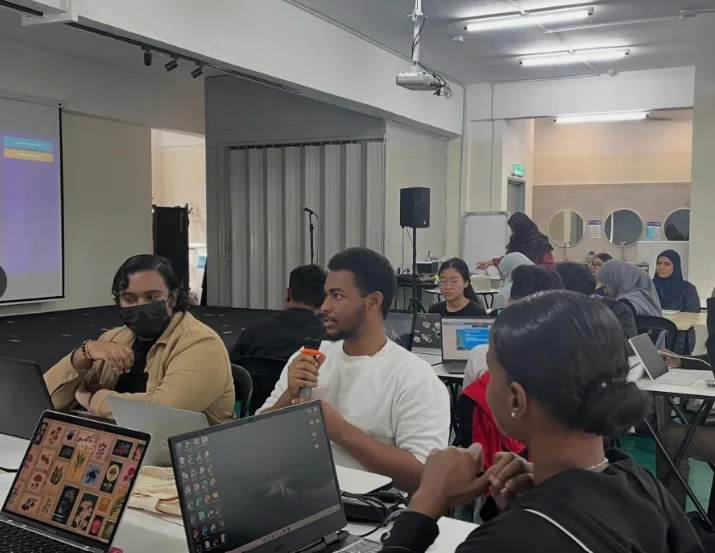
Caption: Working with refugee youth through CERTE, where conversations often begin long before ambition.
In Real Life: Was that the conversation that affected you the most?
Sebastian:
It was one of them, but another one has stayed with me just as much.
He was a university student preparing for interviews. At first he wanted feedback on his résumé and communication skills, but after talking for a while I realised those weren’t really the issue. Every few minutes the conversation somehow came back to the same sentence.
“My English isn’t good enough.”
As we spoke more, he shared that he’d already gone through several interviews without success. Every rejection made him more nervous before the next one. Eventually he stopped believing companies were rejecting his interview performance. Deep down, he started believing they were rejecting him as a person.
I remember asking him, “Who told you that you weren’t good enough?”
He sat there quietly for a while before smiling awkwardly. At first he said, “No one.” Then he looked down and corrected himself.
“Actually… I think I told myself that.”
That answer stayed with me because somewhere between the first rejection and the fifth, disappointment had quietly become his identity.
We still worked on interview preparation, but I realised confidence was what really needed rebuilding. Before we ended our session, I told him something I genuinely believe.
“Don’t let someone else’s decision determine your value. An interview decides whether you’re the right fit for a role. It doesn’t decide your worth as a person.”
A few months later he sent me a message saying he’d finally received an offer. What I remember wasn’t the job title. It was the last line he wrote.
“Thank you for believing in me when I had already stopped believing in myself.”
I read that message a few times before putting my phone down. It reminded me that encouragement is sometimes far more powerful than advice.
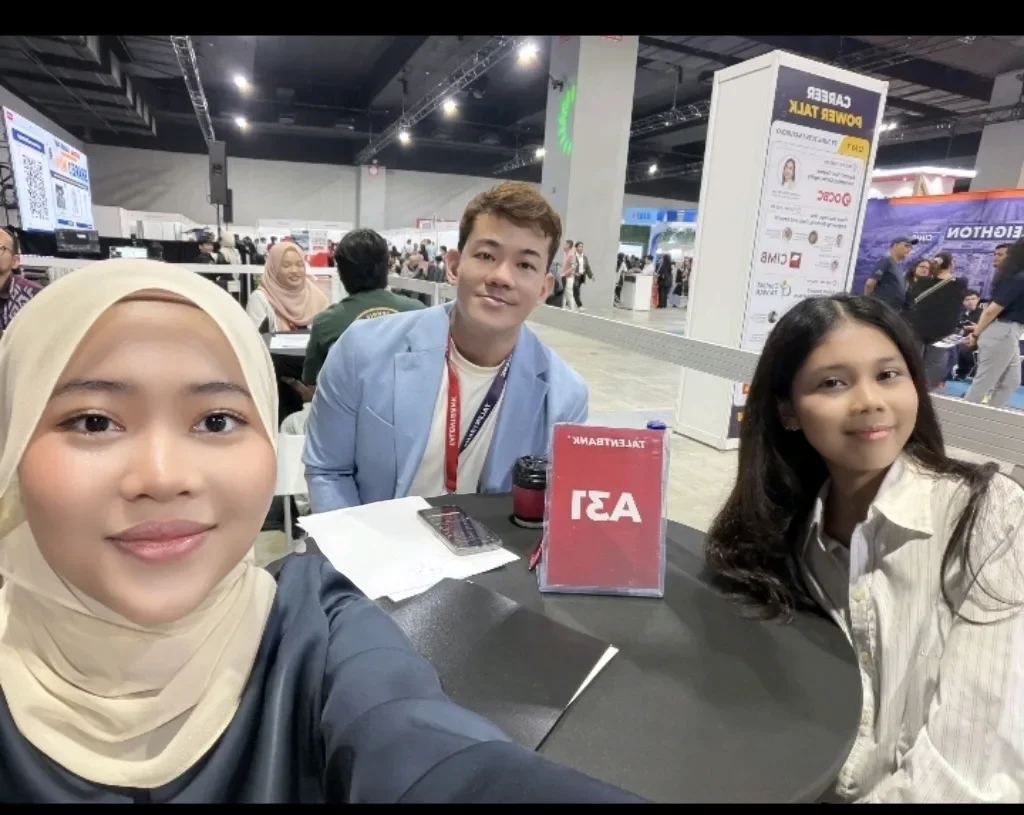 Caption: Conversations with students and job seekers navigating careers, uncertainty, and AI disruption.
In Real Life: And the third person?
Sebastian:
She wasn’t a student at all.
She was an experienced professional who had achieved more than many people would realise. When we first met, we spoke about work, leadership and career progression. It all sounded quite normal until she eventually admitted what had really been weighing on her.
She said she’d slowly begun questioning her own value because she felt she was constantly overlooked. Watching others receive opportunities while she remained unnoticed had convinced her that perhaps she simply wasn’t enough anymore.
I could tell that wasn’t easy for her to say. In fact, I think she’d been carrying those thoughts alone for quite some time.
I remember telling her something that I’ve had to remind myself of over the years as well.
“If you build your confidence on other people’s approval, you’ll always be waiting for someone else to tell you who you are.”
People have preferences. Organisations change. Managers change. Those things are often outside our control.
What remains is our character, our sincerity, the way we treat people and the integrity we bring to our work. Those are things no one can take away from us.
By the end of the conversation she wasn’t asking about promotions anymore. We were talking about self-worth.
That stayed with me because I realised she wasn’t looking for career advice.
She was looking for permission to believe in herself again.
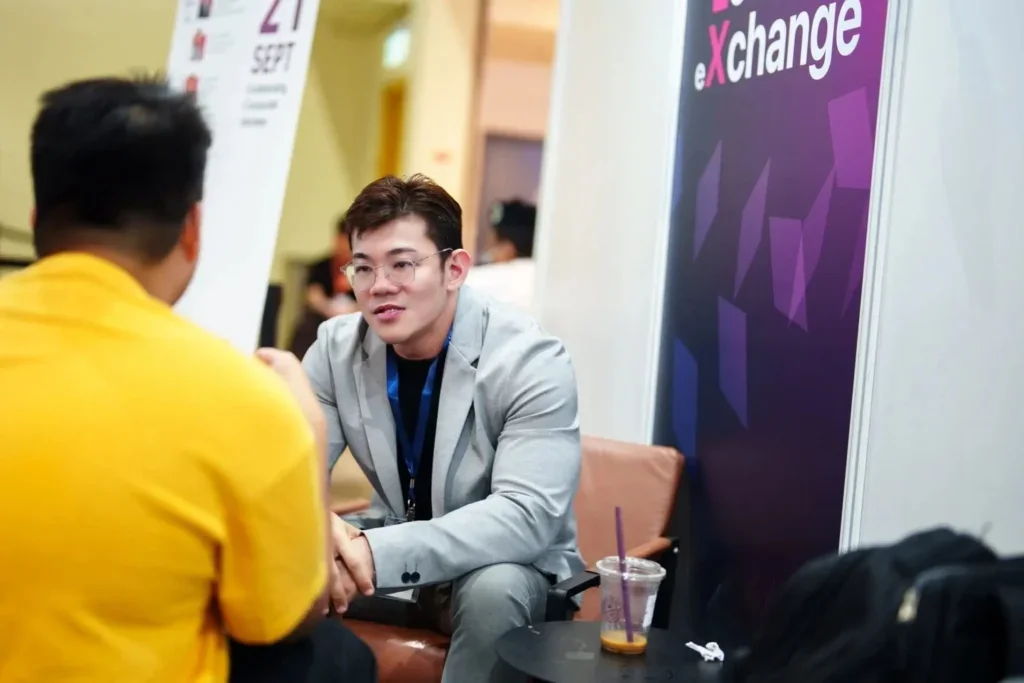
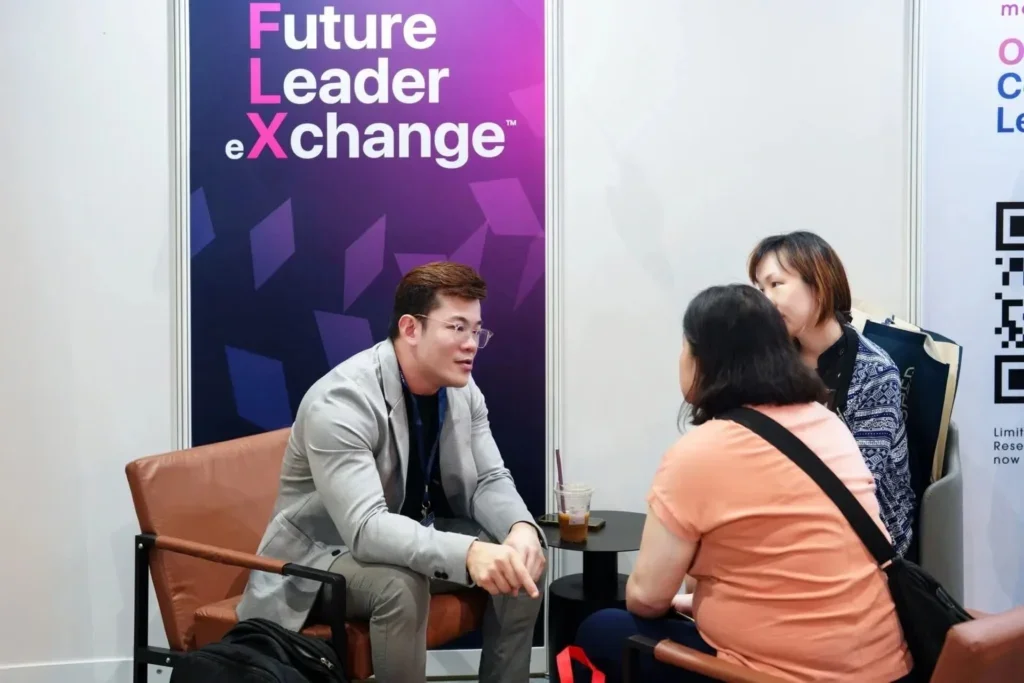
Caption: Mentoring became one of the unexpected chapters in Sebastian’s journey, proving that sometimes the conversations that change others end up changing us too.
In Real Life: It’s interesting listening to those stories together. On the surface they seem completely unrelated, yet they all seem to have left a similar impression on you.
Sebastian:
Exactly.
One was searching for hope.
One had lost confidence.
One had forgotten her own worth.
Different ages, different backgrounds and different life experiences, but after thinking about those conversations again and again, I realised they were all wrestling with the same question, even though none of them actually asked it out loud.
“Do I still matter?”
The more I reflected on it, the more uncomfortable that question became because I recognised it.
Maybe not in exactly the same way, but there were seasons in my own life when I’d quietly asked myself something very similar.
That’s probably why those conversations never really left me.
I thought I was mentoring three different people.
Looking back, I think they were quietly mentoring me too.
SECTION 3 – Seeing the Journey Differently
In Real Life: Listening to everything you’ve shared, it feels like this past year has changed more than just what you do. It seems to have changed how you think about leadership and success as well. Was there something that helped you make sense of it all?
Sebastian:
There actually was, and it’s probably not the answer people would expect.
Not too long ago, someone shared a perspective on the biblical story of Joseph that I’d never heard before.
The sentence was very simple.
“Joseph’s journey wasn’t only upward. It was outward.”
To be honest, I wasn’t very familiar with Joseph’s story before that. I’d heard people mention Joseph before, but I’d never really stopped to think about it. That one sentence made me curious, so I went home and read the story for myself.
What struck me wasn’t that Joseph eventually became one of the most powerful people in Egypt. It was everything that happened before the palace.
Whether he was serving in Potiphar’s house or helping fellow prisoners interpret their dreams, he was already serving people long before anyone recognised him for it. The palace didn’t suddenly give Joseph a purpose. It simply revealed what had already been happening all along.
I remember sitting with that thought for quite a while because, without realising it, my mind kept going back to the conversations we’d been talking about earlier.
The refugee youth.
The graduate.
The experienced professional.
Until then, I’d treated them as meaningful mentoring moments. Suddenly, I saw them differently.
Maybe this past year wasn’t only about building my career or giving back through mentoring.
Maybe it was quietly shaping me into a different kind of leader.
In Real Life: Do you think that’s why you’ve continued saying yes whenever another mentoring opportunity came along?
Sebastian:
I think so.
People ask me quite often how I manage to balance work, mentoring and everything else that’s happening. The truth is, I don’t always have the time. Like everyone else, I have deadlines, commitments and days when I’m exhausted.
But every now and then I’ll receive a message from someone I met months ago.
Sometimes it’s a graduate telling me they’d finally found the courage to apply for a role after months of self-doubt. Sometimes it’s a founder saying they decided not to give up. Sometimes it’s just a simple message saying, “Thank you for listening.”
Those messages are usually only a few lines long, but they remind me why I keep saying yes.
When I first started mentoring, I genuinely thought I was helping other people rebuild their confidence or navigate their careers.
Looking back now, I think those conversations were quietly rebuilding something in me as well.
In Real Life: This year has also been a year of recognition. You were named among DMAT’s Top 20 Digital Leaders, received the Global Recognition Award, and continued receiving invitations from universities and organisations. Did those recognitions change how you viewed your own journey?
Sebastian:
I don’t think they changed it.
I think they helped me understand it.
Receiving recognition is always encouraging because someone has taken the time to acknowledge your work. I’m genuinely grateful for that.
What surprised me was that two completely different recognitions seemed to be pointing towards the same idea.
Being recognised among DMAT’s Top 20 Digital Leaders wasn’t only about digital transformation. One of the things that meant the most to me was that it recognised leadership not just for driving business outcomes, but also for creating meaningful social impact.
Then, when I received the Global Recognition Award, one sentence in the citation really stayed with me.
“Sebastian Tai exemplifies the kind of leadership this award was designed to honour because his ability to drive commercial results while simultaneously investing in communities and the next generation of professionals sets him apart as a genuinely exceptional recipient.”
I remember reading that sentence a few times because, until then, I’d always thought my corporate work and my mentoring journey were two separate parts of my life.
Suddenly, they didn’t feel separate anymore.
Whether I’m helping an organisation navigate digital transformation, mentoring a student, supporting refugee youth or coaching someone as a personal trainer, I’ve realised the work has always been about transformation.
The setting changes.
The people change.
But the purpose has quietly remained the same.

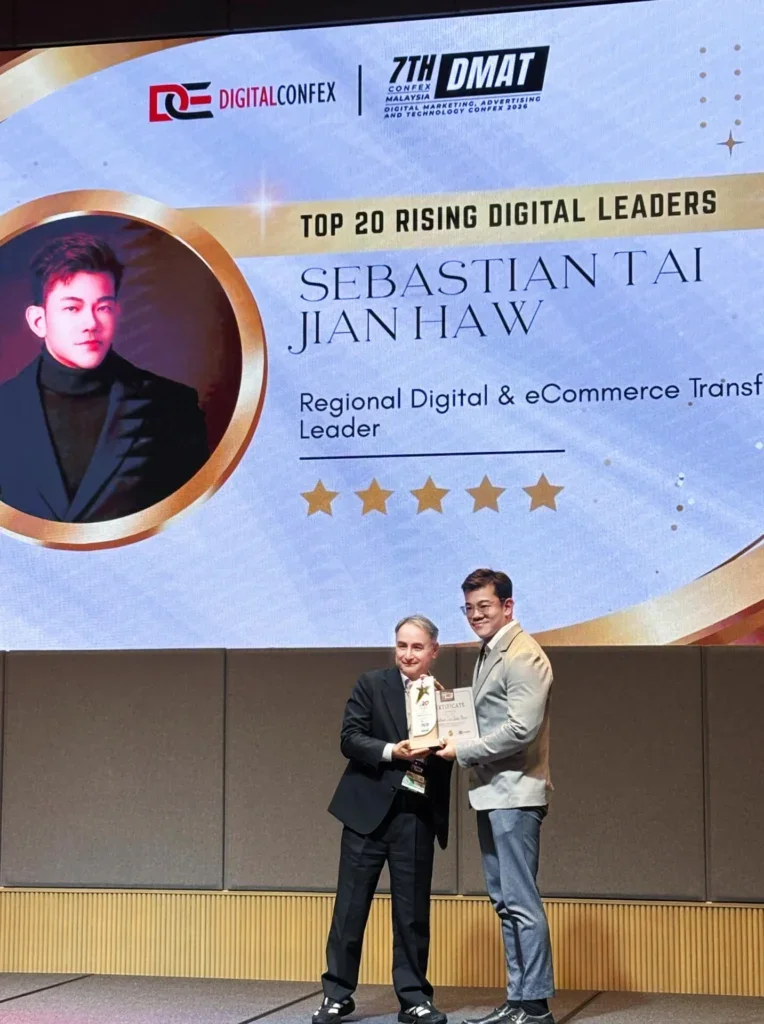
Caption: Recognition that reflects not only business performance, but contribution to the wider ecosystem and next generation.
In Real Life: Looking back now, if you could say one thing to the Sebastian we interviewed a year ago, what would it be?
Sebastian:
I’d probably tell him not to rush.
When you’re rebuilding your life, it’s very easy to believe your worth depends on getting back to where you used to be. I understand that feeling because I’ve lived it.
What I didn’t know then was that some of the most meaningful work I’d ever do wouldn’t happen because of another title or another promotion. It would happen through conversations that no one else would ever see.
I started mentoring because I thought I had experiences that might help other people.
What I never expected was that, somewhere along the way, they would help heal parts of me too.
If there’s one thing this past year has taught me, it’s that influence doesn’t begin when someone gives you a title. It begins whenever you’re willing to invest in another person’s life.
So if people remember me one day, I honestly don’t hope it’s because of a position I held or an award I received.
I hope it’s because, for a small part of their journey, they felt seen.
They felt heard.
And they left believing a little more in themselves than when we first met.
I think that’s a life worth living.
About Sebastian:
Sebastian Tai Jian Haw is a digital transformation and eCommerce leader, mentor, and ecosystem contributor. He continues to collaborate with universities, organisations, and communities in youth development, innovation, and underserved ecosystems. He welcomes meaningful conversations and collaborations via LinkedIn.
Submit your story to ym.efillaerni@olleh and you may be featured on In Real Life Malaysia.
Read also: ‘I gave up my family to pursue my dreams’ Shares 34 YO M’sian woman – In Real Life
‘I gave up my family to pursue my dreams’ Shares 34 YO M’sian woman
More from Editor Picks

I was targeted by the Dead Monkey Highway Scam in Perak
On the highway from Ipoh to KL, a senior couple and their adult daughter were beset by a strange man …

“Goodbye Malaysia, I Wish You Well” Former M’sian Who Gave Up Citizenship Says It Was Not About Money
He was the kind of Malaysian who stood at attention when the national anthem played on morning television. His family …
“TNR Can Be Done By Anyone” How KL Condo Residents Are Solving The Stray Crisis
While the national conversation about stray animals in Malaysia keeps cycling between outrage and blame, residents in condominiums across the …

A Dining Table In My Bra?” M’sian Woman Walks Out With Full Refund After
My husband and I had just finished renovating the house we bought in Subang Jaya. I was out buying the …