





My CEO trusted me early, granting me access that most people didn’t get. I figured out fast that decisions from the top are the only ones that matter. I was 24, handling client lists and rate cards with responsibility for daily operations in a startup of thirty people.
It came with a lot of responsibility and was treated as normal. I read my power and responsibilities as recognition. I delivered results and was paid well. That felt like the agreement.
It took me a while to understand that access and trust weren’t always the same thing.
The guy I couldn’t stand
Rizal was an engineer. Good at his job in a way that made him hard to ignore. I had to work with him constantly, and we did not get along. Every meeting had a kind of pressure before it even started. He was stubborn in that engineer way, where he already had the right answer and was waiting for everyone else to catch up. Working with him felt like banging my head on a locked door.
Still, we got things done by building a working truce. Avoid when possible. Cooperate when necessary. No warmth, no friendliness. Just function, sustained by a strip of Panadol Extra I kept within reach.
But Rizal had habits that didn’t fit the version of him I kept in my head. He remembered my birthday, how I liked my tea and favourite kuih. It annoyed me more than it should have, because it didn’t match the story in my head about him.
He also did the things that HR liked to talk about. Where they talked about culture, Rizal built things that looked like it. He built an interdepartmental pickleball league, and organised team lunches that pulled people from different functions together. He also remembered coffee preferences and birthdays. I just found him professionally unbearable.
One coffee I did not take
About a year in, my CEO asked me for coffee after work. Just the two of us. I said no. It wasn’t complicated. I didn’t want blurred lines in a place where everything already depended on informal trust and constant interpretation. I had seen enough of those situations go wrong. He looked disappointed for a moment. Or maybe I read it that way. It passed quickly enough that I didn’t dwell on it.
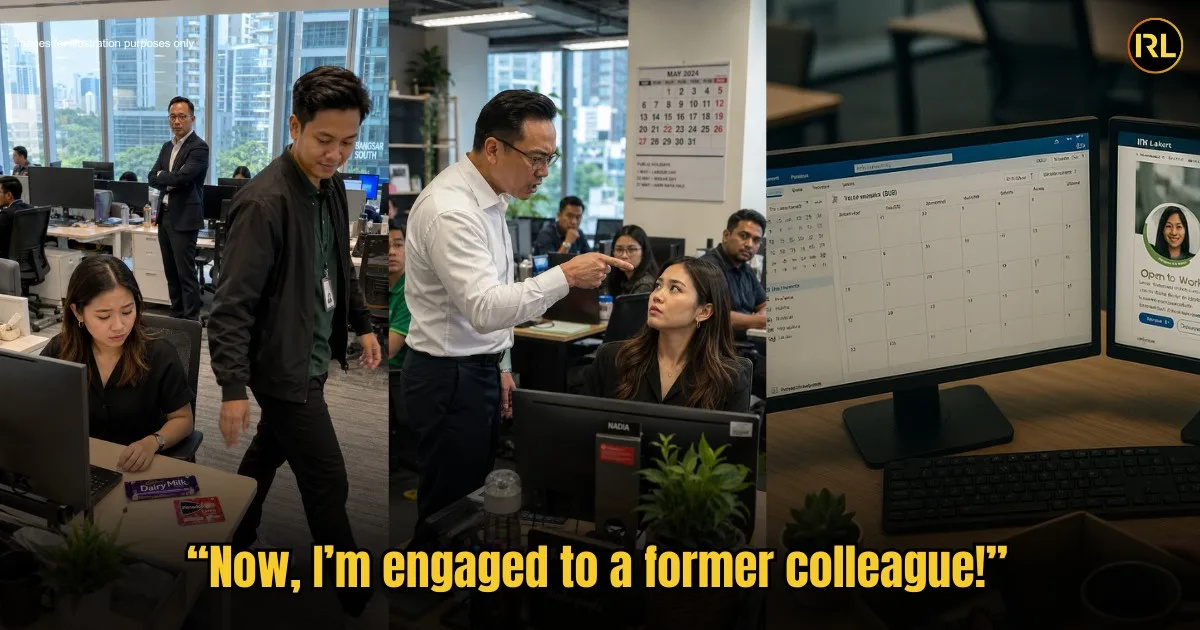
Later that afternoon, Rizal glided past my desk and dropped a chocolate bar and a strip of Panadol Extra. He paused, like he wanted to say something, then gave me a nod. I said thanks. He smiled his usual easy smile and carried on. I didn’t know what to make of it. He treated it like it was nothing.
Across the room, I caught my CEO looking over. Not long. Just enough to notice. When I looked back, his expression had already changed. I didn’t think much of it at the time.
Watching it happen
Not long after that, the CEO’s behaviour towards Rizal shifted: Rizal had become useful and inconvenient at the same time. It was a series of decisions that pointed in the same direction. His access was removed in stages. Projects reassigned without clear handover. Deadlines suddenly tied to him on projects he’d never worked on.
Then his calendar emptied. No projects or meetings. Just empty space. He got the message, updated his LinkedIn, and got two interviews in less than a week. He paid out the remainder of his notice period and was gone the following Monday.
The office changed quietly for the worse. HR tried to keep the pickleball league going. It just faded away. Lunch groups became smaller and more predictable. People stopped buying snacks to share in the pantry.
I noticed his absence more than I expected to.
He messaged first
A few months later, Rizal sent a polite, neutral message like he was testing if our old friction was there. We talked slowly at first, then more easily. A few months passed and we realized that our conflict and animosity were driven by the CEO pitting us against each other behind the scenes.
We met for coffee. Then pickleball, because that was a shared language we didn’t have to overthink. Outside of work, he was the same person without the office tension. I found myself genuinely laughing at his jokes. There was no clear shift or moment where we changed direction. It just stopped feeling like work.
A few months later, we were on my couch watching Cyberpunk Edgerunners. My cat had claimed the space between us like she belonged there.
We started dating a week later. We had a year of quiet before my CEO found out.
What he actually said
He didn’t call me into his office. He did it in front of everyone in the open plan office. “Traitor” was one of the words he used. “Security risk” was another. He said I had breached confidentiality by dating someone who worked at a competitor.
Rizal had left almost two years earlier. That detail didn’t matter in how he framed it. Proximity and association did. In the tech industry, where companies sit close enough that people move between them constantly, the line was always blurry. But he treated it as a clear betrayal.
There was no policy to point to. HR stayed quiet. No clause covered it. He actually said that I “should know better than to date among the competition.” He expected access to my personal life because I was part of his trusted inner circle.
I pushed back. Said my performance hadn’t changed and pointed out my most recent evaluation that he had signed off as “Exceeded Expectations.” He repeated himself, louder, but the contradiction didn’t need explaining.
He had asked me for coffee once. I said no. A year later, when I had a boyfriend, I was a security risk.
I didn’t say that out loud. We both understood.
The slow sidelining
After that, work just stopped arriving in the same way. Responsibilities were reassigned quietly. A lot went to people and interns who weren’t ready for it. Meetings continued but my involvement shrank until I was a silent observer. He actually said, “Don’t talk to her about it, she doesn’t need to know.”
I went to lunch alone a lot more. I’d seen this pattern before. Saw it happen to my boyfriend, and two other project leads. People came in, lasted a few months, then left once they understood how things really worked. One Senior Project Manager arrived, felt the tension in the office and resigned the same day.
I stayed functional. Kept working and maxed out my training budget, getting every certification I could. Eventually I was staring at my completely empty calendar. I updated my LinkedIn and prepared.
I left first
I took a job at a competitor. Three buildings away. The irony was obvious. The same CEO who framed my relationship as a security risk ended up with me working in another company right next door.
My relationship with Rizal would never have survived the manipulative micromanagement and emotional scrutiny dressed up as leadership. By driving Rizal out, my former CEO thought he was removing an obstacle. What he actually removed was the workplace that kept us at each other’s throats. Instead, we gained the time and space to figure each other out.
Rizal still organizes pickleball. I still laugh at his jokes more than I probably should. We still work in Bangsar South, albeit in different buildings. Looking back, I think we started with a chocolate bar and Panadol Extra left on a desk. I still find that funnier than I probably should.
We’re engaged.
I’m still not inviting him.
Submit your story to ym.efillaerni@olleh and you may be featured on In Real Life Malaysia.
Read also: ‘I gave up my family to pursue my dreams’ Shares 34 YO M’sian woman – In Real Life
https://inreallife.my/i-gave-up-my-family-to-pursue-my-dreams-shares-34-yo-msian-woman/
‘I gave up my family to pursue my dreams’ Shares 34 YO M’sian woman
More from Office Drama
A Dining Table In My Bra?” M’sian Woman Walks Out With Full Refund After
My husband and I had just finished renovating the house we bought in Subang Jaya. I was out buying the …
“They made me sign an NDA after they fired me,” shares Malaysian woman
This story is about a Malaysian woman who did everything by the book, but her company's response was to let …
“I deleted all their access and 100s of files,” shares M’sian freelancer.
This story is about a freelancer who was fired after asking for fair pay, only to discover his former employer …