



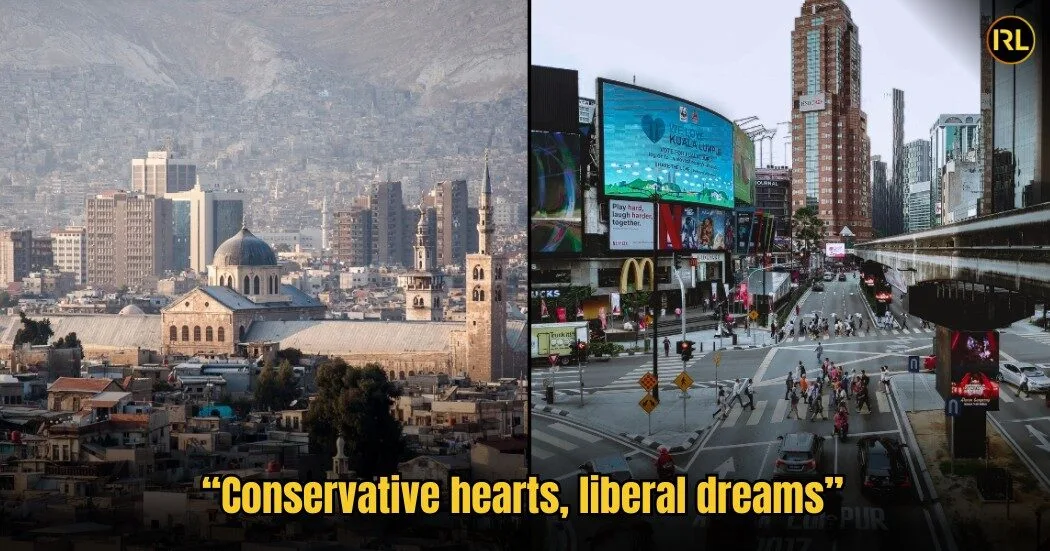
This story is by a Syrian woman who shares her experiences of two parts of Asia that don’t often get compared—Malaysia and Syria.
As someone who’s lived between both worlds, I find myself constantly drawing lines between cultures, seeing the places where they meet and the spaces where they clash.
This story is a reflection on how Malaysia and Syria stack up when it comes to liberalism and conservatism, and how, despite their differences, they share a beating heart rooted in family, community, and resilience.
Shared Roots in Community and Family
Let’s start with what brings us together. Despite being thousands of kilometers apart, Syria and Malaysia share cultural values that feel deeply familiar: a strong emphasis on family, the importance of hospitality, and a communal way of life that shapes every decision.
“In both places, you don’t really exist as just an individual—you’re part of a larger fabric. Your family, your neighborhood, your reputation, they all follow you around like shadows,” I often say to friends when they ask what Syria is like compared to Malaysia.
Growing up in Syria, family meant everything. And in Malaysia, I’ve found that same reverence. It’s in the way people talk about their parents, the way gatherings are centered around food, the sense that you’re never really alone. This cultural common ground offers comfort—it’s the part of Malaysia that has always made me feel at home.
Religion and Public Space: Malaysia’s Complex Landscape
Religion is a defining thread in both countries, but Malaysia handles it in ways that can feel more visible and institutionalized. While Syria is largely secular in its governance—at least in theory—Malaysia officially recognizes Islam as the religion of the federation, and Islamic norms often influence public life and law.
“You feel it in how people dress, how businesses operate, and even in how women are expected to present themselves,” I explained to In Real Life Malaysia when asked about daily life in Kuala Lumpur.
Yet, this visibility can be both empowering and restrictive. On one hand, Malaysia has state-funded Islamic bodies, halal regulations, and syariah courts for Muslims. On the other, this can create tension for religious minorities or even for Muslims who want to live more liberally.
In Syria, even though the country is majority Muslim, religion often stays behind closed doors. Public life isn’t as deeply entwined with religious codes—at least, not officially. But that doesn’t mean Syria is more liberal; in fact, there’s far less tolerance for religious diversity or open expression in some contexts.
Gender and Expression: A Tale of Two Conservatisms
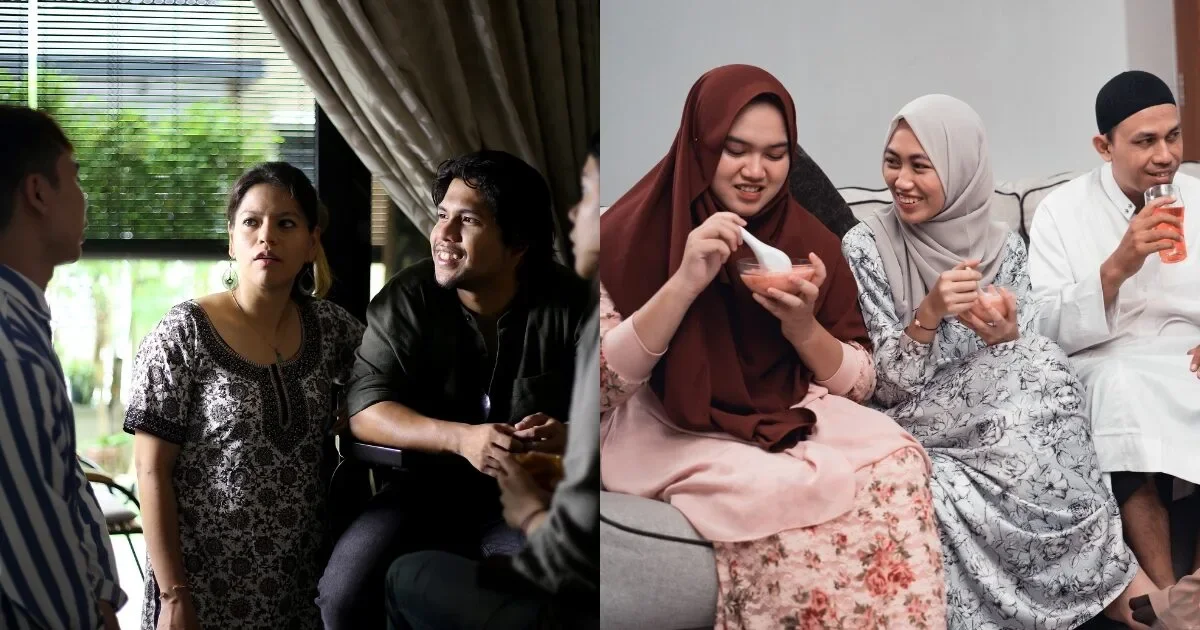
When it comes to gender roles and personal expression, the comparison gets tricky. Malaysia can feel both more open and more conservative than Syria, depending on where you stand.
In Syria, there’s a kind of silent permission to exist outside the lines—especially in urban areas. I’ve seen women smoke in cafes, wear what they want, and speak their minds in ways that can feel bold compared to what’s expected in certain Malaysian communities.
“But Malaysia surprises me too,” I explain to a Malaysian friend. “There’s this undercurrent of youth-led activism, especially among women, queer folks, and creatives, that feels very alive and brave.”
Still, Malaysia has its red lines. Public displays of affection are taboo. LGBTQ+ rights remain limited, and there are real legal and social consequences for stepping outside gender and sexuality norms. In Syria, LGBTQ+ issues are mostly invisible—often erased altogether—while in Malaysia, they’re fought for, even if at great risk.
Freedom of Speech and Political Climate
Malaysia offers more space for public discourse than Syria, especially after the Arab Spring and the ongoing civil conflict. In Syria, censorship is not just common—it’s expected. Criticizing the government can be life-threatening. Fear is woven into everyday speech.
“In Syria, you learn to speak in code. There’s always this invisible line you know not to cross,” I explain to a Malaysian friend.
In contrast, Malaysia, with all its political complexities, still allows room for dissent, especially online. Students lead protests. NGOs call out corruption. Journalists still report with a sense of urgency, even if they’re sometimes silenced. The presence of civil society here, however fragile, is still something powerful.
Yet, the fear of backlash exists in both places just in different ways. In Malaysia, the threat may come in the form of lawsuits, sedition charges, or religious policing. In Syria, the threat can be far more final.
Young People as the Pulse of Change
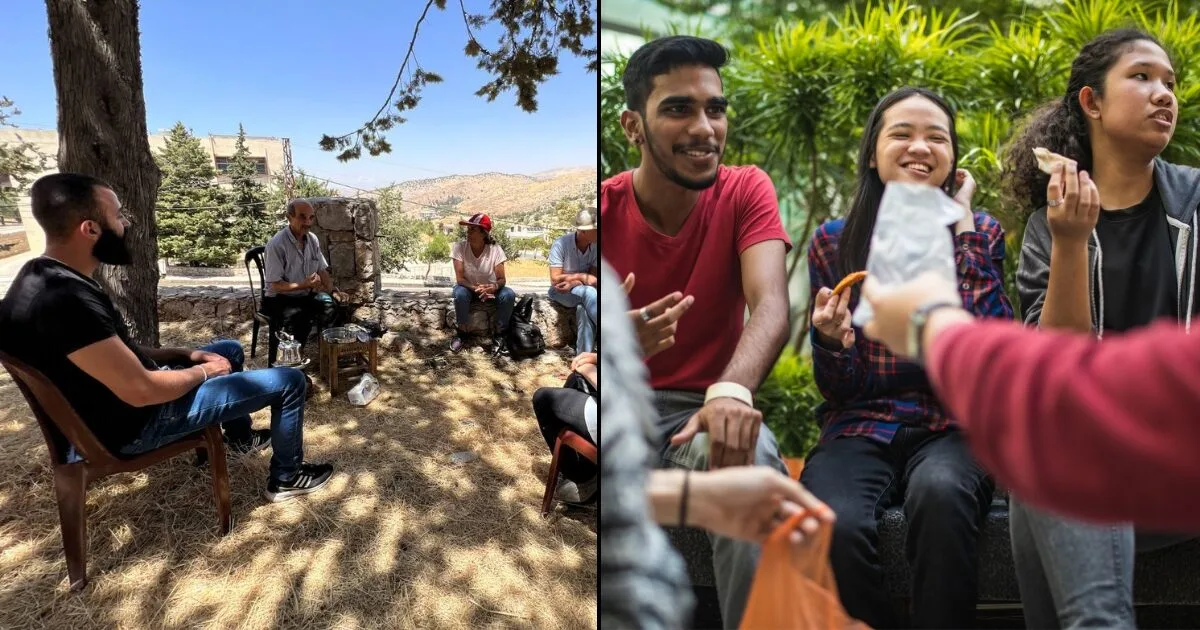
What gives me hope in both countries is the youth. Whether it’s Syrian creatives making art from war-torn cities or Malaysian students leading protests for fair elections and climate justice, there’s a fire that refuses to go out.
“As someone in my early 30s, I feel connected to this generation of thinkers and doers. We may be navigating different systems, but the desire is the same: to be heard, to be free, and to build something better.”
Malaysia might be more liberal in how it holds space for activism, education, and public dialogue. Syria, for now, holds its dreams in quieter corners. But in both places, young people are imagining futures beyond what they’ve inherited.
In the end, comparing Syria and Malaysia isn’t about deciding which is “better.” It’s about understanding how culture, politics, and personal freedom collide in different ways.
Both countries are navigating their own struggles with tradition, modernity, and identity. And for those of us who live in between, it’s a delicate dance—one that constantly teaches us about resilience, hope, and the power of community.
Have a story to share?
Submit your story to ym.efillaerni@olleh and you may be featured on In Real Life Malaysia.
Read also: I Earn RM15,000 Monthly as a Designer After Teachers Said I’d Have No Future – In Real Life
I Earn RM15,000 Monthly as a Designer After Teachers Said I’d Have No Future
More from Opinion
“Why Should I Cover My Tattoos To Get The Job?” Teacher Questions Dress Code in Malaysia’s Private Education Sector
This opinion piece is shared by a teacher who challenges the idea that tattoos should be covered up and calls …

“I’m not a Man!” Woman Who Is Constantly Mistaken For a Man in M’sia Shares Her Daily Struggle
This story is a user submission about one woman’s experience of being called a man in an MRT restroom, shining …
“Puasa Kan Kena Hormat?” What’s The Etiquette in M’sia for Eating in Public During Ramadan?
In this opinion piece, In Real Life contributor Nazmie shares his personal reflections on Ramadan in Malaysia. Every year, as Ramadan …