







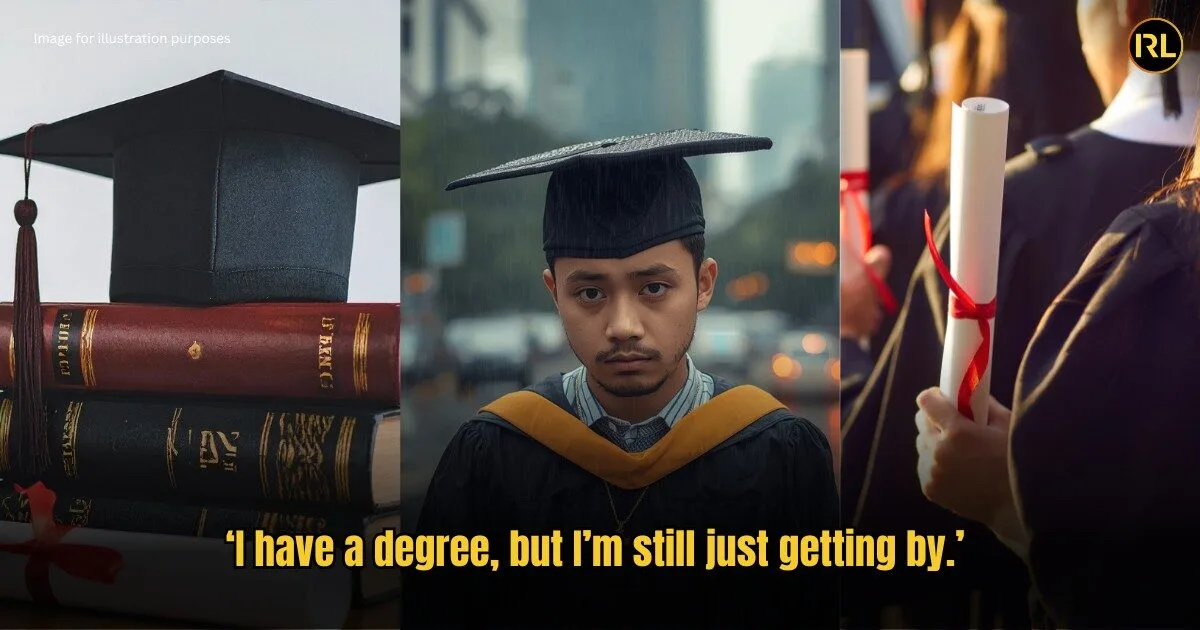
This story is about a Malaysian graduate navigating big dreams in a job market where a degree no longer guarantees a future, and survival often comes before success.
In the gleaming towers of Kuala Lumpur and across the verdant landscapes of Malaysia’s quieter states, a silent crisis brews behind closed doors and glowing computer screens. These are not the stories of the unskilled or unmotivated but of the educated, the ambitious, and the dreamers.
They are graduates with scrolls in hand and hopes in heart, yet many are left grappling with a brutal truth: there simply aren’t enough jobs that match their qualifications. In a country that has invested billions into education reform and scholarship programs, the rise in unemployment among degree-holding Malaysians is not just an economic hiccup it is a systemic contradiction.
Reform and the Path Forward
According to recent data from the Department of Statistics Malaysia, the number of unemployed graduates has hovered between 170,000 to 200,000 annually in the past few years.
These are not just figures. These are individual engineers working as delivery riders, IT graduates managing cafes, and economics majors applying for customer service positions that barely touch the surface of their capabilities. The paradox is haunting: a nation striving for a knowledge-based economy, yet producing talent it cannot absorb.
Reform and the Path Forward
The root of the issue is complex, woven into the fabric of Malaysia’s education system, job market, and shifting economic priorities.
Over the past two decades, private universities and colleges have mushroomed, often producing more graduates than the job market can realistically absorb.
On paper, Malaysia boasts a growing percentage of tertiary-educated citizens. In reality, employers continue to report that fresh graduates often lack the soft skills, critical thinking, or practical experience required in a competitive global economy.
The result? A disconnect between the classroom and the boardroom.
Reform and the Path Forward
But let’s not lay all the blame at the foot of academia. The labor market itself is undergoing a quiet revolution. Traditional jobs are shrinking as automation and AI redefine entire industries. Entry-level roles in law, media, and even medicine are being streamlined.
At the same time, new jobs—many in digital and gig economies—are emerging, often in forms that older generations neither understand nor trust.
Many parents still equate success with government positions or corporate stability, not realizing that their children may be better off freelancing in UX design or running e-commerce startups.
This cultural lag in accepting non-traditional careers also pushes many graduates to pursue roles they neither like nor thrive in, simply to conform.
Reform and the Path Forward
There’s also the elephant in the room: wage stagnation. Even when degree-holders secure jobs, the pay rarely justifies the years of education, student loans, or personal sacrifice.
It’s not uncommon for fresh graduates to start at RM2,000 to RM2,500 a month—barely enough to cover rent, food, transport, and student loan repayments in urban centers.
With inflation rising and job security on shaky ground, many feel stuck in a cycle of survival rather than growth.
For some, especially in B40 communities, education once represented a ladder out of poverty.
Today, it often feels like a weight pulling them back in.
Reform and the Path Forward
And yet, amidst the gloom, there’s a growing wave of self-made success stories. A generation of young Malaysians are defying the old playbook, turning to entrepreneurship, the arts, tech innovation, and social enterprise.
Some have traded their degrees for digital dreams becoming YouTubers, digital marketers, or app developers. Others have joined NGOs, gone into farming, or opened home-based businesses.
They are rewriting the narrative, not waiting for the system to change but challenging it from the outside. The government too, has begun to respond, albeit slowly offering upskilling programs, gig economy incentives, and soft-skill development courses through initiatives like MyFutureJobs and PERKESO.
But whether these efforts will bridge the widening gap between education and employment remains to be seen.
Reform and the Path Forward
Ultimately, the question Malaysia must face is this: are we equipping our youth with skills for the world as it was, or the world as it is becoming?
As the country steps forward into its digital and global future, it cannot afford to waste the talents of its most educated citizens.
The scrolls they hold should be passports to opportunity, not paper shields against disappointment. Until the system shifts from classroom syllabi to boardroom mindsets Malaysia’s brightest minds may continue to graduate into a fog of uncertainty.
And that, perhaps, is the real tragedy: not the lack of jobs, but the loss of potential.
Write in. Tell your story. Get paid.
Share your story on our Facebook page and you may become a contributor for In Real Life Malaysia.
I Made Sure My Ex-husband Lost Everything After He Cheated On Me With A 21 Year Old Influencer
More from Real People

“I only wanted to help him stand up again” Elderly Man’s Kind Gesture Ends in Debt and Gambling Fallout
A well-intentioned act of kindness quickly turned into a heartbreaking lesson about the dangers of debt and online gambling after …
“I Was In Tears” shares Activist who Rescued Elderly Man From Run-down House
This story is about a Malaysian activist who rescued an elderly man allegedly locked inside a dilapidated home in Kelantan …

‘A RM100 fee cost a company 5 years of revenue’ shares M’sian
This story is about a Malaysian who learned that bureaucracy can be defeated simply by not arguing with it.A billing …