



In this interview, IRL speaks with former Oil & Gas C-level executive Ainee Cha on how she built a successful career in a male-dominated industry without compromising her values, and how she eventually found her way to become a mindfulness meditation teacher.
Ainee Cha began her career in a non-technical role at a small downstream oil and gas company, where she quickly discovered the challenges of operating in a space dominated by technical experts and strong personalities.
Through resilience, strategic thinking, and emotional intelligence, she rose through the ranks and, by the age of 36, became a partner in her own oil and gas consultancy and the youngest lady President of the American Society of Heating, Ventilation, Air-Conditioning Engineers (ASHRAE), Malaysia Chapter. Now a leadership coach, Ainee shares her hard-earned insights into working with — not against — male peers, making difficult decisions, and navigating leadership while staying grounded.
IRL: What was it like starting out as a young woman in a male-dominated industry? Were you bullied by the men?
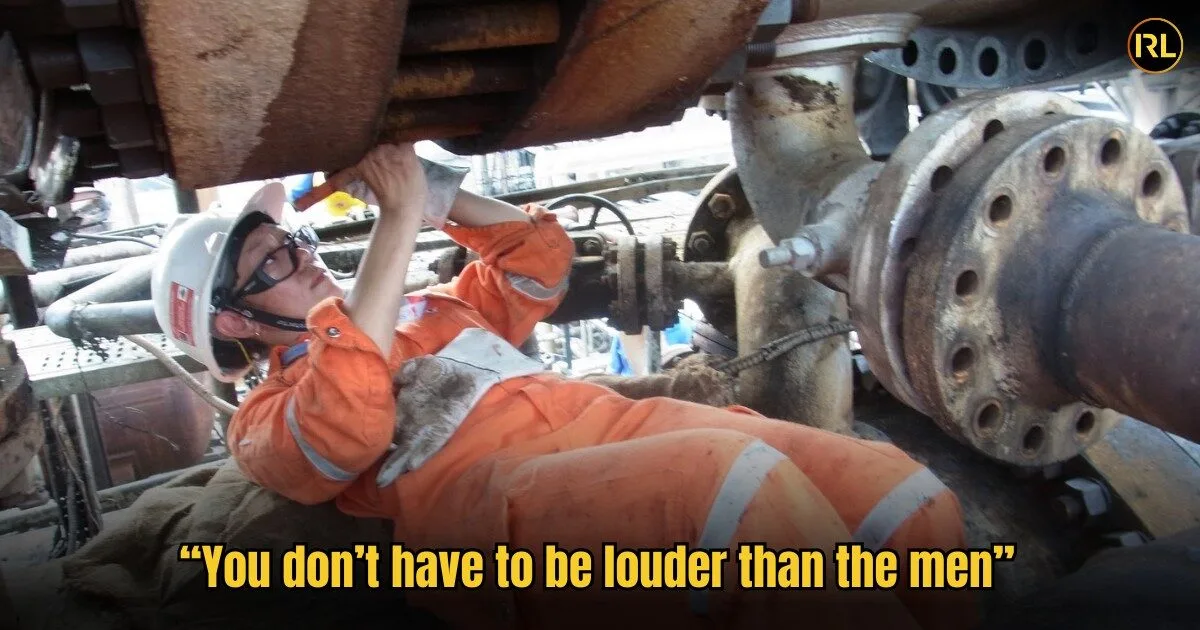
Ainee: There were moments I felt unseen — not because I wasn’t capable, but because I was different. As a young woman stepping into a field where experience often came with grey hair and deep voices, I had to learn to hold my ground quietly. I wasn’t bullied, but I did feel the weight of assumptions.
But instead of resisting it, I listened. I learned how things were done, how they communicated, and what they valued. And from there, I built trust. I didn’t need to be louder. I just had to be consistent, curious, and present. That made all the difference.
IRL: What have you learned about working with male peers?
Ainee: One thing I’ve learned is that if you approach someone with curiosity rather than competition, you’re more likely to be received. I would ask for advice or insight, not to appear weak, but to allow collaboration. When people feel seen and valued — regardless of gender — they tend to respond with openness.
Men, like anyone else, want to feel trusted and respected. I learned to meet people where they are, to listen for what was unsaid, and to lead with empathy even in technical environments. That made me relatable and respected.
It’s not about fighting with men or women alike.. It’s about learning how to navigate their egos. You can ask a man for help, and he will happily help, instead of competing with him to do the difficult task. Sometimes they’ll point you in the right direction, so you don’t have to figure it all out alone. When I ask, I often get, “You can contact this person,” or “He’s the one with the answers.” That’s so much easier.
IRL: Do you get any men who assume you know less than they do?
Ainee: Yes, that happens — especially in technical settings, where there can be an underlying assumption that I might not “get it” right away. But I’ve learned not to react or rush to prove myself. I observe, I listen, and I let the quality of my work — and the depth of my questions — speak on my behalf.
In the early stages, I often asked for help or advice. Not because I wasn’t capable, but because it allowed for connection. When you’re not trying to compete, people feel less need to compete with you. The guard comes down. There’s more openness.
And over time, that dynamic naturally shifts. Once you’ve earned trust and established your presence, people see you differently. I’ve come to understand that growth isn’t about dominating a space to be seen — it’s about showing up fully, doing the work well, and letting your presence create its own gravity.
IRL: What does it mean to be a female leader in a room full of men?
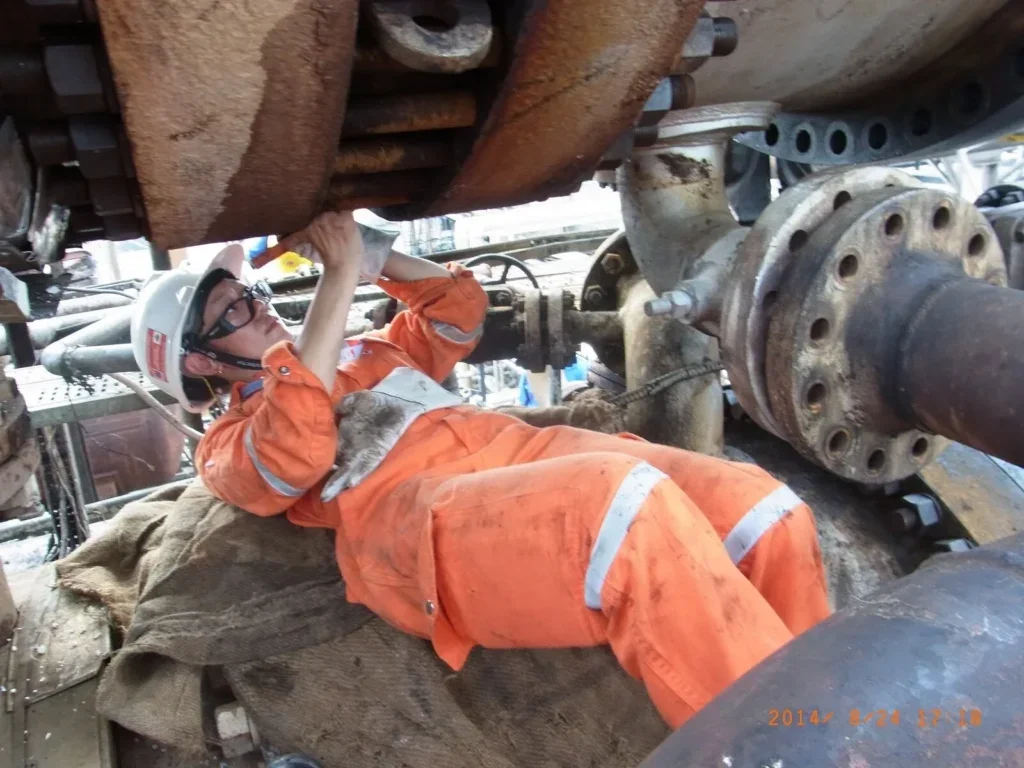
Ainee: It means walking into a room anchored in who you are, rather than who you think you should be. I’ve always found strength in softness — in knowing my value and leading with presence. You don’t need to overpower a room to lead it. Leadership isn’t just about knowledge and skill — those can be learned. In fact, your knowledge is replaceable. To survive in a male-dominated field, you need curiosity, people skills, and the ability to earn respect. Your attitude and personality matter. It’s about developing rapport and mutual respect, not overpowering anyone. I kept showing up — grounded, prepared, and kind. Eventually, even skeptics listened.
IRL: How do you develop rapport and mutual respect with men?
Ainee: Respect is a two-way bridge. I didn’t try to “win over” anyone. I just focused on doing my work well, listening deeply, and not taking things personally. I also made space for their knowledge. I would say, “You know this well — can you walk me through it?” And often, that shifted the dynamic. People open up when they feel valued. Over time, relationships were built not from pushing, but from showing up with steadiness and sincerity.
IRL: Can you talk about a tough decision that challenged your values?
Ainee: One of the hardest decisions I’ve had to make was letting someone go. I’ve always valued people — I see the human behind the role. And I recognise that I have a compassionate heart, shaped by my own journey. I know what it’s like to struggle, to climb the ladder, to work just to put food on the table. So when someone isn’t meeting the required skills or knowledge, even if the bigger picture calls for it, it’s not easy to say, “I’m sorry, I have to let you go.”
That decision challenged something deep within me — not just my values as a leader, but my values as a human being. Because my compassion doesn’t come from theory. It comes from lived experience. I’ve been there. That’s why it hurts.
But I’ve learned that compassionate leadership sometimes means making difficult choices with clarity and kindness — not avoiding them. I choose to honour the person, not just the position. And in those moments, I remind myself: it’s possible to lead with both heart and responsibility.
IRL: When you make those decisions, do you ruminate on them?
Ainee: I do, but not for long. If I’m clear it’s the right decision, I move on. But it’s tough to execute. My advice to those who have to be in my position is, don’t carry all the responsibility on your own — it’s a decision by the board, by management. You’re just executing. But in whatever way you can, help ease that process. Stay grounded. Many of us fall into that soft spot when someone asks for a chance. It’s hard to say no — we’re people pleasers. But you can’t please both management and subordinates.
Yes, I do reflect — I feel deeply — but I’ve learned to trust the clarity that brought me to that choice. I give myself space to feel, then gently release the weight. Mindfulness has taught me to be with discomfort without being consumed by it.
IRL: How do you stay emotionally balanced when you’re caught between difficult decisions and the expectations of others — especially when both sides are pulling at your values?
Ainee: Balance begins with awareness — not just of our outer responsibilities, but of our inner world. As leaders, we’re often caught between the expectations of top management and the real, lived experiences of our team. It can feel like being stretched thin, pulled in two directions. And I’ve been there — more times than I can count.
I learned this the hard way. I’ve lost myself in the process — in the striving, the proving, the serving. I was so focused on getting it all right that I forgot to check in with me. And each time, I’ve had to find my way back. That’s where mindfulness became not just a practice, but a lifeline.
Mindfulness is the art of noticing — becoming aware of your thoughts and emotions without pushing them away, and without letting them take over. When I feel that inner tension — the weight of expectations, the discomfort of a tough decision — I pause. I bring my attention inward. Am I feeling guilt? Sadness? Resistance? Naming those emotions softens their grip and shifts how I relate to them.
That’s where clarity comes in. You can still be firm in your decisions — but you lead with softness, not sharpness. You take ownership, but you don’t carry it all alone. You acknowledge the human experience — in yourself and in others.
Mindfulness teaches us we don’t have to react from emotion; we can respond from awareness. And that changes everything. It brings compassion back into leadership — without losing clarity, direction, or yourself.
IRL: How do you juggle leadership demands with personal and family obligations?
Ainee: In my early career, I wore “being available all the time” as a badge of honour. I would put my kids to sleep and start working again at 10 p.m. I thought I was doing it all. But eventually, I realised: I was giving to everyone but myself.
It comes down to letting go of self-expectations. We’re not machines — we’re human beings with emotions, rhythms, and limits. Everything is about balance. When we try to juggle it all, we get clouded. We overthink. But when we learn to be fully present — to focus on work when we’re working, and to truly be home when we’re home — something shifts. That presence takes emotional and mental discipline, but it brings clarity and ease.
Now, I live by one principle — be where your feet are. When I’m with my children, I’m not half-scrolling or checking emails. When I’m at work, I bring full focus. That’s what presence looks like for me — and presence, not perfection, is what brings balance.
IRL: How do you stay present?
Ainee: It’s a daily practice. I breathe, I check in with my body, I slow down. I’ve learned that I can’t pour from an empty cup — and I can’t model healthy leadership if I’m always overwhelmed. So now, self-care isn’t optional — it’s essential.
IRL: What does “time for yourself” look like now?
Ainee: Time for myself these days means giving myself permission to slow down without guilt. It could be a long weekend where I don’t work at all — just space to breathe, reflect, be with nature or loved ones, or simply do nothing. And when I do need to work, I approach it with clarity. I ask myself, What truly needs my attention right now? and What can wait? I no longer carry the weight of everything at once. That spaciousness — even if it’s just a few mindful pauses in the day — feels like a quiet reclaiming of self.
IRL: Can you share more about suppressed emotions?
Ainee: As women — especially in leadership or caregiving roles — we’re often expected to keep it all together. But I’ve learned that suppressed emotions are the silent weight we carry – silent killer!. They don’t just disappear. They get buried… and then they leak — into our tone, our relationships, our health, our ability to lead with presence.
For a long time, I kept pushing through, telling myself, “I’m strong, I can handle this.” But unacknowledged pain doesn’t stay buried forever. It finds its way out — sometimes in moments we least expect.
Now I do something different. I let the emotions surface. I create space to feel what’s really there. And then I start peeling back the layers — gently, without judgment. Sometimes it’s sadness. Sometimes it’s old fear, or guilt, or grief I didn’t even know I was carrying. But each layer brings me closer to truth.
This practice isn’t weakness — it’s wisdom. When we can sit with our emotions, breathe with them, and allow them to move through us, we lead with more clarity, compassion, and integrity.
So if there’s one piece of advice I can offer from all I’ve lived through:
Don’t hold it all in. Let it surface. Peel the layers. That’s where healing — and real strength — begins. We don’t need to hold it all in. We need to start peeling back the layers. Talk about it. Vent. Showing vulnerability isn’t weakness — it’s authenticity.
IRL: That’s powerful. So, it’s really about being in tune with yourself?
Ainee: Absolutely. Self-awareness is a form of leadership. When you know your values, your limits, and your patterns, you stop reacting and start responding. You lead not just from the mind, but from the heart. That’s how we lead without losing ourselves.
For me, sustainable success isn’t about titles or being the smartest in the room — it’s about remembering who you are while the world keeps changing around you.
I’ve walked through male-dominated spaces, high-stakes leadership roles, and moments where I almost lost myself trying to meet expectations that weren’t mine. What kept me grounded wasn’t external validation — it was My why. My purpose. My values.
When you’re deeply connected to your why, leadership becomes less about proving and more about serving — from a place of clarity, not burnout.
This is what I now help others uncover in my coaching work: your inner compass. Because when you’re anchored in that, you don’t have to sacrifice your well-being, your softness, or your soul to succeed.
Whether you’re navigating a leadership transition, stepping into a bigger role, or simply feeling the pull to realign — start by asking:
What truly matters to me?
What kind of leader — and human — do I want to be?
The answers are already within you. Sometimes you just need space to hear them.
IRL: That’s profound. Have you ever had to mentor someone who was going through a very tough time mentally — perhaps dealing with family issues that affected their work — and how did you support them through it, especially if they were close to a nervous breakdown?
Ainee: Yes, many times. As a coach, I’ve walked alongside women who were on the edge of burnout — overwhelmed by work, motherhood, expectations, and the quiet pressure to hold it all together. One client in particular stands out. She is a doctor. And as she was returning to the workplace while juggling three young children, with no family support. She believed — as many of us are conditioned to — that this was just how life was supposed to be. That we just needed to “toughen up” and get through it.
But when we began working together, something shifted. Through mindfulness and gentle, compassionate inquiry, we started peeling back the layers of stress and survival mode. She began to see that her emotional exhaustion wasn’t weakness — it was a signal. And that her thoughts, which felt so heavy, weren’t facts — they were patterns, and they could change.
We worked together through guided meditations, somatic awareness, and deep coaching conversations. She began to reconnect with herself — not just as a mother or a doctor, but as a whole person. I witnessed her rediscover joy, presence, and inner stillness. She started to notice beauty again — in simple moments. And she told me, “I never thought this kind of peace was possible.”
For me, this is the heart of my work — guiding people back to themselves when they feel most lost. I don’t offer quick fixes. I offer space. Safe, grounded space to feel, to reflect, and to rewire the relationship with the self. Because healing begins with awareness. And from there, we can lead, love, and live with more clarity and grace.
IRL: That’s inspiring. How did you wind up becoming a life coach?
Ainee: I never set out to become a life coach or mindfulness coach. In fact, I spent over two decades in engineering and leadership roles in the Oil & Gas industry — navigating high-pressure environments and, often, the quiet loneliness of being one of the few women in the room. On paper, I was successful. But something in me had started to ache for more.
The real turning point came when I lost my grandmother. Her passing shook me in a way I didn’t expect. It stirred something deep — a longing to reconnect with what truly matters, and a realization that life is too fragile to live on autopilot. Around the same time, I was dealing with the declining health of my mother-in-law and witnessing stress ripple through every area of my life.
I started questioning the definition of success I had been living by — one that demanded constant strength and productivity, but rarely made space for softness or truth. That’s when mindfulness entered my life — not as a trend, but as a way of life. It gave me permission to slow down, to feel, and to come back to myself.
Through years of practice, healing, and deep study, I found my calling: to support others — especially women — in rediscovering their own voice, their own truth, and their own version of success. Becoming a coach wasn’t a career move; it was a soul decision. A return to what I believe we all need more of in this world: space to be seen, heard, and held as we grow.
IRL: What do you do to help your clients as a coach?
Ainee: At the heart of everything I offer — whether in coaching, teaching, or guiding meditations — is mindfulness. I’m a certified Mindfulness Meditation Teacher, trained under Jack Kornfield and Tara Brach, and my approach is rooted in the practice of awareness — of thoughts, emotions, patterns, and the body.
I support my clients in reconnecting with themselves by creating a space that feels safe, grounded, and deeply compassionate. Together, we peel back the layers — the overthinking, the self-judgment, the “shoulds” — to uncover what’s really going on beneath the surface.
Through a combination of mindful inquiry, reflective coaching, somatic practices, and guided meditations, I help my clients notice their internal landscape with more clarity and kindness. This isn’t about fixing — it’s about remembering: who they are, what they value, and how they want to live and lead.
Many of the women I work with come to me during moments of transition — burnout, leadership shifts, motherhood, or emotional overwhelm. My role is to walk alongside them, offering tools for emotional resilience, inner stability, and the kind of presence that changes not only how we lead, but how we live.
If anyone reading this feels like they’re carrying too much or losing sight of themselves, you’re not alone — and you don’t have to do it alone. Coaching isn’t about being told what to do — it’s about being supported as you remember your own strength, and come home to who you truly are.
“To all the women in leadership reading this —
You are not here to lead like anyone else.
You are here to lead like you — with heart, with depth, and with a courage that doesn’t roar, but roots.
May you remember:
You don’t need to hold it all together to be powerful.
Your tenderness is not a liability — it’s your leadership.
“The world doesn’t need you to be tougher.
It needs you to be true.
Lead from that place — and watch the world soften in your presence.”
With grace and solidarity,
Ainee Cha
Ainee Cha: Global Speaker, Mindfulness & Leadership Expert, Mental Health Advocate

Ainee Cha is a globally recognized speaker and certified mindfulness teacher, known for leading with heart. With over 20 years of experience across engineering, leadership, and wellness, she empowers individuals and organizations through spiritual resilience, emotional intelligence, and mindful leadership. Ainee is the Global Wellness Day Ambassador of Nepal and a passionate advocate for women in leadership, healing, and transformation. Her work weaves ancient wisdom into modern life — helping others pause, breathe, and live with purpose. You can learn more or reach out at www.aineecha.com or connect with her directly through Instagram or LinkedIn (@aineecha). She also offer complimentary discovery sessions for those curious to explore this journey.
📲 Connect with Ainee
🌐 Website: www.aineecha.com
📧 Email: moc.liamg@ssenllewdnimtraeh.olleh / moc.liamg@gnihcaocefil.ahceenia
📞 WhatsApp / Contact: +60 11 16361776 / +64 21 2016704
🔗 LinkedIn: linkedin.com/in/aineecha
📸 Instagram: @aineecha
📘 Facebook: facebook.com/ainee.cha
🎥 YouTube: youtube.com/@aineecha
🎤 Podcast Guest Inquiries: DM or email directly
Have a story to share?
Submit your story to ym.efillaerni@olleh and you may be featured on In Real Life Malaysia.
Read also: “We Have The Talent, We Have The Brains,” Shares Dr. Maha, Founder of Malaysian Science Newspaper The Petri Dish – In Real Life
More from Workplace
M’sian Game Artist Shares How Boss’ Karting Hobby Became ‘Mandatory’ Team Building Exercise
This story is about a young employee who learned that “team building” isn’t always about teamwork. Sometimes, it is about …
‘I thought I was being friendly’ shares M’sian who learned a hard workplace lesson
This story is about a Malaysian who learned that good intentions do not override personal boundaries at work.What felt like …
‘How one tech lead shut down office drama without saying a word,’ shares Malaysian tech worker
This story is about a Malaysian who watched professionalism quietly dismantle performative workplace power.In a KL tech office, facts, documentation, …