





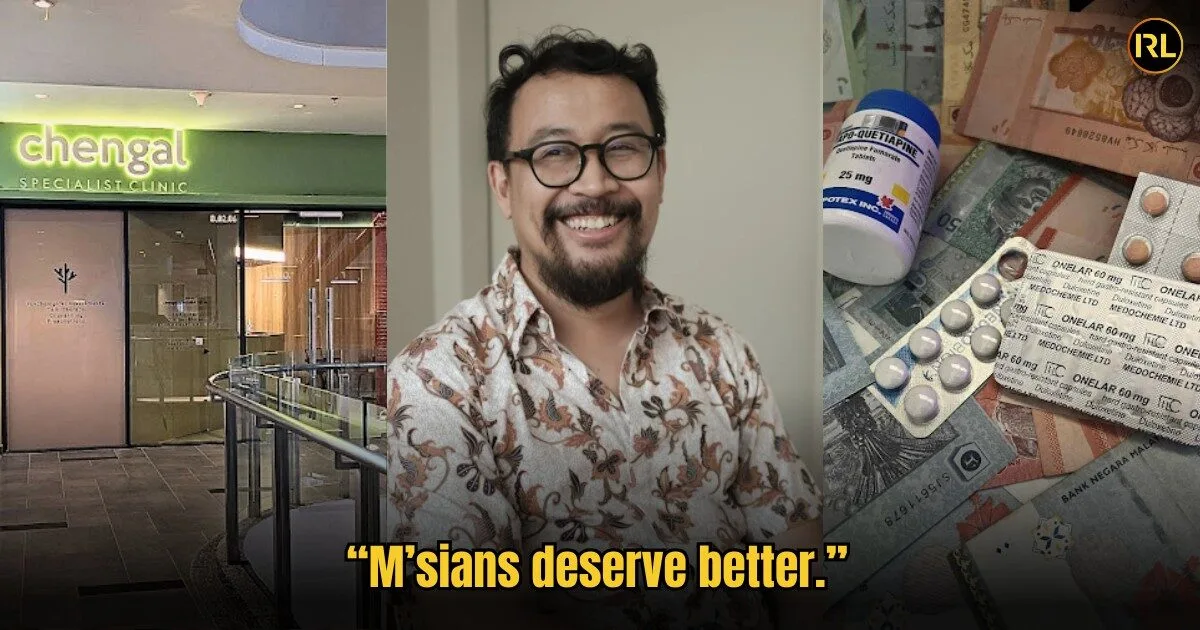
In this interview, IRL speaks with Dr. Johan Ariff Juhari, psychiatrist and founder of Chengal Centre for Mental Health. He shares how his years in public service, and his commitment to queer-affirming, accessible care inspired him to launch a clinic that welcomes Malaysians from all walks of life.
Chengal – The Clinic and Its Vision
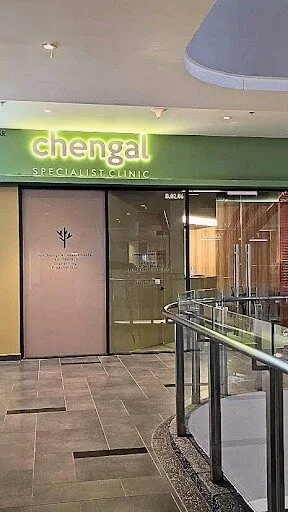
Image/Chengal Clinic
IRL: Chengal is still new in the scene—can you share what inspired you to open this kind of mental health clinic in the Klang Valley?
I’ve been working in the government sector for more than a decade and despite my colleagues’ best efforts, there are just too many obstacles that are hard to overcome: budgetary constraints, limited manpower, culture and societal limitations. Chengal is meant to help the public to overcome some of those barriers. We aim to democratize mental healthcare, to tear down some of the obstacles, and to foster a community that is more accepting and understanding of each other.
IRL: For Malaysians who may be a bit blur about what psychiatry actually covers—how is Chengal different from just seeing a counsellor or therapist?
A psychiatrist is a medical doctor – that means they would have to complete medical school and work for a few years, before specializing in psychological medicine. Therefore, a psychiatrist is able to prescribe medications, sign off on MCs, and do other things that a doctor is trained to do. At the same time, we are also trained in various forms of therapies. Therefore, in our practice, we approach mental healthcare from the biological, psychological and social aspects.
IRL: You describe Chengal as a “safe space” for everyone. What does that really mean, especially in the Malaysian context?
Mental healthcare in the Malaysian context is unfortunately far from ideal. In my experience, as well as in studies done amongst minorities in this country, a lot of clients face bigotry and judgment from those who are supposed to be non-judgmental. We want you to feel safe at Chengal, for you to be able to leave your worries at the door and breathe freely, share freely with our therapists. I can’t promise that we will definitely cure what ails you, but we promise that we will do our best.
IRL: You’re openly queer-affirming—and apparently the first openly queer-affirming psychiatrist in Malaysia. How does that shape how you run Chengal to provide such personalized care?
Being affirming is different from being friendly. In being friendly, you don’t care what people’s backgrounds are and you treat them the same. Being affirming means, you take into account the unique experience each person goes through, their personal struggles, how they were perceived, and every single thing that makes you, you – and you tailor your management and approach to that specific individual. It is my belief that in mental healthcare, you CANNOT treat people the same. Two individuals from the same social stratus, even the same family at times, with the same diagnosis would have very different experiences. How can you treat them the same? This is what we strive to do in Chengal. We want people to feel that we at least try to address every concern of theirs.
IRL: Some people think mental health clinics are only for “crazy” people or when things get really bad. How would you address that misconception?
Personally, I don’t like the term ‘crazy’ but there was a comedian I saw on social media who did a bit exactly with this as a premise. What they said stuck with me: “You’d have to be crazy if you think you don’t need mental healthcare in this day and age.” Our socio-political landscape is demanding and challenging. People are expected to do 1000% in all aspects of their lives and are shamed if they’re not doing that. Knowing what I know through my professional experience and education, I still do check in with my own therapist from time to time.
Services & Approach
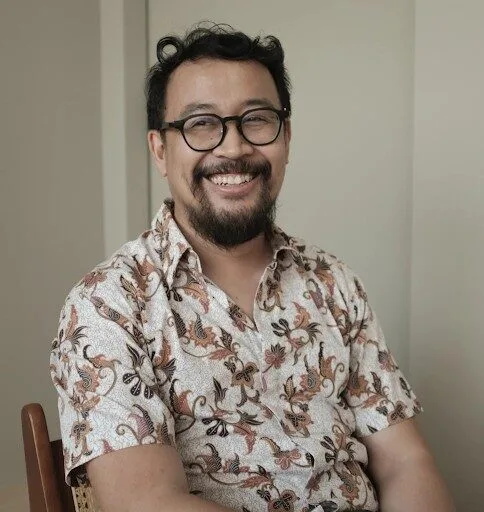
Dr. Johan Juhari. Image/Chengal Clinic
IRL: Chengal offers a whole list of services—from talk therapy to medication, even D&D roleplay sessions. What kind of people actually benefit from these types of therapy?
We try to cover all bases with our approaches. Therapy is always offered but might not be something some people are open to. Talk therapy might be too difficult for some people to directly face, so roleplaying and art therapies offer an alternative to traditional talk therapy.
IRL: You also offer art therapy and grief counselling. Why do you think creative or expressive therapy methods are so powerful for Malaysians specifically?
As Malaysians, we are heavily influenced by the colonial idea of ‘children should be seen, not heard’. What this translates to is: expressions of feelings are something to be ashamed about and not encouraged. Therefore, for a lot of Malaysians, addressing and communicating your feelings is not something that comes readily. We use these kinds of therapies to help our clients to recognize, name and feel those feelings. It would be much easier to let go of things if you’ve done this.
IRL: You also have an in-house pharmacy and do home deliveries—is this part of making mental health care more accessible?
Yes. There’s a lot of misconception of the shipment of medications amongst doctors. At the end of the day, if we can make our clients’ lives easier without bending or going against the law, I think it should be done.
IRL: Some people are afraid of taking psychiatric medication—they think once you start, you can’t stop. What’s your take on that, and how do you guide patients through it?
A lot of this depends on the individual case. While, yes, some clients might need lifelong medications, others do not. This is something that will need to be discussed with clients. Options for starting or choices of medications will be discussed with the clients or their guardians if they’re not able to make decisions. Risks and benefits, instructions on how to take the meds, what to expect in terms of effects and side effects and others will also need to be discussed.
I also want to stress that taking medications is not the ‘last step’. Often, people can’t start therapy or even administer self-help because they aren’t able to focus or gather the energy to actively participate in these activities. Medications can help with that. Scientific evidence shows that medications plus therapy yields better results than either therapy or medications alone.
Being Accepting & Affirming
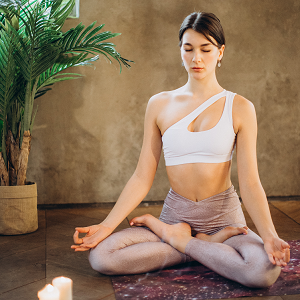
Image/Unsplash
IRL: You’ve worked with the LGBTQ+ community for years. What kind of mental health challenges do queer Malaysians face that others might not realize?
There’s a lot of things that are taken for granted by the cisgendered heterosexual majority that queer people face from a young age and every day: the questions of identity, fitting in, being ‘normal’, being ‘sinful’, filial obligations – to name a few. On top of the internal struggle, there is a struggle for acceptance by society – society excuses bullying and abusing of queers and treats it as ‘normal’, there are still laws against gender expression, and indeed, even what people do in the bedroom invites harassment from strangers and government officials, judgment and preaching by medical professionals, these are just from the top of my mind. Queer people struggle to even breathe the same air as cisgendered heterosexuals. All these challenges affect the mental health struggles of a queer individual. A lot of queers just want to be left alone, to be treated the same as other people. That’s all there is to it.
IRL: Do you ever get pushback for being openly queer affirming, especially in a professional setting like this? How do you deal with that?
Of course. Without getting into details, I have been told by my superiors that some of the hardships I have had to endure professionally is because of my activism. I’ve gotten unofficial investigations and complaints for just advocating for better healthcare access for queer people. People have been threatened for just associating with me. The accusations have always been about me trying to legalize the queer agenda, when in fact, my work has always only been reminders to my colleagues to treat queer people just like any other client. That’s all.
IRL: How does Chengal support clients who may not be “out” or are exploring their gender or sexual identity in private?
Whatever your identity is, you are entitled to explore it however you want. If it’s something you want to discuss, vent, bounce ideas with, our therapists are there to do these with you.
IRL: You also welcome people from all walks of life—how do you make sure the space feels equally safe for an auntie, a teenager, and a queer young adult?
There’s a very prevailing belief in mental health care that you shouldn’t let your values affect your clinical approach. I don’t know if I could truly do that, honestly. “Be a bigot but just not here” doesn’t seem like something I could do. It is easier for me to adjust my values to be accepting of everyone else’s as long as it’s not harming others or themselves.
Tackling Malaysian Stigma
IRL: In Malaysia, there’s still a lot of stigma. Some families believe mental illness is caused by Djinn or karma. How do you handle clients who are caught between therapy and family beliefs like that?
As a younger doctor, I would challenge them and have had mixed results. Now, wizened with age as I am, I would rather use a ‘yes, and’ method: “YES, this might be because of karma/Djinn. Do whatever you believe to cleanse yourself of this AND let’s do things the scientific way too. Cover all our bases.”
IRL: Some Malaysians are afraid to even say “I need help” because they think it means they’re weak. What would you say to someone who feels that way?
Humans are social creatures. Evolutionarily, religiously, philosophically, we know that we need each other for help. It is hard to get over the toxic masculine idea of needing help is appearing weak, but I would ask myself: what is the alternative?
IRL: A lot of people still don’t talk about trauma—especially things like abuse, bullying, or grief. How do you help clients open up when they’ve never even said the words out loud before?
By creating a space that feels safe, fostering the trust between the client and the therapist, and maybe after that, they will feel safe saying these things. Sometimes, they would never say the words, even after months or years of therapy, but I trust that my clients are able to figure things out on their own. We will just provide the support in the meantime.
Seeing The Human Behind the Clinic
IRL: At the end of the day, what do you hope Chengal will represent to people? What legacy are you trying to build with this clinic?
I want to challenge the way we have been doing things in mental health care. I want people to see that being inclusive is powerful and helpful. I want people to realize that mental healthcare is not scary and doesn’t have to be patriarchal.
IRL Malaysia would like to thank Dr. Johan Ariff for the opportunity to interview him about his new practice, which has just opened in Sunway Geo. If you would like to make an appointment please reach out and make contact via their socials linked below:
Chengal Centre Website / Chengal Centre Instagram / Chengal Center Facebook
Have a story to share?
Submit your story to ym.efillaerni@olleh and you may be featured on In Real Life Malaysia.
Read also: How CNY Gambling Cost Me RM12,000 (And Maybe My Marriage) – In Real Life
More from Real Mental Health
“I Was Scared of Waking Up in Handcuffs,” shares Depressed M’sian on Repealed Law
In 2023, Malaysia repealed Section 309, a colonial-era law that made suicide attempts a crime. The change marked a shift …
‘Everyone Saw A Successful Student While I Was Crumbling,’ Shares 22 Year Old Student
This is a story of a 22 year old woman who shared her story as a Straight A’s student as …

5 Harmful Mental Health Myths Malaysians Still Believe
Let’s break down five of the most common myths Malaysians still believe, and why it’s time to let them go.