




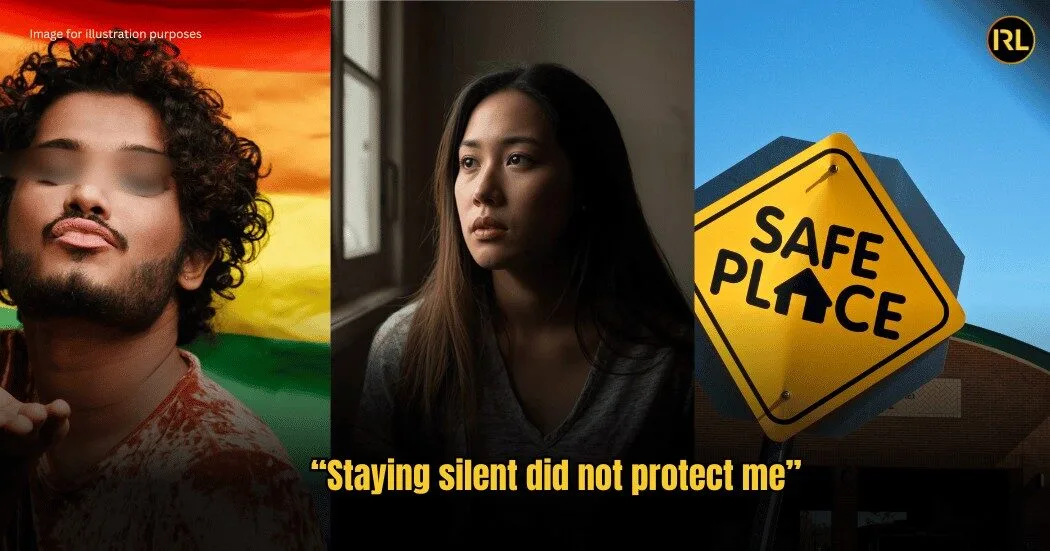
This story is about someone who believed safety could be promised by organisations and people who spoke its language, and how that promise collapsed when accountability disappeared.
When I arrived in Malaysia, I believed safety was something you reached, like a destination stamped onto a passport, something that came from organisations, letters, and people who spoke the language of protection and when one LGBTQ organisation told me they had a safe house and someone who could manage it, I believed them because believing felt easier than continuing to live like every door might close at any moment.
I was tired of explaining myself, tired of correcting people, tired of carrying my life in one bag. He spoke about community and care and said he understood what it meant to be displaced and queer, because he was one of us, a trans woman.
I let my guard down in small ways I did not notice at first, the way you do when you are finally allowed to sit instead of run.
The safe house did not look dangerous, it looked ordinary, shared rooms, shared kitchen, shared rules and on my first night there I slept lightly with my shoes next to the mattress and my documents under the pillow because habit does not disappear just because someone promises safety and because deep inside I knew that places can be called safe while still belonging to someone else.
Learning how to behave in a place called safe
In the beginning, life in the house followed a routine that felt stable enough. Shared meals when there was food, quiet conversations, rules explained as care. He was always present, always watching, always reminding us that this place existed because of the organisation and because of his work and he made sure we always remember.
Small things started to change.How I felt inside the house, the way he corrected us in front of others, the way he used the wrong pronouns and did not fix himself after, the way jokes were made that left some of us silent.
I noticed how difficult it was to speak without being described as emotional, sensitive, or problematic, words that sound harmless until they follow you everywhere.
It became clear that some people were listened to more than others, that privacy depended on how useful your story was, and that respect was not automatic even in a queer space. I learned to measure my words, my tone, my presence, because surviving inside the house required careful behaviour, not honesty.
When hunger became a rule
After some time, the problems were no longer only about words or respect, they entered our bodies, our meals, our daily survival. When food became less and explanations became more, I told myself this was temporary, that organisations are slow, that refugees must be patient because that is what we are taught to believe.
He spoke often about budgets and responsibility, about how difficult it was to manage people like us. And while he talked, he decided who ate more, who complained too much, who deserved understanding.
I noticed how hunger made people quiet, how it turned questions into risks and how asking for transparency started to sound like disobedience.
Standing in the kitchen one evening, looking at what was left for dinner, I understood something clearly and painfully, that food was no longer shared, it was controlled. And that once your basic needs are managed by someone who does not respect you, silence becomes the price of staying alive.
When my life story became a hot topic
I started to feel unsafe in a new way when I realised that things we shared inside the house were no longer staying there because he spoke about our lives outside, repeating details that were not his to repeat, our medical issues, our families, our reasons for running as if they were examples instead of wounds.
I would hear my own story come back to me through other people’s mouths, changed slightly, simplified, sometimes joked about.
Each time it happened I felt exposed in a way that was hard to explain because it was not only about privacy, it was about losing control over my own life again.
After that, I stopped sharing because I understood that anything I gave could be taken, reshaped and used without my consent. Silence became another way to protect myself.
The day I was kicked out
The day everything broke, it was not calm and it was not professional. It was loud, humiliating, and frightening because he shouted, insulted us, called us names that were meant to remind us how little power we had. In one moment he pushed me and attacked me physically, enough to make my body freeze even after it was over.
He threatened me with my UN file, saying he could cancel it, delay it, destroy my future with one phone call, even though later I learned he did not actually have this power.
At that moment, fear does not ask for proof, it only listens to the person standing in front of you who controls your shelter and food.
After that, he spoke to the organisation and described us as problematic, difficult, dangerous, girls who did not follow the rules, even though the rules were never clear and changed whenever we tried to understand them, and because he sounded confident and responsible, they believed him more than they believed us.
When I was told to leave, it was already decided somewhere without me, based on his version of events and I understood that once someone controls the narrative, they also control who stays and who disappears.
Understanding too Late who he really was
I began to understand who he really was only after I was no longer under his control, when distance made space for questions and I started to hear things that explained what never made sense before, the way his story shifted depending on who was listening, the way his identity existed mostly in the stories he told, not in how he lived among us.
People who had known him longer spoke quietly, carefully, about how he had arrived in Malaysia already running from problems in his own country, from serious accusations and legal trouble that had nothing to do with being queer and how presenting himself as a trans refugee had opened doors that would otherwise have stayed closed.
It became clear that what he claimed to be was less important to him than what it allowed him to access: Trust, funding, authority and proximity to vulnerable people and that identity, like everything else, was something he used when it benefited him.
Later, I heard that many in the queer community had distanced themselves from him, that friendships ended and trust was withdrawn. But by then, it meant very little to me, because whatever consequences he faced did not give my dignity back.
What I carry with me now
I am still displaced and still rebuilding, but I am speaking now because staying silent did not protect me, it protected him and because stories like mine are often ignored when they are uncomfortable or complicated, or when the person who caused the harm uses the language of care.
I did not lose my place in the safe house because I was difficult or dangerous, I lost it because once someone controls shelter, food and narrative, truth becomes something you have to fight to reveal.
I am telling this story not to punish one person but to remind organisations and NGOs that safety can not exist without accountability and that listening only to the most confident voice in the room will always leave the most vulnerable outside the door.
Write in. Tell your story. Get paid.
Share your story on our Facebook page and you may become a contributor for In Real Life Malaysia.
I Made Sure My Ex-husband Lost Everything After He Cheated On Me With A 21 Year Old Influencer
More from Psychological Abuse
‘The caller knew who I was’ shared M’sian student who volunteered at crisis hotline
This story is about a Malaysian who volunteered to listen to people in crisis and became the one in danger.