






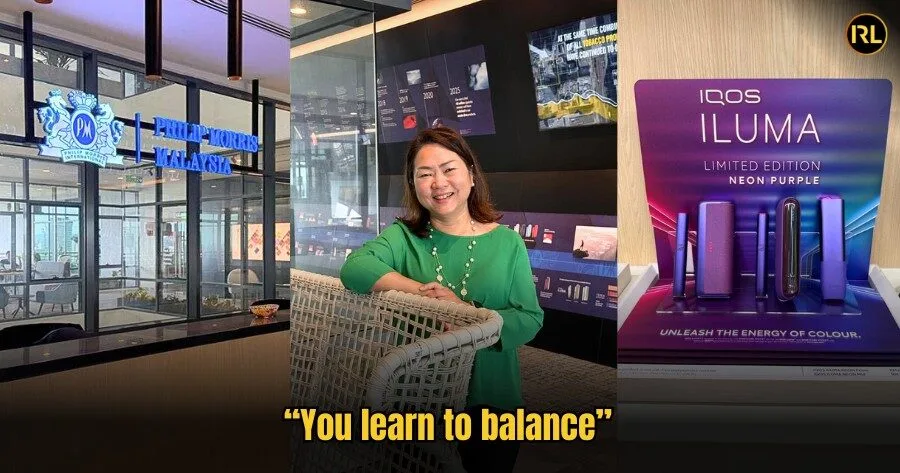
In this article, In Real Life interviews Veronica Choo, Head of Corporate Communications at Philip Morris Malaysia, to talk about her journey as a woman breaking into and rising to the top of the corporate world.
Veronica Choo is an industry veteran who has built a distinguished career in corporate communications, branding, and leadership across multiple industries and global markets in Hong Kong, the U.S., and Malaysia.
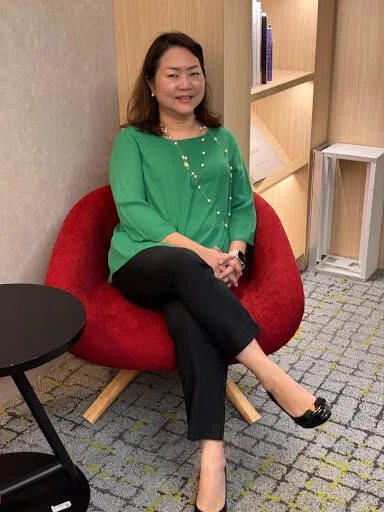
Photo via In Real Life Malaysia
In her illustrious 20-year career, she has led high-impact branding initiatives for companies like Sunway and Mandarin Oriental, played a key role in launching Starbucks in Asia, and managed high-stakes crisis communications, including during 9/11.
Now serving as Head of Communications at PMM, she navigates a male-dominated industry with strategic leadership, resilience, and a deep understanding of global corporate dynamics, making her a trailblazer in her field.
Having navigated these challenges firsthand, Veronica shares the key lessons that helped her build a successful career and rise through the ranks.
Veronica’s Early Years Set The Stage

Hong Kong skyline. Photo via Unsplash
Early in her career, Veronica took a leap of faith by studying in New York and working in Hong Kong for 6 years.
During her time in Hong Kong, Veronica was involved in bringing Starbucks into the Asian market. She worked with the brand’s first Asian regional office, handling communications and PR for its market expansion, where her team developed process manuals cementing her expertise in brand storytelling and strategic communication.
“In Hong Kong, communication is direct—if you have an idea, you speak up, and whether you’re a junior or a senior, people listen based on merit. It’s a very equal exchange,” she recalls about her time in an agency.
“Whereas in China, hierarchy dictates everything. You don’t just speak; you must address someone based on their rank, their seniority, their status. It’s a system where position matters more than capability.”
Understanding this difference in cultural norms has been crucial to Veronica’s approach when returning to Malaysia.
“When I came back to Malaysia, I felt like a foreigner. In Hong Kong, when there’s a problem, the solution comes immediately. People don’t wait. But in Malaysia, you can tell someone to send an email before lunch, and when you get back after lunch, it still hasn’t been sent,” she laughed.
Malaysia, especially when dealing with the government, follows a similar top-down structure as China. “You have to be careful with words, using the right honorifics—tuan, yang berbahagia—and so on. If you don’t show the proper respect, you won’t even be heard,” Veronica remarked.
Tenure in Sunway and Mandarin Oriental
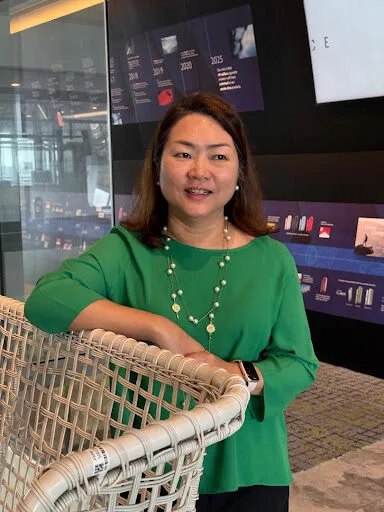
Photo via In Real Life Malaysia
At Sunway, Veronica played a pivotal role in rebranding the company as it expanded its hospitality division. When she joined, Sunway had a limited hotel portfolio, and its brand was perceived as outdated.
Veronica was tasked with a complete branding overhaul for Sunway Resort to ensure a cohesive and modernized identity. The challenge was convincing a group of senior executives—many of whom had been in the company for decades—to go with her branding strategy.
“How do you, as a young 20-something executive with barely half the years of experience, walk into a room full of men in their 40s and 50s and tell them that there is plenty of room for improvement?” she shared, eyebrows raised. “You can’t just walk in and challenge everything head-on. If you do, you’ll have 100 objections coming at you.”
“When you sit at a management table, the first question people ask is: “Why is she here?” You feel it before anyone even says it out loud. So, you have to prove why you deserve that seat. I don’t sit back and wait to be acknowledged—I speak up, I come prepared, and I make sure my contributions are undeniable.”

Photo via Sunway
During her five-year tenure at Sunway, Veronica developed branding manuals and corporate narratives that positioned Sunway as a fully integrated hospitality offerings.
“I don’t challenge for the sake of challenging, but when I present a case, I back it up with facts, strategy, and results. It’s not about being aggressive—it’s about being firm, clear, and competent. Some may hesitate to take you seriously at first, but when they see you’re adding value, that changes. You don’t demand authority; you demonstrate it until there’s no question why you’re at the table.”
Veronica shares how she would read her audiences’ reactions, adjust her tone, and invite them into the conversation. “I don’t say, ‘This is wrong.’ I say, ‘Let’s explore this together.’ That way, they don’t feel offended—they feel involved.”
Corporate communication is a game of chess
Veronica expanded on this by emphasizing that communication is a game of strategy, not just honesty. She explained that cultural and hierarchical differences play a huge role—what works in one setting may backfire in another.
“Asian women are considered timid, right? So those of us in leadership roles may feel the need to be as loud or as demanding as the men. But not every time being direct works, and not every time being indirect works either.”
Understanding personalities and power dynamics is crucial. In some cases, being too direct can make people defensive, shutting down the conversation before progress can be made. On the other hand, being too indirect can lead to confusion or dismissal.
“You have to read the room. Some people appreciate straight talk—they want the facts, the solution, no sugarcoating. Others take offense if you’re too blunt, even if you’re right. So, you learn to balance. If you’re too direct, they’ll see you as too aggressive. If you’re too subtle, they’ll miss the point entirely. You have to constantly strike the right balance.”
A Clash of Egos

Photo via In Real Life Malaysia
When asked if she had a fiery temper when she was younger, Veronica laughed and admitted, “Oh yes, absolutely.” She recalled being highly impulsive, quick to argue, and unafraid to challenge authority. “If I disagree with something, I would fight, fight, fight. I had so much energy, and I wasn’t afraid to speak my mind.”
“There’s a lot of male ego in any male-dominated industry. But women have ego too,” she said, explaining that she, too, had moments where she wanted to defend her ideas and take full ownership.
Through mentorship and experience, she learned to temper that fiery nature with strategy.
She realized that picking battles wisely and approaching situations with patience often led to better results. “I still stand my ground, but now I know when to push and when to step back. You can’t fight all the time—sometimes you win more by letting go.”
Over the years, Veronica has learnt how to step back and let go of ownership. After her tenure at Sunway, Veronica took that breadth of experience to Mandarin Oriental, where she oversaw branding and communications while managing major rebranding projects. She led the launch of new F&B outlets, including the branding of Sultan Lounge and Mandarin Grill, working with top-tier branding agencies to refine the hotel’s positioning in the luxury market.
“Sometimes you need to let go of credit. If someone doesn’t like you, they won’t accept your ideas no matter how good it is. Instead of forcing it, you plant the seed and let them believe it was theirs,” she said. “Ultimately, the goal is progress, not personal recognition.”
What Makes Women Good Leaders in the Workforce?
Photo via In Real Life Malaysia
For Veronica, leadership isn’t just about making tough decisions—it’s about making them with humanity. She believes that women often bring an added dimension of compassion to leadership, considering the well-being of others where a man might not.
“Letting people go was one of the hardest things I’ve ever had to do. These were good employees, hardworking and dedicated, and many times it wasn’t their performance issue—it was merely a restructuring process.”
Unlike a purely numbers-driven approach, Veronica fought to ensure employees were compensated fairly and given time to transition. “I fought for compensation for employees being laid off because it wasn’t just about money—it was about fairness.”
She didn’t see them as just staff, but as people whose livelihoods were affected. “I believe if someone has contributed to a company, you don’t just hand them a letter and say, ‘Good luck.’ That’s not right. I pushed as far as I could because fairness matters.”
This ability to lead with empathy and integrity is what makes women exceptional leaders—balancing tough business decisions with a deep sense of responsibility. “But at some point, you have to accept that not everything is in your control. You do your best you can for people, and then you reach a point where you have to decide, I’ve done everything I can in my capability to ease the transition, and then you let go of the guilt.”
In 2025, has gender equality been achieved in the workplace?
According to Veronica, the answer is yes. “There’s been significant progress in how women are treated in the workforce compared to 20 years ago. Back then, women had to put extra efforts to have their voices heard in leadership, but today I see more women in leadership roles now, and their voices are respected rather than constantly questioned.”
Veronica also highlighted that societal expectations have shifted—women are no longer expected to simply marry and become housewives; many are actively pursuing long-term careers.
“There’s been solid improvement. Women today don’t just see themselves growing up to get married; they know they have to find space for themselves in the workforce.”
Overall, she believes there has been steady progress, with companies embracing diversity and inclusivity more than before.
Final Thoughts
Veronica’s story is proof that success in a male-dominated industry is possible with the right mindset and strategy.
By taking risks, speaking up, building strong networks, staying resilient, and prioritizing learning, women can not only climb the corporate ladder but also pave the way for future generations of female leaders.
As Veronica’s career shows, the journey may not always be smooth, but with determination and the right support, breaking barriers is within reach.
Have a story to tell?
Submit your story to us at ym.efillaerni@olleh and you may be featured on In Real Life Malaysia.
Read also: “Malaysians Are Driven By Community,” Observes Sunny Sharma of Philip Morris Malaysia – In Real Life
“Malaysians Are Driven By Community,” Observes Sunny Sharma of Philip Morris Malaysia
More from Feature

“I Sold Light Sticks to Survive,” shares M’sian startup VP turned Night Market Seller
This story is about a Malaysian startup VP who rose to the top of the startup world, lost it all, …