


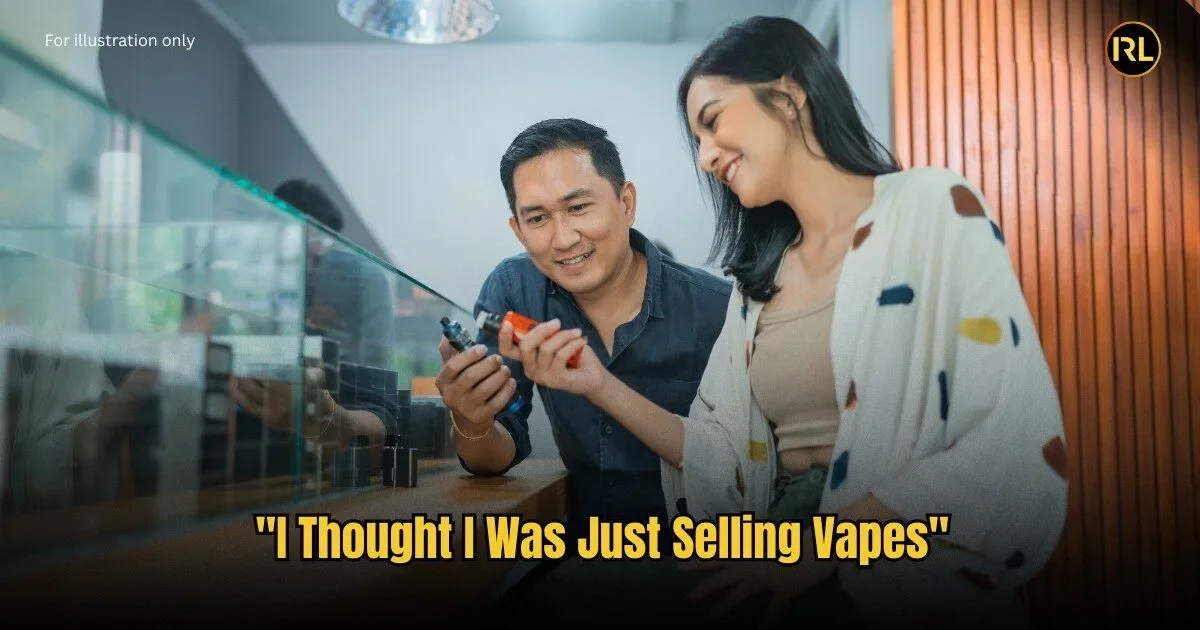
This story is about a Malaysian woman who thought she was just working a regular job, only to discover how much the job was asking her to sacrifice.
“You looked really good in that crop top the other day,” my boss said casually, almost like he was complimenting my haircut.
“Maybe you can wear something like that for the next shoot.”
I laughed it off, the way women are taught to laugh things off when something feels off but you don’t want to make it a big deal. Inside, my stomach knotted. I knew exactly what he meant. It wasn’t framed as an order. But when your boss says it, it doesn’t feel like a suggestion either.
Week by week, the nudges became more frequent. They weren’t direct demands, always wrapped in smiles and compliments but the message was clear: the more I showed, the better for them.
How I Landed There
This wasn’t the kind of life I pictured when I left Sabah for KL.
From afar, the city sparkles with possibilities not to mention the tall buildings, endless lights, people rushing somewhere important. But up close, KL is brutal. The rent drains you, the bills suffocate you, and every day feels like a reminder that you need to hustle harder or fall behind.
My first few months here, I lived on instant noodles and teh o ais from the kedai downstairs. I jumped from job to job – folding jeans in boutiques, stacking sneakers in sports shops, standing long hours at convenience stores. I’d come home exhausted, my feet throbbing, and lie on the thin mattress in my rented room, wondering if I made a mistake leaving home.
One night, while I was scrolling through job ads half-heartedly, my housemate leaned over and said, “Eh, why not try working at a vape shop? You already vape. At least you know your stuff.”
It was said casually, but it made sense. I wasn’t an expert, but I could tell a good juice from a bad one. I knew the difference between pods and mods. For once, maybe my random habit could actually help me.
The next day, I walked into a vape shop down the street. The door was plastered with brand stickers, the glass slightly fogged from the fruity clouds inside. The air smelled like a mix of watermelon, mango, and something sweet I couldn’t place. Behind the counter, the manager looked up and gave me a smile that felt warmer than most interviews I’d been to.
He asked me about my experience, then about my knowledge of vape products. I could feel his eyebrows lift when I explained the differences between salt nic and freebase, which devices hit stronger, which brands were hype. For once, my answers didn’t sound like guesses.
“Would you also be okay helping with some content for the shop?” he asked after a while. “Just pictures, short videos. Nothing too fancy.”
I hesitated, then nodded. I’d seen other vape shops post TikToks of girls puffing clouds, or Instagram reels of product demos. It didn’t sound like a big deal. Keep in mind that this happened years ago when there’s not many regulations on the vape industry.
By the end of the conversation, he offered me the job.
That night, walking back to my rented room, the city lights didn’t feel so harsh. For the first time in weeks, I felt lighter. I thought, maybe this is it. Maybe I can finally stop worrying about money.
The First Few Weeks
The shop wasn’t fancy, but it was lively. Regulars would drop by to try new flavours, some just came to lepak and talk mods. I worked the counter, restocked the glass shelves, and answered questions. Customers liked that I knew what I was talking about.
The “content” was harmless at first. A photo of me holding a new pod system. A short clip of my hands demonstrating how to refill a tank. Sometimes I’d just be standing behind the counter, smiling, holding up the product while my manager recorded.
It felt easy. Harmless. Honestly, I even felt a little proud when I saw myself on the shop’s Instagram. My parents back in Sabah didn’t need to know what kind of shop it was – I just told them I was working retail.
When the Camera Shifted
But slowly, I started noticing changes.
The camera wasn’t focusing so much on the vape anymore. It was focusing on me.
The angles dipped lower. Shots lingered a little too long on my chest. Sometimes my face wasn’t even in frame – the product would be held near my neckline instead.
At first, I rationalised it. I was wearing T-shirts and jeans. I told myself, “It’s not that bad. I’m covered.”
Then came the comments.
“That crop top you wore the other day – you looked really nice,” my boss said one afternoon, smiling like it was just a compliment. “Maybe try that again for the next video?”
I smiled back weakly. But in my head, the words echoed: Maybe try that again.
It wasn’t a demand, but it didn’t feel like I had much choice either.
Week by week, the nudges piled on. Not outright instructions, but subtle hints – suggestions wrapped in casual remarks. I started choosing my outfits more carefully, second-guessing whether my clothes were “content-friendly.”
And like the naive girl I was being desperate to keep my job, I went along with it.
The Breaking Point
The breaking point came one night when my housemate sent me a link.
“Eh, isn’t this you?” she texted.
It was my videos – reposted on Bigo. Strangers flooding the comments with words that made my stomach twist.
Men I had never met were dissecting my body like it was a product on display. Some of the comments were so vulgar I couldn’t even finish reading.
I remember staring at my phone, feeling heat rush to my face, my chest tightening like I couldn’t breathe. All I had wanted was a job. A steady paycheck. Instead, my image was being passed around online, turned into entertainment for strangers.
That night, I tossed and turned, replaying everything – the way the camera had angled down, the way my boss had smiled when he “suggested” outfits, the way I’d laughed along even when I felt uncomfortable. By morning, I knew I couldn’t do it anymore.
When I told my boss I was quitting, his smile disappeared.
“That’s the nature of the industry,” he snapped. “If you can’t handle it, maybe you’re not cut out for this line of work.”
For a moment, shame washed over me. Maybe he was right that it was indeed my fault for signing up voluntarily.
But no. Deep down, I knew better. I wasn’t the problem. The problem was an industry that thought it was normal to use women like this.
Bigger Picture: Vape Ban News
Even after I quit, I couldn’t shake the feeling that what happened to me was part of a much larger issue. And recently, that larger issue made headlines.
Malaysia’s Health Minister, Dzulkefly Ahmad, announced that the country will begin phasing out vape products. The plan is to start with open-system vapes before potentially moving towards a full ban. The move is framed as a public health measure and a way to finally regulate an industry that, for years, operated with minimal oversight.
Shops will no longer be allowed to flaunt vape products in full view, and in some states, their licenses may not even be renewed.
For someone like me, this means two things:
- Less space to hide behind “legitimacy”
When the industry was less regulated, everything felt fly-by-night. If things are going to tighten up, the shops will have to be more honest, more careful. Maybe fewer people will be pressured to participate in marketing they aren’t comfortable with. - A chance for change
It might mean fewer female staff being subtly nudged (or openly pressured) into becoming accessories. Maybe safer boundaries. Maybe more accountability.
What I Learned
I still vape. I won’t pretend otherwise. But my time in that shop left me with scars that are not physical, but emotional. I saw how easy it was to be reduced to what someone thought would get clicks, likes, attention. My value wasn’t how well I stocked shelves or knew flavours but it was how “instagrammable” I looked.
Now, with news of the vape ban creeping closer, I hope this means less exploitation, less objectification, less pressure to show more than you want to show just because someone behind the lens asked.
Because, in the end, I thought I was selling vape products. What they were selling me was a version of myself I didn’t want.
No job is worth losing your sense of self.
Have a story to tell?
Share your story on our Facebook page and you may be featured on In Real Life Malaysia.
I Made Sure My Ex-husband Lost Everything After He Cheated On Me With A 21 Year Old Influencer
For the latest stories, follow us on Facebook and Instagram
More from Mental Abuse
“My Ex-Husband Convinced Me I Had Schizophrenia,” Shares Woman Who Left Abusive Relationship
This is a story of how a 33-year old woman from Ipoh realized that her partner was abusing her mentally …