







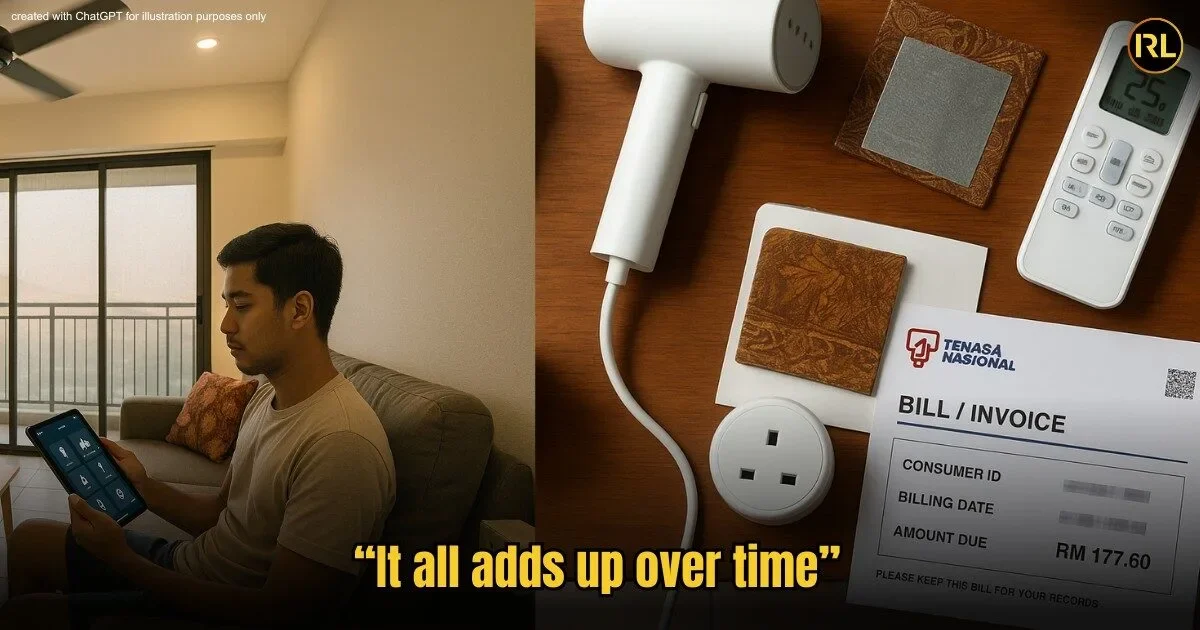
This story is about a Malaysian who discovered that saving on TNB bills isn’t just about old-school habits, but new tech too.
Malaysians have been feeling the pinch across the board, and one of the things hitting our wallets hardest is the electricity bill—rising faster than your Kopi-O at the mamak.
With TNB’s Time-Of-Use (TOU) rates, the price per unit of electricity depends on the time of day. Peak hours cost more, while off-peak hours cost less. Understanding this difference is the first step; the next is knowing what to do with it.
These are real-world tips that save real ringgit—some old, some new, and a few hacks your parents probably never thought of. I use them myself, which is why I sweat less in a heatwave and smile a little more when I see my bill at the end of the month.
The Classics
Let’s start with the obvious, because these basics form the foundation of lower bills. If you’re not already doing them, you’re paying extra for no reason:
- Set your air-cond to 24–26°C.
- Turn off appliances at the wall, because standby mode still consumes power.
- Use LED or high-efficiency lightbulbs that last longer and use less energy.
- Wash laundry in cold water.
- Cook with lids on pots.
- Boil only the water you need instead of leaving the aeropot on.
Even simple changes like using timers for your AC and fans make a difference.
For example, I sleep at 11pm, set the AC to turn off at 2am, and have the ceiling fan kick in after. The room stays comfortably cool without freezing my bank account overnight. And of course, if you’ve got the roof space (and budget), solar panels are the ultimate long-term move.
Once you’ve mastered these basics, you’re ready for the next level—the modern hacks.
The New Hacks That Actually Work
Today, electricity-saving strategies have gone beyond just switching things off. With smart devices, modular setups, and passive cooling, you can save more without sacrificing comfort—perfect if you’re renting or living in a small space.
#1.Smart Plugs
Take smart plugs, for example. High-wattage devices like air-cond, rice cookers, and kettles are silent bill-killers when left running.
Smart plugs let you schedule them to switch off automatically and avoid those “Alamak, I left it on!” moments.
#2. Solar Window Film
Then there’s the blazing Malaysian sun. It’s harsh, but you can fight it with some low-cost solar window film paired with heat-reflective or blackout curtains. This simple combo lowers indoor temperatures by several degrees, which means your AC doesn’t have to work as hard.
#3. Motion Sensor Bulbs
Lighting is another sneaky culprit. That’s where motion-sensor bulbs come in handy. It’s underrated, especially for toilets, storerooms, or even cupboards—lights turn on when you enter, and off when you leave. No more wasting money because someone forgot to flip the switch.
#4. Voice Command “All-off” Function
If you’re into smart home setups, check out if they have an “All Off” function.
With Alexa or Google Assistant, a single command can turn off every light, fan, and plug as you head out the door. It’s convenient and feels like living in a sci-fi movie, while also saving you money.
#5. Time-Of-Use Pricing
And don’t forget TOU pricing. Electricity costs drop after 10pm, so charging your devices at night with smart plug timers can shave more off your bill.
Some tips are more subtle, but surprisingly effective. I switched from a hot water boiler to a standalone tankless water dispenser, and my wallet thanked me immediately—no more keeping water hot 24/7. Even ironing has an upgrade: a garment steamer. It’s faster, easier, and noticeably lighter on the electricity bill.
Final Thoughts: Layer Your Savings
No single hack will magically halve your bill. The real trick is layering them together—combining passive cooling (like solar film), smart control (like timers and plugs), and off-peak habits.
Most importantly, check your TNB bill every month. When you actually see your kWh breakdown, it’s easier to spot what’s quietly burning a hole in your wallet.
Comfort doesn’t have to cost a fortune—it just takes a little smart thinking.
Have a story to share?
Submit your story to ym.efillaerni@olleh and you may be featured on In Real Life Malaysia.
Read also: