


This story is about a foreigner’s experience with navigating the unspoken walls within the Malaysian art world as an outsider and a dreamer.
I’m 30 years old. I’m a painter. I moved to Malaysia with a head full of colors and a heart hopeful for connection. But being a foreign artist here is more complicated than I ever expected. Art is supposed to transcend borders, but when you’re not a local, the borders show up in all kinds of invisible ways.
A Brush Against the Grain
Malaysia is a beautiful place. The nature, the food, the warmth in people—it drew me in. But as an artist from the Middle East trying to find space in the local art scene, I often feel like I’m painting in the dark.
When I first arrived, I carried with me years of experience: a degree in Fine Art from the Arab International University and countless exhibitions, murals, and community art projects under my belt. I imagined joining the local creative community with ease. I thought art would be a shared language. But I quickly learned that without the right contacts or local connections, your work stays unseen.
“There’s a deep sense of community here,” I said once to a fellow artist. “But it’s also a closed circle. If you’re not already inside, you stay on the outside looking in.”
A Story Lost in Translation
Being a foreigner comes with a quiet kind of erasure. I’m often invited to events only as a guest, never as a featured artist. People smile, nod, ask where I’m from—but the conversation rarely goes further. My art, rooted in Middle Eastern history, symbolism, and struggle, sometimes feels like it gets lost in translation. It’s not always understood, and sometimes it’s simply ignored.
Art in Malaysia leans toward the contemporary—digital media, pop culture commentary, politically nuanced pieces. Meanwhile, my work comes from a different place: textured canvases of displacement, calligraphy woven with memory, figures wrapped in myth and resistance.
“In Syria, art is survival,” I often say. “It’s our way of remembering, resisting, and reclaiming. Every brushstroke has a story behind it.”
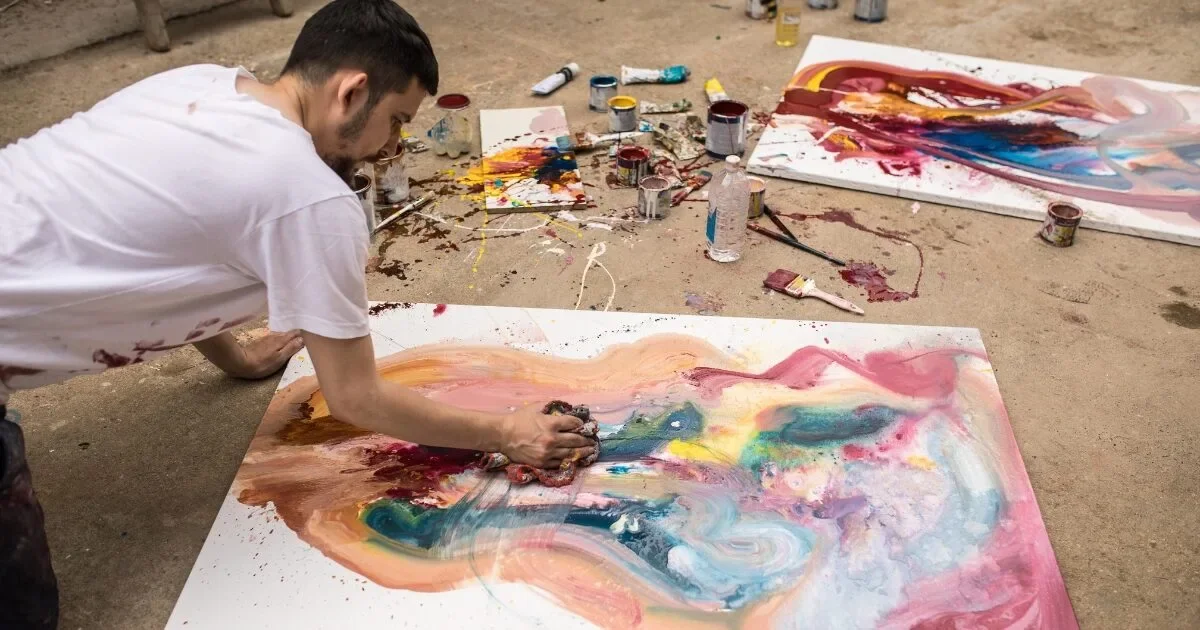
That kind of storytelling doesn’t always fit into the neat, polished aesthetic many local galleries want. It’s about paint-stained hands, closed gallery doors, and the quiet courage it takes to keep creating in a place that doesn’t quite know what to do with you.
History, Heritage, and the Weight of Where We Come From
In the Middle East, art is deeply interwoven with history and identity. We carry the weight of ancient civilizations and present-day conflicts. From Mesopotamian motifs to the rawness of modern war-torn cities, our art often serves as a record of both beauty and brutality. It speaks to displacement, exile, longing, and love.
In contrast, Malaysian art history—though just as rich—has grown out of a different soil. Here, art has often been a form of post-colonial expression, identity reclamation, and cultural pride. It’s beautifully diverse, drawing from Malay, Chinese, Indian, and Indigenous traditions. But it’s also young compared to the centuries-old visual language I was raised in.
That difference isn’t a problem—it’s a treasure. But it also means I’m constantly straddling two artistic identities, one that feels too foreign to be embraced here, and another that is invisible in the local narrative.
The Invisible Artist
There are real barriers, too—logistical, financial, and legal. As a foreigner, it’s harder to rent gallery space, apply for grants, or even join artist collectives. Many initiatives prioritize local creators, which makes sense in a national context—but it also means I’m often excluded from opportunities to grow, connect, and contribute.
I started volunteering in refugee camps and community centers, teaching art to kids who, like me, are caught in the in-between. That work has given me purpose, but not visibility. And in an industry that thrives on networking and exposure, visibility is everything.
“I just want to be seen as an artist,” I told a friend recently. “Not as a foreigner, not as a guest. Just someone who creates.”
Why I Still Paint
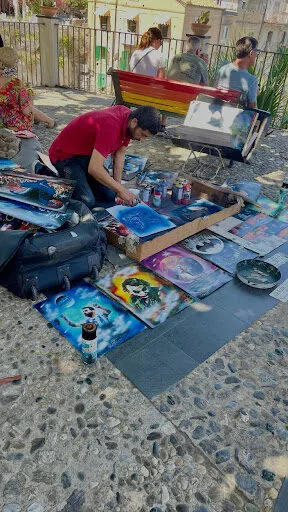
Despite everything, I still paint. I still teach. I still show up. Not because it’s easy, but because I believe in the power of art to bridge the spaces where words fail. I’ve started my own small line of stickers and prints—tiny windows into my world—and I sell them at art markets where I can meet people face-to-face. It’s not a gallery, but it’s something.
To the 20- or 30-something creatives out there who care about justice, identity, and voices on the margins: seek out the foreign artists in your city. Listen to their stories. Invite them in. Art needs many voices, especially those that speak from places we’re not used to hearing.
This story is mine, but it’s not just mine. It’s one of many.
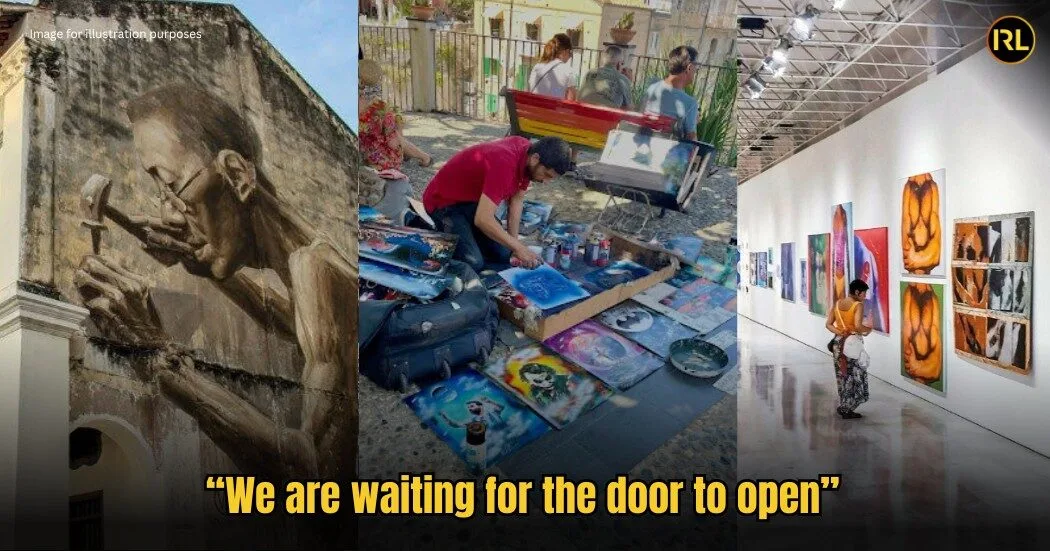
We are here. We are painting. We are waiting for the door to open.
Have a story to share?
Submit your story to ym.efillaerni@olleh and you may be featured on In Real Life Malaysia.
Read also:
More from Arts & Culture
From State Basketball Player, to Farmer, to Artist: How M’sian Richie Tan Defied A Conventional Career
This story is about choosing the uncertain path, defying tradition, and turning raw emotional chaos into something that moves people—through …