







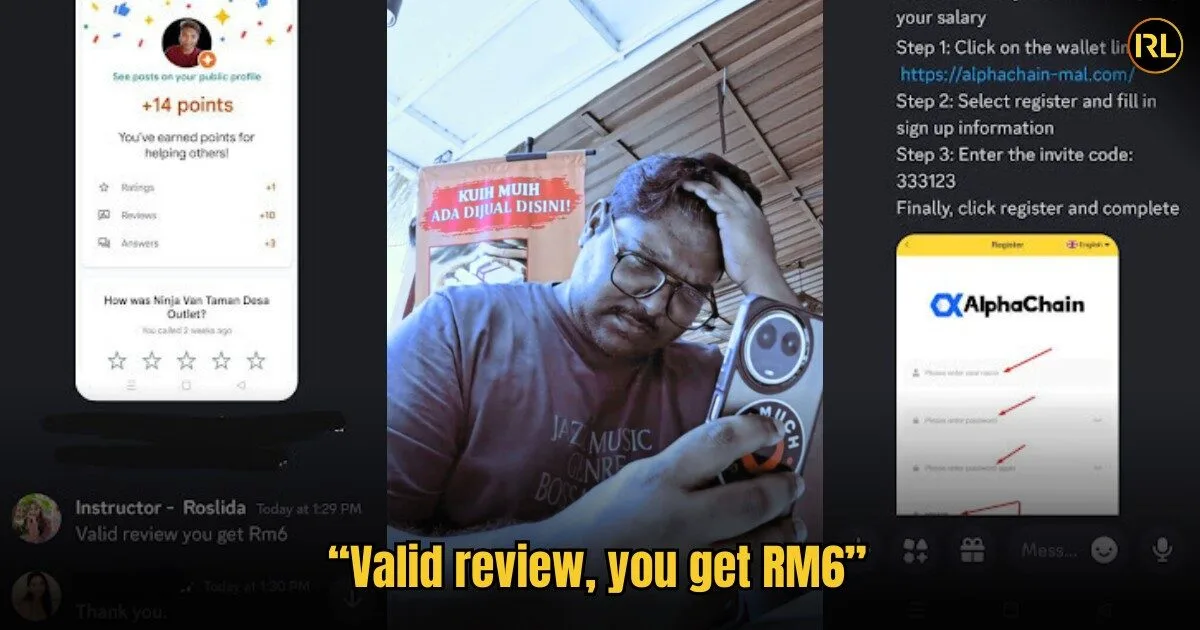
Ever wondered what goes on in a work-from-home scam? This story is shared by someone who investigated the AlphaChain scam. Here’s what he found.
In today’s digital age, work-from-home scams continue to evolve while their modus operandi remains eerily familiar.
Recently, an ad promising easy money by leaving Google reviews caught my attention. The enticing promise of earning from the comfort of home quickly turned into a harrowing encounter, revealing yet another layer of deceit in the online job scam universe.
The Bait and the Switch
The scam began with a seemingly harmless click on an advertisement that read, “Leave Google reviews and earn money from home.” The ad led me to an inbox operated by an individual using the fake ID “Siti Aishyah.”
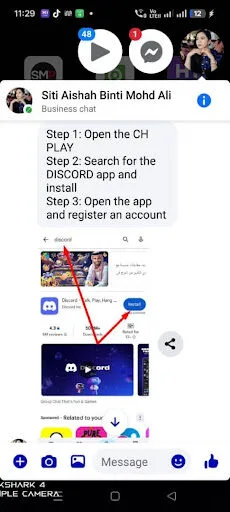
Pic 1 – Upon clicking an advertisement for a Work From home opportunity, an inbox message from Siti Aishah Binti Mohd Ali appeared.
The conversation escalated quickly: I was instructed to download Discord and add a “mentor” named Roslinda to begin training for the job.
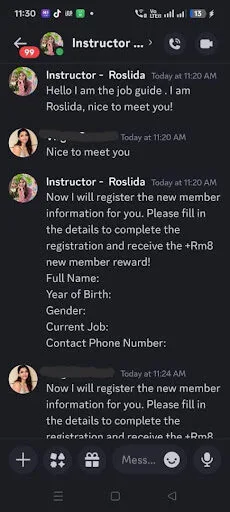
Pic 2- Roslida introduced herself as the job guide. My personal details were collected to register me as the new member.
Soon after, I was invited to join a Discord server labeled “Google Review Jobs,” where dozens of profiles—mostly bots—were active. Their constant updates about completed tasks and received payments painted a convincing picture of legitimacy.
The operating style was strikingly similar to previous scams I had encountered on platforms like WhatsApp and Telegram. In these schemes, the scammers work fast and expect you to keep pace. Any sign of hesitation, questioning, or delay is met with a sudden withdrawal of interest—an all-too-familiar tactic to “reel you in” before abandoning the operation.
The Training and the Task
Playing along, I was soon assigned a small task: posting a five-star review to supposedly earn RM6.
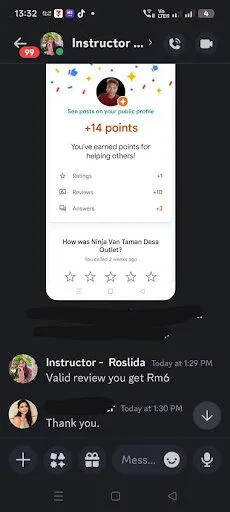
Pic 3 – I was asked to perform a task of giving a 5 star Google review to a particular business. I was told I’ve already earned RM 6.
Following this, the mentor asked me to sign up for an “Alpha Chain” account to receive the money—a move that immediately raised red flags. Suspecting the link could lead to a phishing site, I hesitated.
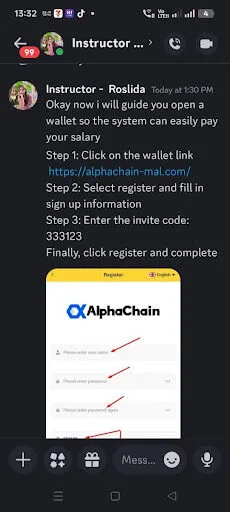
Pic 4 – In order to withdraw my current and future earnings. I was told to open an AlphaChain account.
Inside the Discord channel, I managed to strike up conversations with a couple of real humans among the sea of automated profiles.
They revealed that, in their cases, scammers had instructed them to deposit money into their Alpha Chain accounts before releasing any payments. However, none had yet received the promised funds.
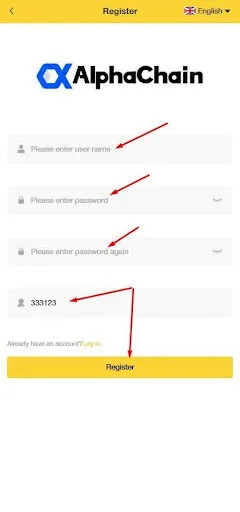
Pic 5 – This is the interface of the AlphaChain registration.
One distressed individual lamented that they had accumulated nearly RM8,000 by doing tasks, only to be at risk of vanishing unless she deposited RM 200 to allow the finds to be released.
Their stories painted a grim picture of how these scams not only lure victims into a false sense of security but also trap them in a web of financial deception.
A Glimpse Into the Past
This wasn’t my first encounter with such scams. During the Movement Control Order (MCO), I experienced a similarly elaborate scheme.
Back then, the scammers spun a tale linking the booming e-commerce platforms, Lazada and Shopee, with an urgent need for positive reviews.
They claimed that new businesses—lacking the established ratings of long-standing outlets—needed a boost to compete in an increasingly competitive market. The narrative was both believable and persuasive.
Initially, I received a small deposit of RM50 for my reviews, which seemed to confirm the scam’s legitimacy. The tasks were straightforward: post reviews, assign ratings, and occasionally buy an item to trigger a bonus payout.
For instance, after buying an item worth RM58, I received RM98 in my account. This cycle of tasks and “reimbursements” continued until I was presented with a much larger sum: a task requiring me to transfer RM1,288.
Up until that point, I had only risked RM8 of my own money, with the remainder being the scammers’ funds—ostensibly held for me.
The Breaking Point
The scam took a devastating turn when, after transferring RM1,288, I received a message claiming that I had not completed the task within the allotted time, forfeiting RM1,200 of the amount. The mentor then offered a “rescue” task: transfer RM600 to a specified account, promising a total return of RM2,800 once completed.
Desperate to recover what I believed was rightfully mine, I complied. However, after transferring the RM600, silence reigned.
I was abruptly removed from the task group, and the mentor vanished without a trace. That RM600, which I had earmarked for my monthly rent, was gone forever, leaving me financially strained and emotionally rattled.
Lessons Learned and Words of Caution
The evolution of these scams—from WhatsApp and Telegram to now using Discord—demonstrates that while platforms may change, the underlying tactics remain the same.
Scammers prey on those in search of quick and easy money, crafting elaborate narratives and using social proof to lure in potential victims.
Their modus operandi is consistent: bait with small rewards, build trust through staged successes, and then extract larger sums of money with the promise of even greater returns.
Here are some key takeaways to protect yourself:
- Be Skeptical of Vague Job Offers: Advertisements that promise unusually high earnings without a clear explanation of the work involved are red flags. If the job description is ambiguous or overly simplistic, it’s best to steer clear.
- Avoid Unverified Platforms: Scammers often use legitimate platforms like Discord, WhatsApp, or Telegram to mask their activities. Verify the authenticity of any account or group before engaging.
- Don’t Rush Into Financial Commitments: Whether it’s signing up for unfamiliar accounts like “Alpha Chain” or transferring money, always take time to research and verify the legitimacy of the request.
- Trust Your Instincts: If something feels off or too good to be true, it probably is. Heed any gut feelings and consult trusted sources or friends before proceeding.
These scams not only have financial repercussions but can also lead to emotional distress and shattered trust. By sharing these experiences and lessons learned, the hope is that others will be more cautious and avoid falling prey to similar deceptions.
Ultimately, in the fast-paced world of online opportunities, vigilance is key. Always remember that if a job or task seems too enticing and lacks transparency, it’s wise to step back and reassess. Stay informed, stay alert, and safeguard your financial wellbeing against these ever-adapting schemes.
Have a story to share?
Submit your story to ym.efillaerni@olleh and you may be featured on In Real Life Malaysia.
Read also: “I Thought I Had Made It In Life,” Shares M’sian Woman Who Regrets Buying a House – In Real Life
“I Thought I Had Made It In Life,” Shares M’sian Woman Who Regrets Buying a House
More from Scams

“I Lost RM10,000 to a job scam,” shares 29 YO Unemployed M’sian Woman
This is the story of how an unemployed woman, despite being highly qualified, lost almost RM10,000 in this scam that …
“I got scammed out of RM13k by a fake rental,” shares 35 YO M’sian woman
This is the story of how a Malaysian woman was scammed by a fake agent while trying to rent a …

27 YO M’sian woman who lost RM8,000 shares,“I never thought a young person like me would become a victim”
This is a story of how a young Malaysian woman in her 20s was a victim of a debit card …