




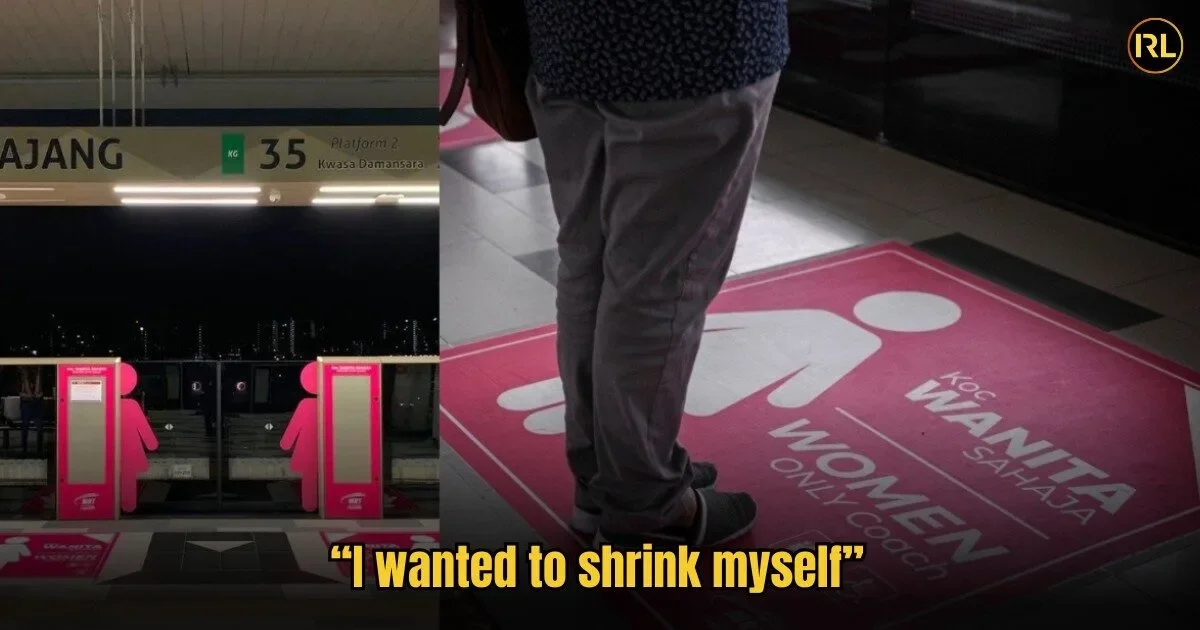
This story is about one woman’s experience with the awkward glances, the silent tension, and the self-awareness that comes with not quite “fitting in”—because she ‘looks’ like a man.
It’s about being a 30-year-old woman with a masculine appearance, and what happens when you step into the women’s coach of the MRT.
If you’ve ever felt out of place, misread, or stared down by strangers in a space where you were supposed to belong, this one’s for you.
A Normal Day—Until It Wasn’t
It started like any other commute. I was heading home from work—tired, headphones in, book in hand. I stepped into the women’s coach of the LRT, looking for a quiet seat where I could zone out for the next few stops. The coach was half full. I sat near the end, by the window.
And then I felt it. That subtle shift in atmosphere. The kind you can’t quite describe but definitely notice. It wasn’t dramatic—no one said anything, no one moved away—but the eyes, they lingered.
I can feel their glances like static on my skin, I remember thinking. It’s that look people give when they’re trying to figure out if you belong—or if you’ve made a mistake.
I know I don’t look like a typical woman. I have broad shoulders, a strong jawline, and I dress more androgynously than most women around me. Still, I’ve never questioned whether I should be in the women’s coach. But that day, they did.
The Stare That Asks, “Why Are You Here?”
It’s a peculiar thing—being a woman whose appearance doesn’t match conventional femininity. People don’t always say what they’re thinking, but their faces speak volumes.
Some stared and quickly looked away. Others kept looking, uncertain. I caught one woman whispering to her friend, eyes darting toward me and then away. I knew that look: it wasn’t malice, but discomfort.
“They weren’t trying to be mean. But they were trying to place me. And they couldn’t,” I said to a friend later that day.
There’s an unspoken assumption in gender-segregated spaces: you either fit the mold, or you don’t belong. And when you challenge that mold—intentionally or not—you become a question mark. A glitch in their expectations.
Why It Happens: Our Eyes Are Trained to Sort
To be fair, this reaction isn’t new, and it’s not always personal. We live in a world where people are taught—consciously or unconsciously—to sort others into boxes: man or woman, safe or unsafe, belonging or intruding.
And when someone doesn’t fit neatly into those boxes, it creates discomfort. Not because the person is threatening—but because ambiguity triggers uncertainty.
This happens even in women-only spaces, which are designed to be safe havens. But for women who don’t look like women in the traditional sense, these spaces can feel less like sanctuaries and more like stages.
The Emotional Cost of Being Misread
It’s easy to shrug and say, “Who cares what strangers think?” But when it happens repeatedly—on trains, in bathrooms, at security checks—it takes a toll.
That day on the LRT, I stayed calm. I didn’t move. I reminded myself I had every right to be there. But I also spent the rest of the ride hyper-aware of my posture, my facial expression, even how I crossed my legs.
“I wanted to shrink myself. Not because I was ashamed, but because I was exhausted,” I later wrote in my journal. “Exhausted from always having to prove I belong.”
This isn’t just about me. It’s about anyone who’s ever been misgendered, misread, or misunderstood in spaces where they’re just trying to exist.
What We Can Learn: Make Space for the In-Between
If there’s a takeaway from this story, it’s this: belonging isn’t always about who you are—it’s about whether others let you be who you are.
We need more awareness around the diversity of womanhood, femininity, and gender presentation. Not every woman wears dresses. Not every woman has delicate features. And not every woman fits into a neat, pink-colored box.
To the 20- or 30-something reading this, especially if you consider yourself progressive or empathetic: practice that empathy in the quiet moments. When someone walks into a space and makes you hesitate—pause before you judge. Ask yourself: Am I reacting to them, or to my own conditioning?
Because inclusion isn’t just about policies and Pride Month posts—it’s about what we do with our eyes, our thoughts, our whispers. Especially when we think no one’s noticing.
Final Thoughts
That day on the LRT didn’t end with a confrontation or a viral TikTok moment. It ended with me getting off the train, a little more drained, but also a little more resolved.
I’ll keep riding the women’s coach. I’ll keep taking up space. And maybe, if people like me keep showing up, the stares will eventually fade into familiarity.
Until then, I’ll remind myself—and maybe you, too: we all deserve a seat, no matter how we look.
Have a story to share?
Submit your story to ym.efillaerni@olleh and you may be featured on In Real Life Malaysia.
Read also: I Earn RM15,000 Monthly as a Designer After Teachers Said I’d Have No Future – In Real Life
I Earn RM15,000 Monthly as a Designer After Teachers Said I’d Have No Future
More from Social Causes
“I’m Proud to Stand up For My Countrymen,” says Burmese Student in M’sia Fighting for Rohingya Rights
This is the story of a foreign student from Myanmar who dares to raise awareness for the rights of the …
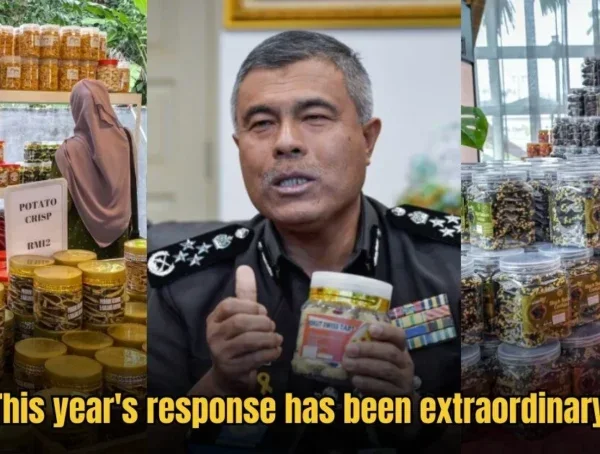
Over 60,000 Jars of Raya Cookies Sold by Kajang Prison Inmates During Raya
This story is about Malaysian prison inmates who, remarkably, have produced and sold over 60,000 jars of traditional Raya cookies …