







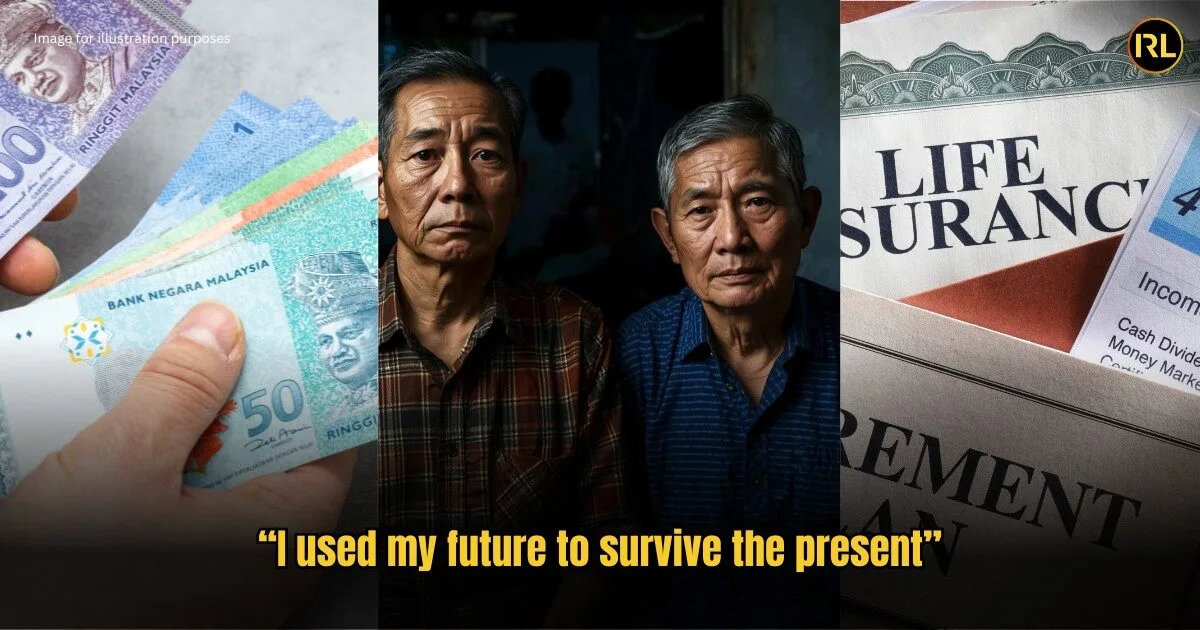
This story is about the victims of Malaysia’s retirement crisis whose EPF savings are less than RM10K.
Malaysia is on the brink of a retirement crisis as millions of citizens struggle to maintain adequate savings in their Employees Provident Fund (EPF) accounts. The issue has become more urgent following multiple withdrawals permitted during the COVID-19 pandemic, leaving countless individuals with significantly reduced retirement funds.
According to EPF statistics, nearly 40% of members have less than RM10,000 in their accounts, while a staggering 20% have less than RM1,000. Financial experts warn that these alarming figures could result in a future where many Malaysians are unable to sustain themselves after retirement. EPF’s basic savings target is RM240,000 by age 55, but many fall far short of this goal.
EPF Chief Strategy Officer Nurhisham Hussein expressed his concern, stating, “The reality is that many Malaysians do not have sufficient savings to retire comfortably.” He also acknowledged that while the pandemic-related withdrawals helped in the short term.
they ultimately “did more harm than good” by severely impacting long-term retirement security.
Withdrawals During the Pandemic: A Necessary Risk?
During the COVID-19 pandemic, the Malaysian government allowed four special withdrawals from EPF accounts to alleviate financial burdens, namely i-Lestari, i-Sinar, i-Citra, and a one-time RM10,000 special withdrawal. These initiatives collectively saw RM145 billion being withdrawn by 8.1 million members, significantly weakening the retirement savings of countless Malaysians.
While these withdrawals provided immediate relief, they also drastically reduced members’ long-term savings. For some, it was a lifeline during a crisis, but now many are left with an uncertain financial future. Many contributors are struggling to replenish their savings as they face rising living costs, inflation, and stagnant wages.
Financial planner Carol Yip noted that many people did not fully grasp the long-term impact of withdrawing their savings. She emphasized that while withdrawals might have been necessary to survive the pandemic, the reality of depleted retirement funds now poses a severe challenge.
Experts have pointed out that the pandemic exacerbated pre-existing issues with retirement savings, as many Malaysians were already facing challenges in maintaining adequate funds for old age. Some have urged the government to implement stronger safeguards to prevent future emergencies from draining retirement funds.
Low Savings and the B40 Community
For many low-income earners, the situation is even more dire. A significant portion of the B40 (bottom 40% income group) exhausted their EPF savings during the pandemic, leaving them with minimal funds to rely on for retirement. The Malaysian Trades Union Congress (MTUC) has called for urgent action to address the issue, warning that many Malaysians may be forced to continue working well into old age just to make ends meet.
EPF also revealed that 6.7 million members have less than RM10,000 in savings, which is far from sufficient for a basic retirement. Even more concerning, 3.1 million members have less than RM1,000 left, which leaves them highly vulnerable to financial hardships.
EPF Chairman Tan Sri Ahmad Badri Mohd Zahir stressed the importance of improving financial literacy and cultivating a culture of long-term savings.
He highlighted that even before the pandemic, many Malaysians were struggling to save enough, and the crisis only worsened the situation.
Reform and the Path Forward
As concerns over insufficient retirement savings grow, calls for EPF reform have intensified. Suggestions include stricter withdrawal policies to safeguard funds for old age, increasing mandatory contributions, and encouraging voluntary top-ups to help bolster savings.
Financial literacy is seen as a key component to prevent future issues. Nurhisham Hussein emphasized the importance of teaching financial planning skills early on, stating, “It’s crucial that we address this issue through education and policy reform to ensure a more secure future.”
Moreover, the government is urged to introduce holistic policies that not only secure EPF savings but also address the root causes of financial insecurity, such as wage stagnation and the high cost of living. Introducing retirement planning modules in schools and workplaces is also being considered to instill better financial habits from a young age.
Economist Yeah Kim Leng pointed out that Malaysia’s current social protection system is inadequate and requires urgent reform to provide better security for retirees. He stressed the importance of a multi-pillar approach that combines EPF savings, private retirement schemes, and social assistance programs.
Social activist Datuk Dr. Denison Jayasooria also raised concerns about the increasing number of retirees living in poverty and called for better social safety nets to protect the vulnerable elderly population.
While debates continue, the government is being urged to take proactive measures to protect retirement savings and promote a culture of financial responsibility among citizens.
Write in. Tell your story. Get paid.
Share your story on our Facebook page and you may become a contributor for In Real Life Malaysia.
I Made Sure My Ex-husband Lost Everything After He Cheated On Me With A 21 Year Old Influencer
More from Real Personal Finance

“I’m Also Getting Stressed” Fresh Grad With RM7K Salary Can’t Finish Spending It
A fresh graduate has set Malaysian social media alight after sharing that his biggest financial worry is having too much …

“I Drive Grab Instead of Choosing Retirement” Shares 65 yo M’sian Man
This is a story of a 65-year-old Grab driver who lost his job after COVID and instead of retiring chose …

How Much Can You Actually Make Selling at Bazaar Ramadan?
In this thinkpiece, one writer digs deep into the numbers to find an answer to the question posed by inquiring …