






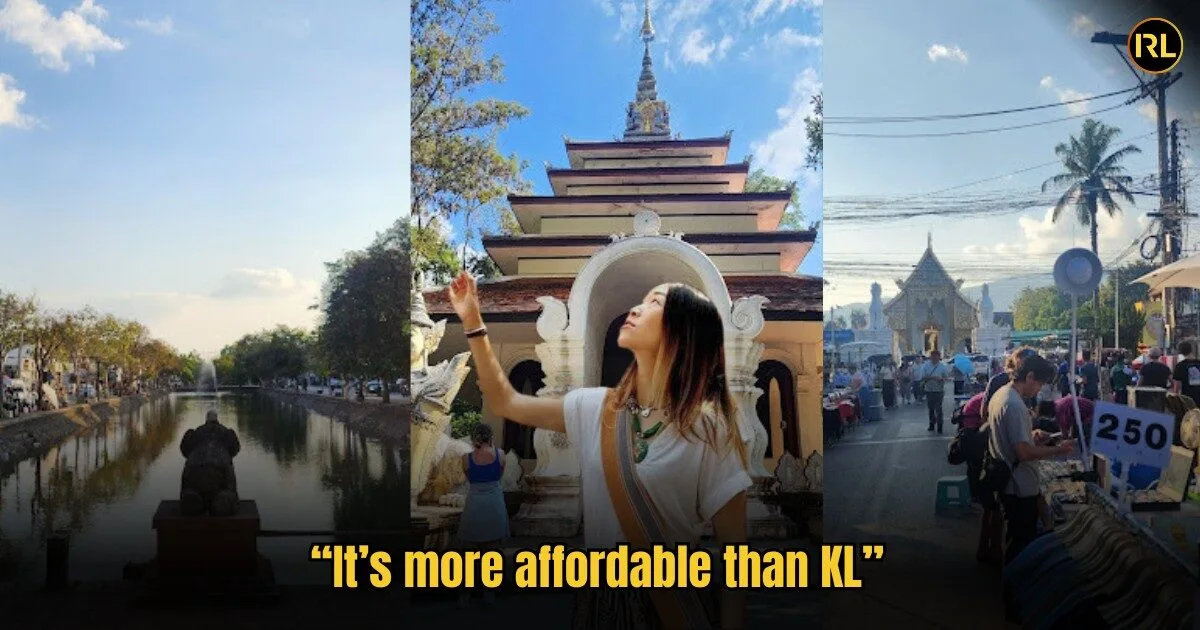
This is a story of how much one Malaysian saved living in Thailand as a remote worker.
“Whoa, Thailand’s actually feasible!”
The first time I did the maths, the possibility of living in Thailand became more concrete to me, and less of an abstract idea.
When my partner first brought up the idea of relocating out of Malaysia, I assumed it’d be a temporary escape.
I envisioned a three-month getaway to recharge somewhere with good Wi-Fi (internet penetration in Thailand ranks one of the highest in Southeast Asia), tasty street food, and maybe a few fewer jam-packed LRTs.
I wasn’t expecting to save a lot of money, given the rising cost of living in Bangkok. But surprise, surprise: I ended up trimming my monthly expenses without even trying that hard.
Let me explain how living in Thailand gave my wallet some breathing room and increased my overall sense of well-being, as an unintended side effect.
Your Ringgit Feels Richer in Chiang Mai
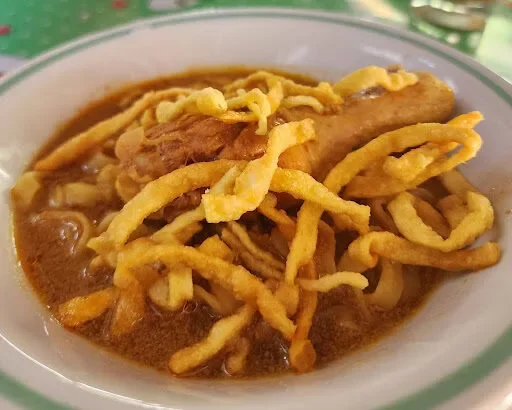
Chicken khao soi topped with crunchy fried noodles. Photo: Irene Chan
KL isn’t that expensive until you start making the comparisons. Rent, Grab fares, the occasional banana leaf rice binge—it all does add up.
I currently split most of my time between Bangkok and Chiang Mai, with the lower cost of living in Chiang Mai providing most of the savings.
Here, everything feels a little bit kinder on the budget, without compromising on city modern conveniences.
Here’s a comparison of the minimum amount you’d be expected to fork out per month in Chiang Mai versus KL:
- Rent: THB6,000 (RM787) vs. RM1,000
- Utilities + Wi-Fi: THB1,000 (RM131) vs. RM200
- Food: THB5,000 (RMR656) vs. RM900
- Transport: THB2,000 vs. MYR500 (motorbike + fuel vs. Grab car)
To be clear, we weren’t roughing it at all to save costs. When we first landed in Chiang Mai, we chose to stay at a clean, modern condominium with a pool, gym, and 24-hour security, and the rental was surprisingly affordable given how nice our accommodation was.
Pad krapao gai (basil chicken) with a fried duck egg on top became a regular lunch favourite.
A Northern Thai dish I quickly fell in love with was khao soi — a noodle dish somewhat similar to curry laksa, but perhaps better (sorry, fellow Malaysians), with the addition of crunchy fried noodle bits.
Dinners were usually gai yang (Thai roast chicken) and khaw niao (sticky rice) from a night market, or hearty pre-cooked, packed meals from any nearby supermarket.
Most supermarkets in Thailand (think Tops, Fuji, FamilyMart, MaxValu) offer pre-cooked packaged meals to minimise wastage of perishable goods, and even the ubiquitous 7-Eleven offers a good selection of reheatable meals — surprisingly healthy-ish, with reasonable macros (meals with a good amount of protein are essential for this gym bunny!)
All those options are affordable, filling, and honestly tastier than anything I could be bothered to cook for myself.
Same Work, Different View
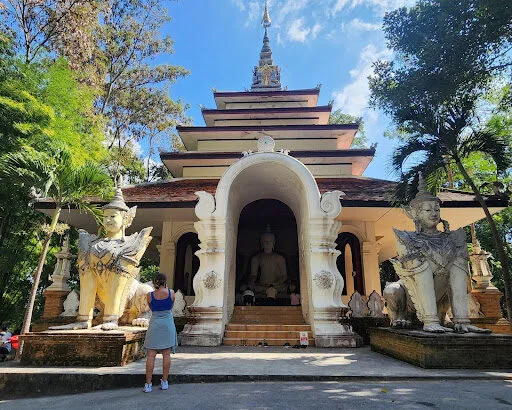
The Wat Pha Lat temple, which is at the peak of the popular Monk’s Trail hike. Photo: Irene Chan
In the first year of living in Thailand, I kept the job I had in Malaysia—same clients, same deadlines (with an hour’s time difference), but somehow doing it in Thailand was such a lovely change of pace I found myself more inspired and energised than ever, even when faced with the prospect of hammering out a 10-page research report.
My morning routine would typically start with an exceptionally affordable iced coffee from a street vendor (THB25!), or at one of the many excellent cafés in Chiang Mai.
The province is coffee-growing territory, so the sacred bean juice is in abundance here, of top-notch quality, and CHEAP.
This would be followed by work sprints in cafés where the Wi-Fi actually worked. After living in Malaysia for so long, where the connection is often patchy, working remotely in Thailand, where Wi-Fi is almost always extremely reliable, felt like a revelation.
The apps that helped me ease into the digital nomad existence were: Notion, Slack, Zoom, Asana—and yes, GrabFood when I was too lazy to leave the condo. But what really shifted was the mental space: I felt a lot less burnt out, even though my work schedule remained the same.
Chiang Mai’s proximity to nature meant I could spend my weekends hiking, climbing, or camping. Or visit the art markets, which the city is also famous for.
Some days, it was very peaceful to do a sunset stroll around the historical Old City section of Chiang Mai.
The crisp year-end Thai winter weather was a bonus — I was all smiles as I pulled on a jumper on an especially chill morning—it was 14C at 9am. We didn’t even need to leave Southeast Asia for cool weather!
Additionally, since Chiang Mai is a hub for SEO specialists, with a yearly SEO conference held in the city, my content writing skills eventually began to improve. The networking I did also expanded my client base to better-paying companies from countries such as the US and the UK.
The Savings Breakdown
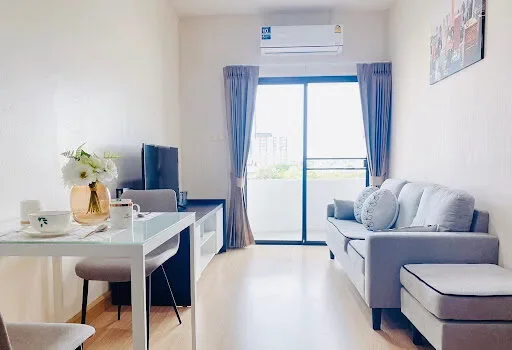
Mountain-facing one-bedroom apartment in Chiang Mai. Photo: Chiang Mai MyHome / Facebook
On average, I saved around RM800 to RM1,200 per month compared to life in KL.
Rent, transport, and food were all cheaper than in KL, even if Thai fuel prices are higher than in Malaysia — we had the option of either renting a scooter or just getting around on the local transport, red trucks locals refer to as “songthaews”.
I even got into the habit of going for weekly massages, which felt very indulgent but were actually very affordable (RM30).
The occasional weekend trips I treated myself to were equally inexpensive and could cost as little as RM100.
And here’s a bonus pro tip for savvy shoppers: the thrifting culture is huge in Thailand, especially among young, hip locals—and you can easily score a pair of pre-loved jeans for THB100 (RM13) in Chiang Mai!
Despite my family’s concerns, my move to Thailand wasn’t sacrificing my quality of life. In fact, it has improved it.
Wasn’t Just Monetary Savings
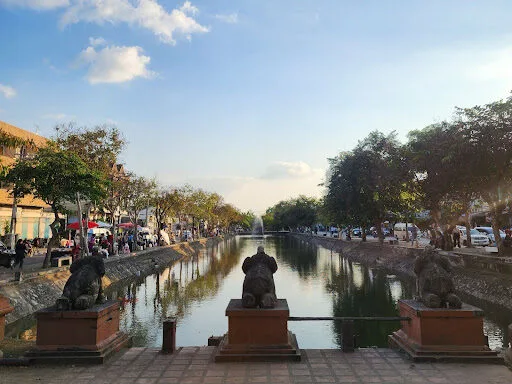
An ancient moat — constructed as part of the defensive walls built in 1296, in the Old City section of Chiang Mai. Photo: Irene Chan
A few months into living in Thailand, I realised that while I’d saved a significant amount financially, that wasn’t the biggest gain for me. I also felt a greater sense of peace—I didn’t realise how lacking that was in my life until I decided to move.
There is an unspoken softness, a sense of consideration that is very much a part of Thai culture.
People here are sabai-sabai, the embodiment of the Thai cultural value of taking things easy and enjoying a relaxed state of mind, and generally prefer to resolve issues gently and with compassion.
Since the concept of karma shapes their general philosophy towards life, Thais live by the idea that people are responsible for their own actions and the consequences they face as a result. As a result, they generally go out of their way to help others, even complete strangers.
I’ve lost count of all the times a random Thai person has run up to me to zip up my backpack.
I’m notoriously scatter-brained and tend to misplace things due to ADHD, which often causes a lot of stress and anxiety. But here in Thailand, I’ve not experienced as much opportunistic theft— I’ve had to retrieve items left behind at public places countless times, and have almost always had them returned.
And here in Chiang Mai, it feels like there’s more space to breathe. Even the occasional traffic, chaotic as it might appear to be, doesn’t carry the same angry urgency I’d grown used to in KL. Before I moved to Thailand, it would never have occurred to me to wind down my car window to ask the driver in the adjacent vehicle for directions!
Some Things Did Cost More
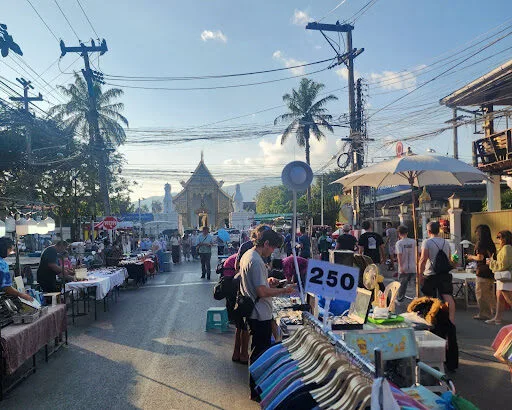
Sunday Walking Street — the famous weekend market in Chiang Mai. Photo: Irene Chan
Of course, aside from the rosy picture I’ve just painted, the reality is, there will always be some “surprise” costs. I had to buy additional health insurance, which cost me RM150/month. Although it’s possible to get decent healthcare at public hospitals, the peace of mind was worth the cost.
Visa runs weren’t cheap — a border hop to Laos or a flight to Penang added a few hundred ringgit every 2 to 3 months.
Tourist visas can get tricky, and in 2020, there were crackdowns on digital nomads who were entering the country too frequently as tourists.
As a result, we ended up paying for an education visa. We opted to study Thai, which proved helpful for living in Thailand. However, this also meant covering the cost of enrolling in a proper language school, and keeping up with studies became a significant time commitment.
I’ll file this under “First World Problems”, but an unexpected cost was frankly the temptation to travel. Flights to Krabi, day trips to Pai, beach escapes—there are many amazing tourist destinations within Thailand, and while generally affordable, the costs did begin to add up.
And I’d do it all over again because those expenses weren’t just necessities—they were experiences I never thought I would have if I’d just stayed on in Malaysia.
Should You Try It Too?
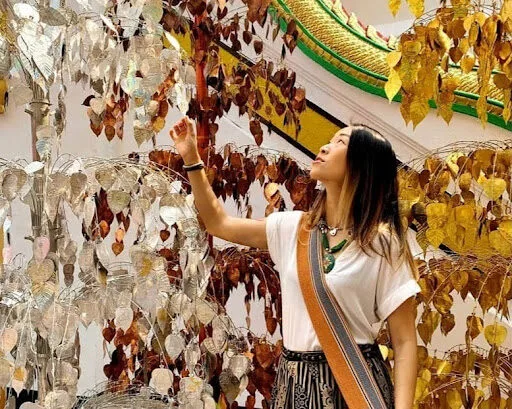
The (very shiny) interior of the Doi Suthep temple in Chiang Mai. Photo: Irene Chan
If you already freelance and/or work remotely, have an income that at least covers the cost of living in Malaysia, and crave a lifestyle shift, Thailand can be a surprisingly doable option.
But this lifestyle is not for everyone. You’ll need some savings as a buffer, and the flexibility to adapt to a new environment and culture. And also: enough self-discipline to not let the feeling of being in a perpetual “holiday mode” kill your productivity.
That said, even a 3-month nomad experience might bring clarity on what you want from work and life.
TL;DR: Saved Money — and Also Saved My Sanity
Living in Thailand made me rethink what I thought was “normal.” I didn’t just save money, I broke myself out of the exhausting cycle of overwork and under-living.
So if you’re currently stuck in the grind, constantly doing the mental math between rent and groceries every month—maybe this article might inspire you to try something different. Who knows, the sabai-sabai life might just be what the doctor ordered.
Have a story to tell?
Share your story on our Facebook page and you may be featured on In Real Life Malaysia.
Read also: A Toast to Sarawak: The Culture Behind Tuak and Langkau
More from Travel

“I wanted to taste Melaka,” shares a M’sian man who felt betrayed by social media
This story is about a Malaysian foodie who thought he was chasing the “real” Melaka flavours. Instead, he was misled …

Planning a Weekend Escape to Kuala Kubu Bharu? Here’s What To Expect
This review is about a quiet little getaway to Kuala Kubu Bharu (KKB), a small town just an hour’s drive …

This M’sian Couple Travelled to 25 Countries On A Shoestring Budget
Despite the simplicity of their kapchai, Alfie and Diana have shown that grand adventures are possible with limited resources.