






In Malaysia, conversations about mental health have slowly become more open—especially after the stress of the pandemic. But let’s be honest: old-school thinking still clings on.
Whether it comes from aunties, uncles, or even well-meaning parents, many of us have heard things like, “Eh, just pray lah,” or “Last time people just tahan only.”
These myths didn’t come from nowhere. They grew from history, culture, fear, and silence. But holding on to them causes real harm—delaying treatment, increasing stigma, and keeping people suffering quietly.
Let’s break down five of the most common myths Malaysians still believe, and why it’s time to let them go.
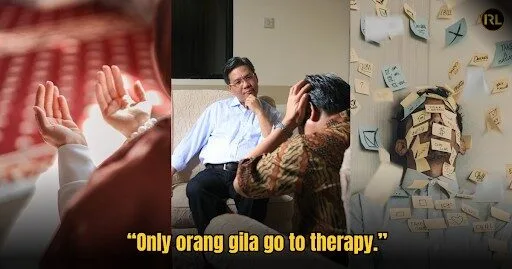
Myth #1: “Only orang gila go to therapy.”
This is one of the most damaging beliefs we’ve inherited. It makes people feel like they have to be “crazy” to deserve help—and that seeking therapy means something is shamefully wrong with you.
“When I finally told my mum I wanted to talk to someone, she said, ‘So now you think you’re gila?’ I kept quiet about it for another year.” — Sara, 22, Johor Bahru
This stigma dates back to colonial-era psychiatric hospitals, where people with severe conditions were locked up. Over time, the word orang gila became a catch-all insult for anyone struggling mentally.
But here’s the truth: therapy isn’t just for crises. It’s a space to process stress, trauma, anxiety, burnout, or even just regular life.
According to a report by Relate Malaysia, only 20% of Malaysians with mental health conditions sought professional help. That’s shockingly low—and stigma is a big reason why.
Myth #2: “Mental illness is caused by weak faith.”
In some households, the moment you say you’re struggling, the response is immediate: “Pray more.” Or worse, “You must have done something wrong.”
“My dad told me to ‘pray more’ when I said I couldn’t get out of bed. As if I hadn’t already been trying.” — Aliya, 26, Kuala Terengganu
It’s a well-intentioned belief—many elders genuinely think spiritual strength can “cure” emotional distress. But while faith can be a source of comfort, it’s not a replacement for professional treatment.
A 2020 survey by RELATE Malaysia found that 78% of Malaysians believe mental illness can be resolved with prayer alone. This belief can cause people to avoid therapy altogether or feel guilty when faith “isn’t enough.”
Mental illness is a medical condition, often linked to brain chemistry, trauma, or prolonged stress. Like with any health issue, treatment is most effective when we combine emotional, medical, and (if relevant) spiritual support.
Myth #3: “It’s just stress, not depression.”
This one’s tricky because stress is common—but not every emotional struggle is “just stress.” When someone is facing clinical depression and they’re told to “just relax,” it can feel incredibly invalidating.
“Every time I said I was tired all the time, my mum would go, ‘Everyone’s tired.’ I started believing I was just lazy.” — Jason, 24, Petaling Jaya
We often confuse temporary stress with depression, but they’re very different. Stress usually has a clear cause and passes with time. Depression lingers, dulls your emotions, kills motivation, and can disrupt sleep, appetite, and energy for weeks or months.
The NHMS 2019 Adolescent Health Survey found that 1 in 3 teenagers in Malaysia reported symptoms of depression. And yet, many adults still don’t recognize what it really looks like in themselves or others.
Myth #4: “Talking about suicide makes people want to do it.”
This myth is particularly dangerous. People believe that bringing up suicide will somehow plant the idea or make things worse. But the opposite is true.
“I tried to tell someone I felt like ending everything. They changed the subject and said not to talk like that—it might come true.” — Nadiah, 19, Ipoh
Avoiding the topic only increases shame. When someone is suicidal, what they need most is a safe space to talk about their pain without fear of being judged or dismissed.
In 2021, according to the News Straits Times, Malaysian police reported over 1,100 suicides, a rise of nearly 81% from the previous year. That’s more than three people per day.
Talking about suicide does not cause it—but staying silent might.
Myth #5: “Therapy is only for rich people.”
Sure, therapy can be expensive—especially in private practice. But that doesn’t mean it’s out of reach for everyone.
“I thought therapy would cost me like RM500 a session. I didn’t even check until a friend said there’s a Klinik Kesihatan one near us.” — Mira, 30, Seremban
This myth sticks around because there’s not enough visibility about affordable or subsidized services. Also, the idea that “mental health is for rich Westerners” still floats around in casual conversations.
In reality, the Ministry of Health now offers mental health services at over 50 Klinik Kesihatan nationwide. And many NGOs and university clinics provide low-cost or even free support.
It’s not about having cash—it’s about knowing where to go.
So… What Now?
It’s time to update our thinking. These myths didn’t come from nowhere—they came from fear, tradition, and a lack of information. But when we know better, we do better. Talking about mental health, reaching out for help, and supporting those who are struggling aren’t signs of weakness. They’re signs of personal responsibility.
Taking care of your mental health means you show up better for your family, friends, and work. It’s a way to live with more clarity, more compassion, and more connection. That’s how we create real community care—not by suffering in silence, but by walking through the hard stuff together.
Mental Health Resources in Malaysia
- Befrienders KL (24/7 Emotional Support): Call 03-7627 2929
- MMHA (Malaysian Mental Health Association): Counselling, therapy, support groups
- Relate Malaysia: Affordable online therapy and education
- Klinik Kesihatan (MOH): Government-run clinics with mental health services
- MIASA: Peer support, advocacy, events
- University Counselling Centres: Free for students (check with your uni)
- Talian HEAL (MOH Mental Health Hotline): Dial 15555
Got feelings you don’t know how to handle? You’re not alone—and you’re not broken. Start by talking to someone. That’s already a win.
Have a story to share?
Submit your story to ym.efillaerni@olleh and you may be featured on In Real Life Malaysia.
Read also: “I Spent RM2.7 Million on a lie,” Shares Betrayed M’sian Husband
“I Spent RM2.7 Mil On A Lie,” shares betrayed M’sian husband
More from Real Mental Health
“I Was Scared of Waking Up in Handcuffs,” shares Depressed M’sian on Repealed Law
In 2023, Malaysia repealed Section 309, a colonial-era law that made suicide attempts a crime. The change marked a shift …

‘Everyone Saw A Successful Student While I Was Crumbling,’ Shares 22 Year Old Student
This is a story of a 22 year old woman who shared her story as a Straight A’s student as …

“We Aim to Democratise Mental Healthcare,” shares Dr. Johan Founder of Chengal Clinic
In this interview, IRL speaks with Dr. Johan Ariff Juhari, psychiatrist and founder of Chengal Centre for Mental Health.