




He was the kind of Malaysian who stood at attention when the national anthem played on morning television. His family subscribed to three newspapers every day and he grew up following current affairs closely. In Form 5, he attended a BERSIH rally alone and experienced tear gas for the first time. In Form 6, he watched BN lose five state governments in one night during the 2008 general election and felt, in his own words, sheer exhilaration. At university, he distributed flyers, organised protests and spoke at ceramahs organised by the local DAP. He believed, with the kind of conviction that is difficult to sustain and easy to lose, that Malaysia could change if enough people pushed for it.
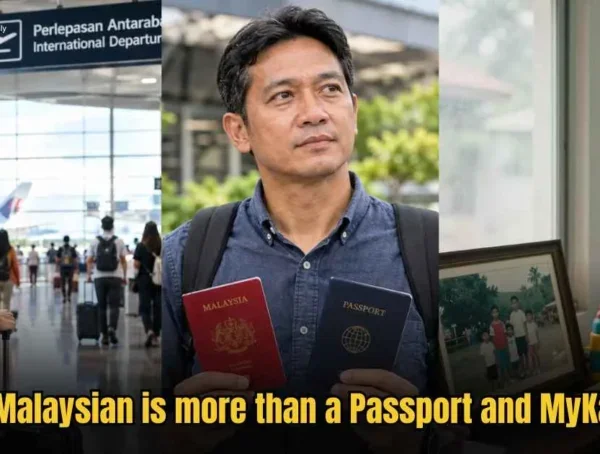
He is a Singaporean citizen now.
When belief becomes exhaustion
In a lengthy farewell letter posted on Reddit, as reported by WeirdKaya, the man reflected on the long distance between the person he was and the decision he eventually made.
His disillusionment did not arrive suddenly.
It came from watching political figures defend the very policies they had once campaigned against, from hearing cabinet ministers say things so different from what they used to say that he wondered whether they believed it themselves.
“An election manifesto is not the Bible,” they said.
What broke him was not the unfulfilled promises on petrol prices, UEC recognition or toll abolition. It was the lack of determination to push through reforms while asking supporters to “look at the bigger picture.” Then came what he described as the final straw: the KK socks controversy, and a shopkeeper ordered to shut down after accidentally displaying the Jalur Gemilang upside down. When leaders did not step in quickly enough to speak up for what was clearly the more sensible thing to do, it was difficult not to feel disappointed.
He moved to Singapore for love, not money
What is notable about his account is how little the salary came into it. After graduating, he worked in Petaling Jaya for several years and described himself as naturally thrifty, someone for whom money was not a primary concern. What wore him down instead was the daily grind of Klang Valley traffic, regularly leaving home before sunrise and returning after dark.
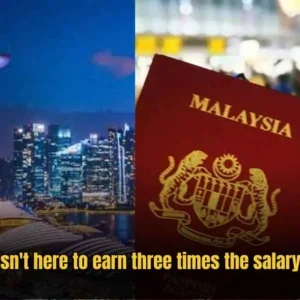
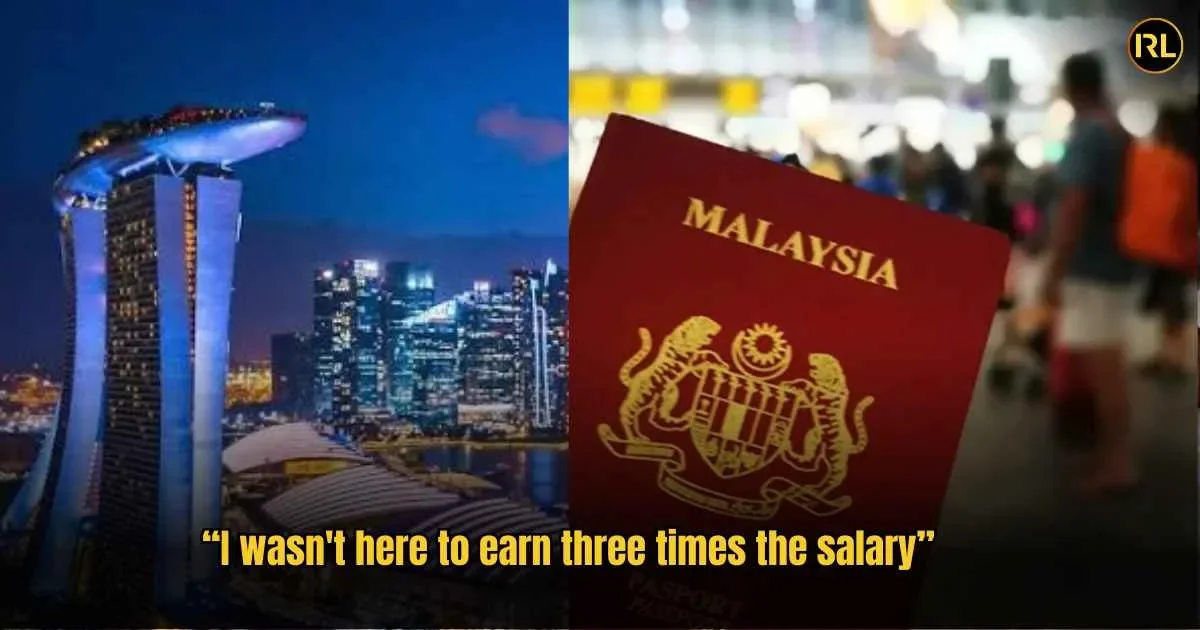
“What frustrated me was spending hours stuck in Klang Valley traffic, regularly leaving home before sunrise and returning after dark. I eventually moved to Singapore to avoid being in a long distance relationship. Yes, really. I wasn’t here to earn three times the salary,” he wrote.
He had become interested in Singapore years earlier, first through a schoolmate who received the ASEAN Scholarship, and later through Lee Kuan Yew’s memoirs, which made him curious about how a country could plan and then actually execute those plans. At 20, he travelled to Singapore alone on a sleeper train to the old Tanjong Pagar Railway Station and spent his trip visiting the Singapore City Gallery, Singapore Mobility Gallery and NEWater Visitor Centre.
He was not there for the shopping but to understand how the place worked.
Starting over with RM3,000
His early years in Singapore were not comfortable. He arrived with little money, borrowed RM3,000 from his brother, and rented a small room in an HDB flat. His first job was at a family-run food ingredients wholesaler, where the pay was slightly below the industry average. He stayed because the hours were regular, his colleagues were kind, and for the first time in years he was able to commute without losing hours of his life to traffic.
Over time, Singapore’s order and predictability settled into something he had not expected to value so much: security. The COVID-19 pandemic deepened that feeling. He was impressed by how the government communicated with its people, managed employment support and maintained essential supplies throughout the disruption. Within a few years, he had also saved enough for his marriage fund.
What Malaysia gave him that Singapore cannot take away
His father has a phrase he has always liked: “Don’t forget your roots.” And the man has not. He credits Malaysia for the Chinese-language education he received, for the depth of cultural understanding it gave him, for the friendliness and easy-going qualities he still carries today. The people who fought for mother tongue education gave him the ability to write this letter in the first place.
He is clear that changing his passport did not change who he is. His culture, his language, the memories of growing up in Malaysia, none of that transferred to the immigration office with his documents.
His farewell letter was written in the final twenty hours before he returned his Malaysian passport and identity card.
“Goodbye, Malaysia. I wish you well.”
Submit your story to ym.efillaerni@olleh and you may be featured on In Real Life Malaysia.
Read also: ‘I gave up my family to pursue my dreams’ Shares 34 YO M’sian woman – In Real Life
https://inreallife.my/i-gave-up-my-family-to-pursue-my-dreams-shares-34-yo-msian-woman/
‘I gave up my family to pursue my dreams’ Shares 34 YO M’sian woman
More from Real People
A New Vintage: Richie on Art, Family and Coming Back
This story is about a Malaysian artist finding his way back to art, family and community and discovering that coming …
“The Bank Just Told Me To Come Home” M’sian Man’s Lost IC Used To Steal Electricity Across Six Factories
Kuang, 35, has never applied for a housing loan, a car loan or a credit card, has never been to …
“Malaysia Was Always Home, Until Now,” shares M’sian dad
I was born and raised in Malaysia. My kampung is Subang Jaya, SS18. I went abroad, studied, got a degree, …