





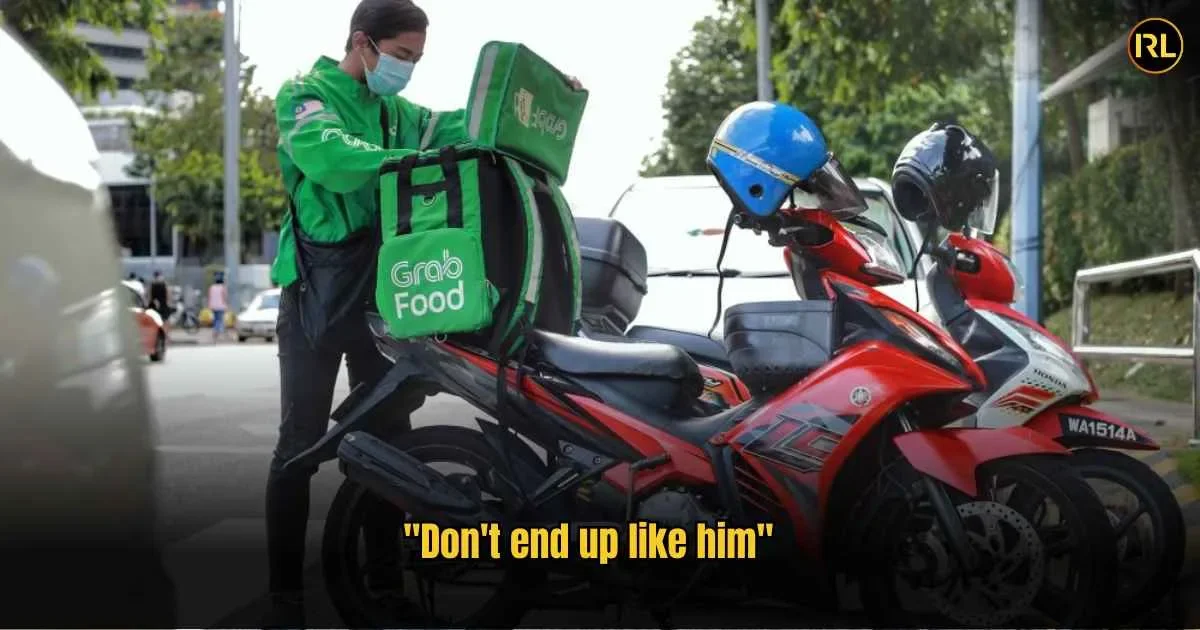
Muaz was waiting alone at an outlet for a food order when he overheard a parent speaking to their child nearby. Study hard, the parent said. Make your mother and father proud.
Then the parent pointed at Muaz and told the child not to end up like him, because delivering food was difficult work that made a person a kuli, a labourer.
Muaz finished waiting for his order, left, and then messaged his sister.
What he wrote that night
His sister shared the exchange on Threads, along with the messages Muaz had sent her. He told her the comment had caught him off guard. He was not angry and did not feel like reacting, just something smaller and different than anger.
“I felt like they were insulting the work I do to make money like this,” he wrote, adding that he was not sure how to make sense of what the parents had said.
His sister said reading his messages made her sad. In her post, she urged people not to speak poorly of someone without knowing their situation or what they may be going through, and expressed hope that the person who had made the remark would see what she had written.
To be a delivery rider
The parent’s remark treated food delivery as something self-evidently shameful, a last resort, a failure of ambition. The reality of what riders like Muaz do every day tells a different story. According to data from Glassdoor, the average monthly income for a food delivery rider in Kuala Lumpur sits at around RM2,000, with earnings fluctuating significantly based on the number of orders completed, time of day, weather, distance, and platform commission structures. Riders bear their own fuel costs, vehicle maintenance, and the physical risk of being on the road for hours at a stretch.
There is no EPF contribution from a platform, no sick leave, no fixed salary waiting at the end of the month regardless of what the week looked like.
Many riders work through public holidays, through rain, through peak-hour traffic, through hours when other people are eating the food they delivered. Some do this alongside other work. Some do this because other work is not available. Most do this because they showed up, took responsibility for their earnings, and got on with it.
What netizens said
The post drew a wave of responses from people who took issue with the parent’s approach. Many commenters pointed out that encouraging a child to study hard did not require humiliating someone else in the process.
One noted that food delivery riders play an important part in daily life for thousands of Malaysians, including those too busy, unwell or tired to leave the house for a meal.
Another said they would teach their own child to respect someone who works hard and earns honestly, regardless of what the job looks like from the outside.
For Muaz, it was a comment made in passing. But as his messages showed, it was also one that stayed with him long after he left the outlet.
Submit your story to ym.efillaerni@olleh and you may be featured on In Real Life Malaysia.
Read also: ‘I gave up my family to pursue my dreams’ Shares 34 YO M’sian woman – In Real Life
https://inreallife.my/i-gave-up-my-family-to-pursue-my-dreams-shares-34-yo-msian-woman/
‘I gave up my family to pursue my dreams’ Shares 34 YO M’sian woman
More from Real People
“No Such Records Exist” Sibu Retiree Searches For RM1 Million Deposited 20 Years Ago
In February this year, a 72-year-old retired Chinese Malaysian man in Sibu was cleaning his home when he found a …
“Goodbye Malaysia, I Wish You Well” Former M’sian Who Gave Up Citizenship Says It Was Not About Money
He was the kind of Malaysian who stood at attention when the national anthem played on morning television. His family …

A New Vintage: Richie on Art, Family and Coming Back
This story is about a Malaysian artist finding his way back to art, family and community and discovering that coming …