






HR took the employee’s side.
I was in the middle of updating payroll when my manager asked me to join a meeting about a “troubling employee.” I asked who. “Venus: She has a second job.” I did a double-take.
That got my attention, but not because a second job is automatically a problem. Almost everyone in Malaysia has side income now. Some sell cakes, some freelance, or drive for Grab. If management was pulling HR into a meeting, I assumed something serious was behind it.
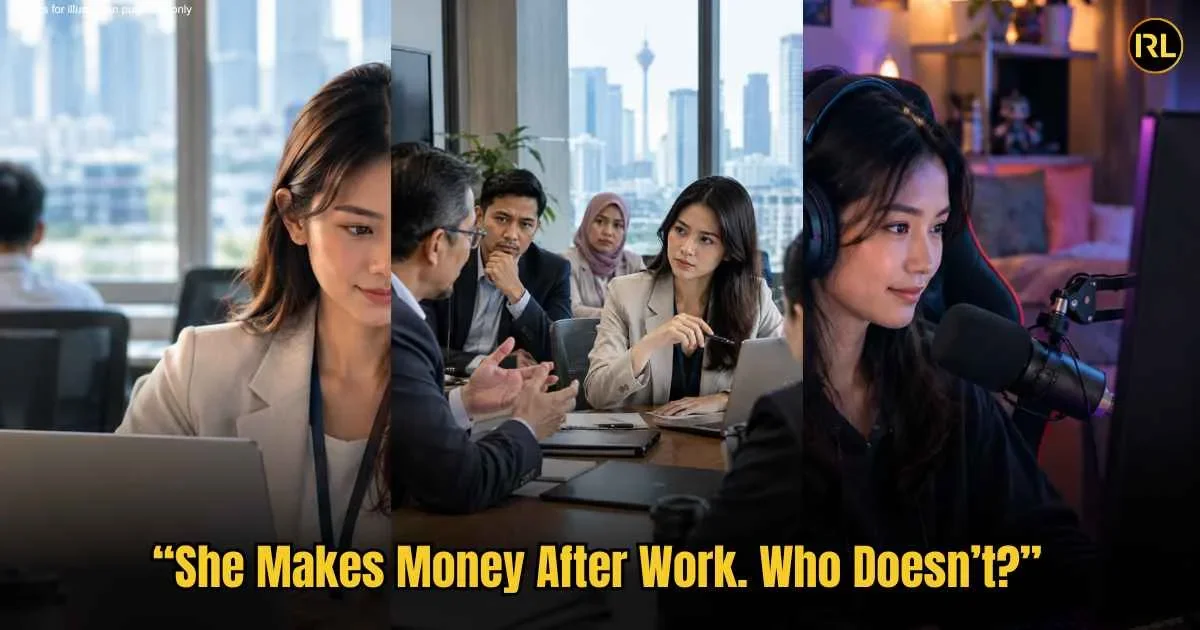
Management explained: Venus streams games on Twitch, Facebook and YouTube, with matching TikTok and Instagram accounts. The crime, it seemed, was that she makes money from it.
A lot of “no” and “I don’t know.”
I asked how much she was making. “We don’t know.” Streaming during work hours? “No.” Using company equipment? “No.” Streaming for a competitor? “No.” Mentioning the company? “No.” Performance dropped? “No.” No missed deadlines, no attendance issues, and no client complaints.
So I asked what we were actually discussing. The answer was how many hours she streamed. It could be two hours or twenty, but if her work wasn’t affected, it wasn’t an HR issue. She was doing something after work that she happened to be good enough at that people paid her for.
I said I’d look into it properly, to establish the facts and check for a real conflict, productivity issue or reputation risk.
Income is the problem
From management’s side, this was never about work performance. It was that Venus had another source of income, and those are two different things. She’d been promoted recently, I was involved in that process, and HR had recommended a better compensation package.
Management rejected it, since it was an internal promotion and she wasn’t offered the same package as an external hire. She accepted the promotion anyway, kept doing her job, and kept streaming. Management worried that if streaming became more successful, Venus might eventually value it over her full-time job. They read that as a possible sign her commitment could change.
“We had this conversation,” I said. HR had already flagged the pay issue when she was promoted. Management chose not to fix it. Now we were in a meeting worrying about her having another income stream. I pointed out that management had already decided what her work was worth, and were now using outside income as evidence she “lacked commitment.”
Earning money elsewhere didn’t change the value of the work she did for us. If streaming eventually hurt her performance, we could deal with that when there was evidence. Until then, it wasn’t a HR or performance problem.
Management brought up “commitment”
I asked what that meant. They said Venus had “one foot out the door” because she was building another career. I asked if she’d actually indicated she intended to leave. She hadn’t. The concern was about what she might eventually do, not anything she’d done.
I asked if the same concern applied to other employees with outside commitments. That’s when the room got uncomfortable. Several of these managers had side activities too: freelancing, family businesses, NGO committee seats. One person in that meeting held a fairly senior charity role. I knew because HR knows these things. “Does that affect your work?” No. “Then why would Venus’ streaming automatically affect hers?”
The company already had a standard for outside activities: Does it create a conflict, breach a policy, or affect performance. I was just applying it evenly. There was no effect on performance here. So, again, what exactly were we disciplining?
The investigation
Management raised a concern, so I investigated. Venus ran separate streaming accounts on Twitch, YouTube and Facebook, plus matching TikTok and Instagram. Management had found them because someone recognised her on stream.
None of it connected to her personal Facebook, her only public personal account. She’d deliberately kept her streaming identity separate. Her accounts were public because streaming is public.
On the things that actually mattered to an employer: no interference with work, her own equipment, her own time, no mention of the company, hours spent streaming irrelevant. Her personal life isn’t the company’s business. The more management pushed HR to dig into what she did online, the more it looked like the issue was something they disliked, not something actionable.
“What are we warning her for?”
No policy prohibited what Venus was doing. Existing policy covered conflicts of interest, competing with the company, misusing resources, or performance problems. My report said there were no HR-related conflicts or performance issues, and that personal disapproval isn’t grounds for HR involvement.
Someone suggested a written warning anyway, just to make the company’s position clear. “What are we warning her for?” Uncomfortable silence. I wasn’t putting a warning in her file because management didn’t like what she did on her own time.
That didn’t make me anti-management or pro-employee. I applied the same standard I’d apply to anyone: Policy breach or performance problem, I act; neither, I don’t. That distinction was unpopular.
I felt the room turn on me. I’d been brought in to deal with a “problem employee,” and now I was the problem for not giving management what they wanted. I was told to protect the company. I said that’s exactly what I was doing, and that protecting the company means knowing when it doesn’t have a case, and refusing to create a disciplinary record without policy, evidence, or a standard applied consistently.
Venus wasn’t asking for anything. She did her job, then did something else after hours.
Nobody is satisfied
The meeting ended without the warning management wanted. I documented it and kept a copy. No confrontation. Venus kept working, kept streaming. No resignations, no firings. I never told her about the meeting.
As far as HR was concerned, we’d looked into a concern, found no employment issue, and closed it. Management gained no enlightenment about side hustles, and I wasn’t going to alarm her over a discussion that went nowhere.
Human Resources is misunderstood
That’s the part people miss about HR. Doing the job well sometimes means making management unhappy. HR isn’t management’s weapon. It manages the company’s employment relationship with its people, which sometimes means protecting the company from an employee, sometimes protecting an employee from the company, and sometimes just telling everyone in the room to show an actual problem.
I wasn’t taking Venus’ side. I was doing my job. If the facts had shown a conflict or a performance problem, I’d have acted on it. They didn’t. I have a second job too, called minding my own damn business. It’s great. People should try it. Especially management.
Submit your story to ym.efillaerni@olleh and you may be featured on In Real Life Malaysia.
Read also: ‘I gave up my family to pursue my dreams’ Shares 34 YO M’sian woman – In Real Life
https://inreallife.my/i-gave-up-my-family-to-pursue-my-dreams-shares-34-yo-msian-woman/
‘I gave up my family to pursue my dreams’ Shares 34 YO M’sian woman
More from Office Drama

A Dining Table In My Bra?” M’sian Woman Walks Out With Full Refund After
My husband and I had just finished renovating the house we bought in Subang Jaya. I was out buying the …
“They made me sign an NDA after they fired me,” shares Malaysian woman
This story is about a Malaysian woman who did everything by the book, but her company's response was to let …
“I refused a coffee date with the CEO one year ago,” shares M’sian start-up Exec
My CEO trusted me early, granting me access that most people didn’t get. I figured out fast that decisions from …