




A Quit House
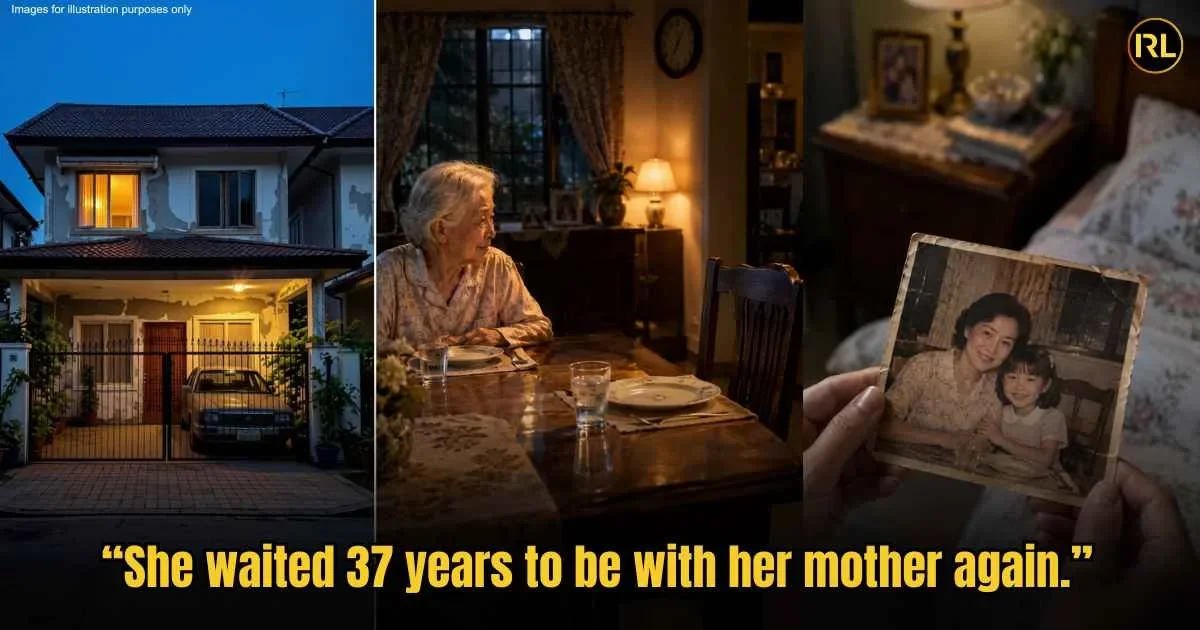
The first thing I noticed about Mrs. Fung’s house was how quiet it was.
It stood along a residential street in Cheras, tucked between two houses with potted plants lining their gates. During the day, motorbikes passed, neighbours called to one another, and dogs barked down the road. But after sunset, the house seemed to absorb every sound.
I had been hired as Mrs. Fung’s private nurse for home hospice care. She was seventy-eight, a widow with a failing heart. Her cardiologist had given her a year at most. My job was to monitor her condition, administer medication and keep her comfortable.
Has My Daughter Come Home?
She was a small woman with fine white hair, thin wrists, and a face that looked perpetually tired. Her movements had become slow, and sometimes she needed to pause halfway through a sentence to catch her breath.
She was gentle and polite, always thanking me for meals or help getting to the bathroom. But every evening, she asked the same question. “Has my daughter come home?”
The first time, I assumed her daughter was working late or living somewhere else. “Not yet, Mrs. Fung,” I told her.
She nodded as if this were perfectly reasonable. “She’ll come tomorrow.”
The next evening, she asked again. “Has my daughter come home?”
“Not yet, Mrs. Fung.”
“She’ll come tomorrow.”
For months, this became our routine. I eventually asked the family member who had arranged my services about her daughter. Mrs. Fung had lost her only child many years ago. I did not press for details. Families have their grief, and it is kinder not to ask questions without useful answers.
She never spoke of her daughter as someone who had died, only someone delayed by traffic or caught up with something. Every night, she expected her to come home.
Mrs. Fung Expecting Someone
On the evening of October 30, 2024, the house felt colder than its usual 24°C. The air-con was running as usual, but there was a chill. Mrs. Fung had barely touched her dinner. When I asked if everything was all right, she said, “My daughter. She’ll be here tonight.”
Her certainty left me speechless. I helped her settle into bed in her usual nightclothes, adjusted her blanket and made sure she was comfortable.
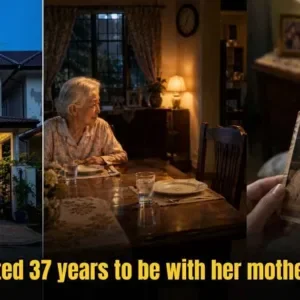
I switched off the main light, leaving the bedside lamp on as she preferred, its soft amber glow filling the room. When I returned to the living room, I noticed the dining table had been set for two. I frowned. I had not set the table that way.
Two plates, two sets of cutlery, two napkins and a glass of water beside each plate. One chair had been pushed out, as if someone had just stood up. I pushed it back, cleared the extra place setting and checked on Mrs. Fung. She was asleep.
Two Places at the Table
It was October 31 when I woke a little after two in the morning. A sound. Laughter. In the dining room. I listened. There it was again: a woman’s voice, soft and warm, followed by a high, light laugh.
Then I heard Mrs. Fung speaking. I walked towards the dining area, my footsteps unnaturally loud against the tiled floor. The laughter came again, this time sounding like a little girl. At the doorway, I stopped. Mrs. Fung was sitting at the table in her nightclothes.
Her white hair had been brushed neatly away from her face, and her hands rested on the table. The chair opposite her had been pulled out. A plate and glass of water stood in front of it. I had cleared that place setting earlier.
Mrs. Fung was smiling at the empty chair. For several seconds, I could do nothing but stare.
“You’re late, darling,” she said.
She tilted her head, listening. “Oh, I see.” A pause. “Was the journey long?”
There was nobody there. Mrs. Fung chuckled. “You’re always giving me excuses.”
She reached for her glass of water, took a small sip, and placed it carefully back on the table.
Then she laughed again. I could hear a second laugh, faint and light, like someone trying not to giggle in a library. My skin prickled. I stepped into the room, but she did not look at me.
“Shh,” she said gently. “We’re talking.”
She held out her hand towards the empty chair. “Come here, darling. Let Mama see you.”
Her hand moved slowly across the table. Then it stopped. I watched her fingers curl slightly, as though they had closed around another hand. Her expression softened, her shoulders relaxed, and the tension that seemed to live permanently in her face disappeared.
She looked younger in the way she smiled. “Oh, look at you.”
She rubbed her thumb against something I could not see. “You’re still so small.”
My mouth went dry. She was a hospice patient with a serious heart condition. I should have checked her vital signs and made sure she was safe. Instead, I could not bring myself to interrupt.
“Tell Mama about your day,” Mrs. Fung said.
She listened, then nodded. “Did you eat?”
Another pause. “You mustn’t skip your meals, darling.”
The little girl’s laughter filled the room again, and Mrs. Fung laughed with her. For the first time since I had started caring for her, she seemed entirely free of pain. I took a cautious step forward. The chair opposite her creaked.
I stopped breathing. Nobody was sitting in it. I could see the empty seat, the wooden backrest and the shadow it cast on the floor. Nothing was there. Yet the chair had moved.
Mrs. Fung kept looking at the empty space with such affection that it made my chest ache.
“I’ve missed you so much.”
Her voice broke. For a moment, she was simply a mother who had been separated from her child for far too long.
She reached across the table again. Her hand remained suspended in the air, her fingers trembling slightly. Then they went still. “She’s here,” she said, turning towards me. “My daughter.”
She turned back to the empty chair. “She’s come to take me home.” She closed her eyes and smiled. A cold sensation crept up my arms. “Where I can be with her,” she said, placing one hand over her chest. “I’ve waited a long time.”
“For how long?”
She turned towards the empty chair again. “Thirty-seven years.” I remembered what I had been told about her daughter, but I had never asked when she died. Mrs. Fung looked down at her hands.
“She was only seven.” Her voice was barely audible. “She was supposed to grow up, get married, have children of her own. I was supposed to grow old enough to see all of that.” Her eyes glistened. “But she was only seven.”
The clock ticked on the wall. Outside, a vehicle passed along the road, its engine fading into the distance. Mrs. Fung looked towards the empty chair, then smiled again. “It’s all right, darling. Mama’s coming.”
She leaned back. I thought she was tired until I noticed her breathing had changed. I hurried to her side and touched her shoulder. Her eyes were closed.
She did not respond. I checked her vitals and called for medical assistance. I stayed beside her as her breathing grew shallow. I tried to rouse her, but she did not respond. A few moments later, her breathing stopped. Mrs. Emily Fung died in the early hours of October 31, 2024, on Halloween.
The Date on the Photograph
The family arrived a few hours later. The house filled with phone calls, quiet conversations and people moving from room to room.
In her bedroom, I found an old photograph lying unframed on the bedside table. Its edges had yellowed with age. It showed a younger Mrs. Fung sitting at a dining table beside a little girl with dark hair, round cheeks and a wide smile.
The girl wore a dress with a white collar. One hand rested on her mother’s arm. They looked happy, sharing the effortless happiness of people who love each other.
On the back was a handwritten note: “Li-Chen and I. Born 1980. Age 7. Halloween with my little girl.” I stared at the words, then at the date: October 31, 1987.
I carried the photograph downstairs and showed it to the family member who had arranged my employment. She looked at it for a long time. Li-Chen died on Halloween in 1987, aged seven.
Mrs. Fung had never truly recovered. For thirty-seven years, she had kept Li-Chen’s belongings, preserved photographs and remembered birthdays. She spoke of her daughter as though she might walk through the door at any moment.
The family had learned not to correct her whenever she asked whether Li-Chen was coming home. They believed it was part of her grief.
“She always waited for her,” the woman said quietly. “Especially around Halloween.”
I looked at the photograph again. In the background was the same dining room I had stood in only hours earlier: the window, the chairs, the table and two plates. One in front of Mrs. Fung. One in front of Li-Chen. The skin on the back of my neck tightened.
I had assumed the extra place setting was something Mrs. Fung had prepared because she was expecting her daughter, another expression of grief repeated over many years.
One Last Halloween
Mrs. Emily Fung had died on October 31, 2024, thirty-seven years to the day after her daughter. Perhaps she had simply reached the end of her life on a date that held terrible significance. Perhaps the laughter I had heard was exhaustion, or my mind filling the silence with something it could not explain.
A few hours later, before leaving, I checked the house room by room for stray medication and medical equipment. It felt different without her. I was in the foyer, keys in hand, reaching for the light switch when I heard a voice behind me.
“Thank you.” I froze. It was a little girl’s voice. Soft. Clear. Then she spoke again. “For taking care of my mama.”
I spun around. Nobody. I stood there, listening so intently that I could hear my own heartbeat. From the dining room came the soft, happy laughter of a mother and daughter.
It lasted only a second. Then the house fell silent. I locked the door, closed the gate and dropped the keys in the mailbox.
I never accepted another home hospice assignment on Halloween after that.
Submit your story to ym.efillaerni@olleh and you may be featured on In Real Life Malaysia.
Read also: ‘I gave up my family to pursue my dreams’ Shares 34 YO M’sian woman – In Real Life
https://inreallife.my/i-gave-up-my-family-to-pursue-my-dreams-shares-34-yo-msian-woman/
‘I gave up my family to pursue my dreams’ Shares 34 YO M’sian woman
More from Family Relationships
“She Left Me A Goodbye Letter,” Shares M’sian Mum
Six years ago today, on Halloween 2020, I got up and made homemade nasi lemak. The rice had that familiar …

“It Was Actually Healing For Everyone” M’sian Woman Finds Forgiveness In Dad’s Dementia
Leong Jui Chuan, a travel agent based in Shah Alam, was not looking for healing when her father's dementia began. …
“She Left While Her Daughter Was Asleep” M’sian Family Reunites Helper With Daughter After 3 Years
Three years ago, Itri left her home in Indonesia before her daughter woke up. She could not bring herself to say …